Joshua Becker
4 min read ⭑
One evening, I sat outside around a fire with two prosperous entrepreneurs, both wonderful human beings and followers of Jesus. It was our first opportunity to really get to know one another. As they began asking me questions about my work, the conversation steered toward minimalism. I shared about not just the work I do around the topic but also the profound positive impact minimalism has had on my family.
My friends were intrigued but skeptical. They could understand the connection between clutter and distraction and even commented on how clean they like to keep their garages. But as we began to press deeper into the implications, the notion that one could maintain ambition without pursuing larger houses in nicer neighborhoods, more expensive cars, financial success and an abundance of material possessions for one’s family seemed foreign to them.
One of the men remarked, “I think I’m too entrepreneurial. That’s just my heart. And my drive for nicer stuff is what keeps me motivated, which is a good thing for my business. I don’t think the minimalist lifestyle is for me. It would kill my motivation for succeeding in business.”

Thomas Franke; Unsplash
I thought, Well, I’m an entrepreneur, too, you know. But my audible response was this: “I’m not suggesting we lose ambition. I’m suggesting we can find greater ambition by redirecting it toward more meaningful pursuits than the accumulation of material possessions.”
Minimalism lowers the amount of money we require to maintain a chosen standard of living, removing the need to earn ever-increasing sums. We begin to see that the motivation for our work doesn’t have to be the numbers on our paychecks. We can direct our passions at work and in our careers toward something more lasting and more fulfilling. Our entire motivation for this important area of life can change. And when it does, the world, God’s kingdom, our families and our own selves will begin to change for the better.
Did you know that in the course of a lifetime, we each spend about ninety thousand hours at work? That’s one-third of our lives on this earth! So, it’s important that we get this part of our lives right.
I believe that most of us Christians understand that honoring God ought to be our objective for our work, same as for every other part of life (1 Corinthians 10:31, NIV). It’s just that in our careers we tend to get caught up in exactly the same frantic moneymaking endeavors that everyone else does. We need something to break us out of this cycle, because God invites us to something better.
Minimalism makes it easier to focus on God’s glory rather than our paychecks as the chief goal of our work. And let me assure you, there’s something truly beautiful in how that switch of perspectives transforms our jobs and our lives.
“Whatever you do, work at it with all your heart, as working for the Lord, not for human masters.”
Choose Your Boss
We should already know better than to get caught up in the “I’m in it for the paycheck” attitude, because 2000 years ago, the apostle Paul gave us a better way of thinking about work. He said it this way: “Whatever you do, work at it with all your heart, as working for the Lord, not for human masters” (Colossians 3:23 NIV).
If you’re like me, you’d like to do your work as unto the Lord. But that can seem almost impossible if we’re looking at work as the means through which we make the money to buy all the stuff we want and live the comfortable lives the world offers us. As we see the value of a minimalist lifestyle, however, our thoughts and motivation for work begin to change. For one thing, minimalism significantly alters how much money we need to live. Work doesn’t have to be about making more if it is already providing enough. Our time, talents, expertise and skills in our work can be used for God’s glory rather than trying to build our own kingdoms and castles.
If I am not a minimalist, I see my paycheck as the means through which I can afford that bigger house or cooler truck or second house on the lake. The only limiting factor on how much money I can spend on stuff is how much money I have. But deciding to live a minimalist life creates positive limitations. Sure, I have to take time to figure out what I need, and those needs might change with the seasons of life. But the parameters are basically set at “I want to own just what I need to own.”
And as soon as the boundaries are set, I get to ask a brand- new-to-me question: “What am I going to do with my income since I don’t need it to buy more stuff?” Again, all the worldly temptations still exist: I can hoard it; I can go on luxurious vacations; and so on. Getting as much as possible can still be my motivation. But if God is directing my steps and I am open in a new way to seeing that I don’t need as much as I can get for myself, I can begin to see my work in a new way. I can bill for less. I can volunteer my talents more. I can help someone else get ahead. I can choose to charge the single mother less than I would have before. God is still meeting my needs — but my flexibility and approach have changed because I’ve set a limitation.

Joshua Becker is the founder and editor of Becoming Minimalist, a website that welcomes over 1 million readers each month and has inspired millions worldwide to consider the practical benefits of owning fewer possessions. He is an international speaker and the No. 1 Wall Street Journal and USA Today bestselling author of several books.
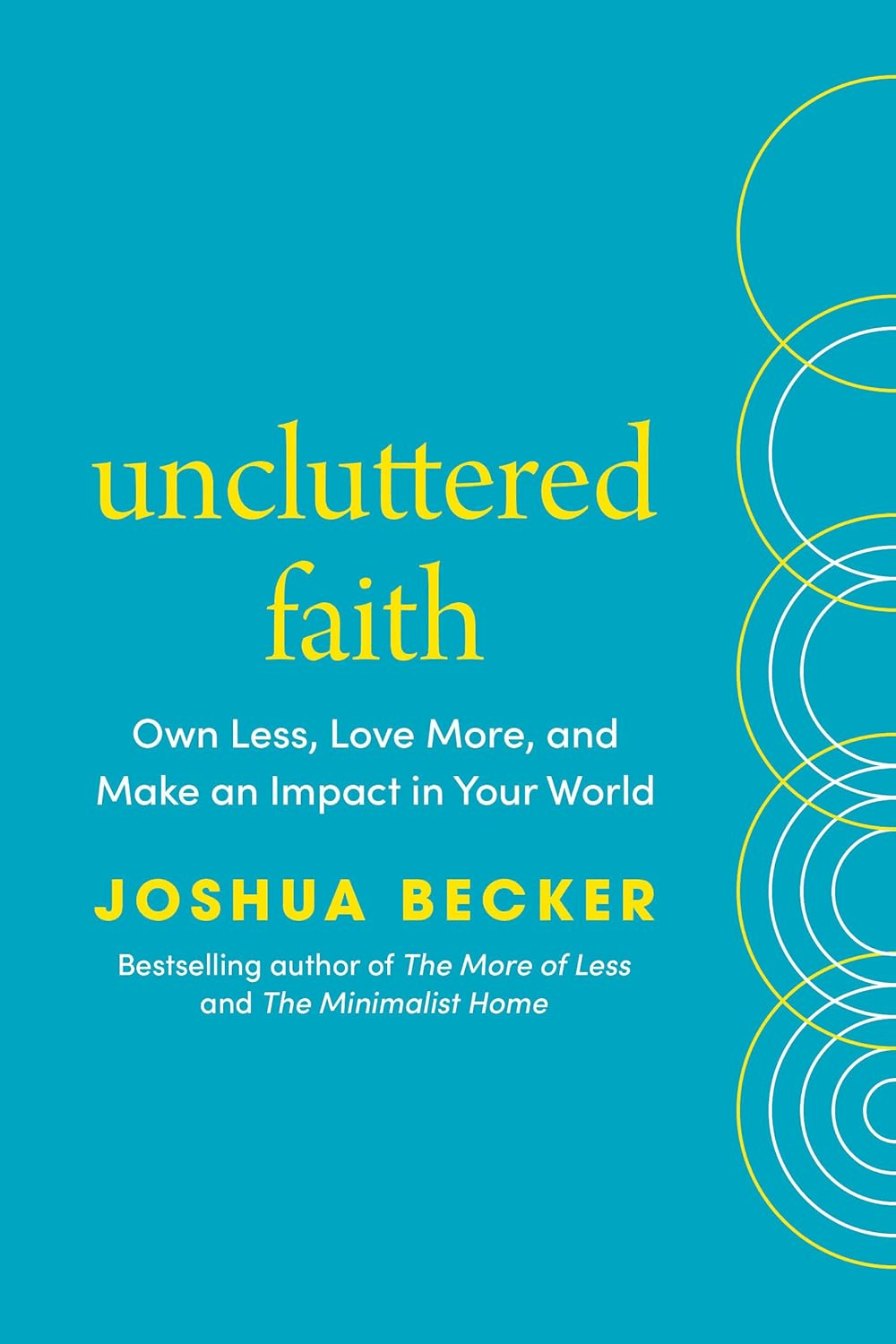
Taken from Uncluttered Faith by Joshua Becker. Copyright © 2026. Used by permission of WaterBrook.