
Looking for Clarity
Big minds, struggling with big ideas.

Trust God only as far as his promises? Small faith, says George MacDonald. God isn’t guarding his dignity. You’re the one afraid. Come closer.

Be true to yourself. Live free. Chase what makes you happy. Timothy Keller, dying, asked why none of it holds. His last book answers.

Feel like something's against you? Something is. Novelist Charles Martin tells how the Devil fell and what beats him, in pages lent to Rapt.

Can’t rest? It might be what you think work is for. John and Jena Starke offer three cultural scripts — and God’s answers to them.

Love God and still wonder if it’s true? So did the disciples who saw Jesus risen. Paul Prather on the good doubt can do.

Does your church feel small? Ephesians was first read in rooms of five to thirty. N.T. Wright says Paul called them God's own poem.

Burned out? Maybe you want what everyone else wants. Jay Y. Kim on the peace that's closer than the top. Opened for Rapt readers.

Opened to Rapt readers from “Authentic Communication,” this excerpt shows why speaking, listening and handling conflict well are part of Christian work.

Jim Street opens this excerpt to Rapt readers, freeing calling from career and talent so you can notice how God may work through you.

From Picasso to Rembrandt, centuries of art can help readers notice the Bible’s grief, glory and humanity with fresh eyes.

Faith is not the absence of questions. Sometimes the deepest disciples are the ones who keep following Jesus even when certainty feels out of reach. If you've ever wrestled with doubt, discover why honest questions need not weaken your faith — and why surrender, not perfect certainty, has always been the truest mark of trust.

A rainbow can be explained by physics and still inspire wonder. The supposed conflict between science and Scripture is often overstated, as if understanding how something works somehow eliminates the One who made it possible. Yet many of history’s greatest scientists saw no contradiction. Nature and Scripture are not rival stories but two ways of encountering truth — each pointing beyond itself to the mystery, beauty and meaning woven into creation.

The parting of the Red Sea is unforgettable, but Moses’ deeper question lingers: Why are we astonished when God interrupts nature yet indifferent to the order that sustains it every day? The same God who parts the waters also holds the tides in place, orders the stars and gives structure to reality itself. Miracles matter, but they point beyond themselves to the One whose wisdom upholds all things.

Some lessons arrive through books, mentors and workshops. Others arrive disguised as disappointment, success or the realization that a milestone wasn't the finish line you imagined. Scripture describes wisdom as a lifelong pursuit, one that grows through humility rather than certainty. God’s work in us rarely ends where we expect it to. As long as we’re breathing, there is still something left to learn.

A miraculous healing convinced him that God still works miracles. Years later, unanswered prayers forced him to wrestle with a harder question: Why does God intervene in some stories and remain silent in others? After witnessing both wonders and heartbreak, he discovered that faith isn't the absence of mystery. It's learning to trust God in the middle of it.

Most gods are just creatures with better costumes — stronger, stranger, louder versions of us. But the God who meets Moses in the burning bush is not one more being among beings. He is Being itself: the great I AM. The plagues are not party tricks, but judgments against lesser powers. Egypt worships creatures. Moses encounters the Creator — the One from whom all existence comes.

Something in us keeps reaching, grasping, trying to be more than we are — and then covering up when it all unravels. The story isn’t just ancient; it’s familiar. Pride, shame, blame — they still echo in us. We sense the gap between what is and what should be. And naming that fracture, honestly, might be the first step toward something like healing.

Consistency with Scripture rarely starts with inspiration. It starts with a decision you keep making, even on the days it feels flat. Small choices — where you sit, what you read, how you begin — quietly shape the habit. Over time, what once felt like discipline becomes something steadier, even wanted. You don’t need a perfect system. Just a place to start, and a willingness to return.

We all carry a longing for home — sometimes rooted in memory, sometimes in what we never had. But Christ meets that ache with something larger than nostalgia. At his Table, we taste both what was and what will be: belonging, healing, communion. It’s not the final feast, but a promise of it — a reminder that one day, every hunger will be met at a table that never ends.
Depth doesn’t begin with the perfect question; it begins with presence. When someone feels safe, seen and unhurried, they’ll often go further than you expected. Jesus seemed to understand this — he met people where they were, then gently invited them deeper. Real connection grows the same way: slowly, intentionally, with space to listen and the courage to stay when the conversation finally matters.
God did not design you to feel less, but to feel rightly. Joy, grief, anger, fear — each has a place in the life of faith. Even Jesus wept, felt anguish and was moved with compassion. The goal isn’t to silence your emotions, but to bring them under God’s care. When held there, they stop ruling you and start guiding you — toward love, wisdom and deeper communion with him.
Meekness isn’t weakness. It’s strength under control. A powerful horse trained to obey its rider isn’t diminished; it’s directed. In the same way, true meekness means mastering anger rather than being mastered by it. Our culture often celebrates force and reaction, but the quiet discipline of restraint — the power to choose patience over impulse — may be one of the most overlooked virtues we need most.

If we’re made in God’s image, what exactly does that mean? Surely not that God shares our crow’s feet or back pain. The likeness runs deeper. We create, feel, reason and reflect — echoes of the Creator’s own life. Yet every answer leads us toward mystery. We resemble God enough to recognize him, but not enough to contain him. The image is real, but the One it reflects is far greater.
George Santayana wasn’t a traditional believer, yet he saw something many modern critics miss: when faith disappears, the human need for meaning doesn’t. It simply relocates. Remove religion, and politics, identity or ideology rush in to take its place — with the same rituals and moral fervor, but far less mercy. Santayana’s warning was simple and unsettling: societies that abandon transcendence rarely become calmer. They become more combustible.
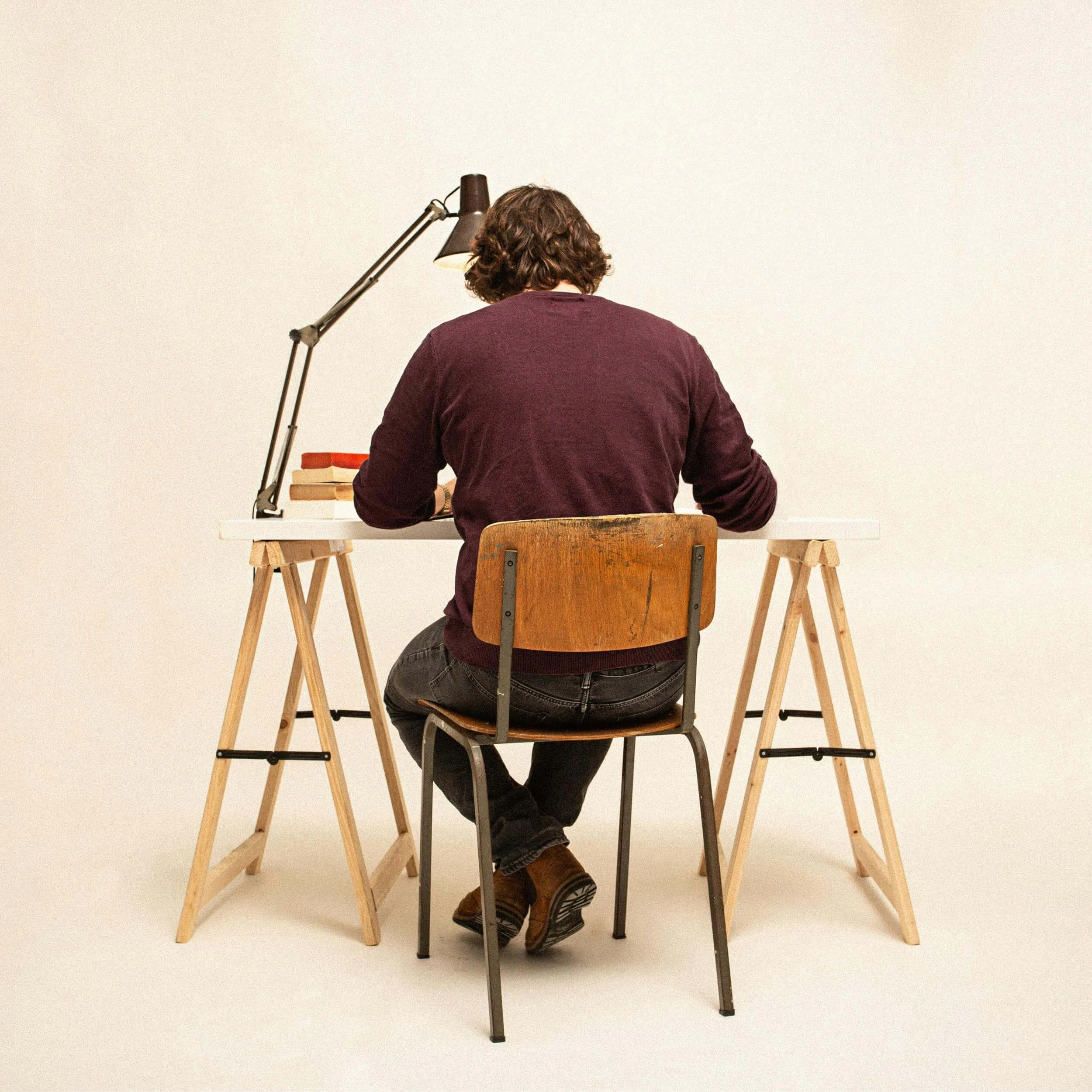
Around a fire one night, two entrepreneurs wondered aloud if less ambition would mean less success. But the question isn’t whether we stop striving — it’s what we’re striving for. When our lifestyle requires less, our work can aim higher. Instead of building bigger barns, we’re freed to serve a better Master. Purpose begins to outgrow the paycheck, and ambition finds a deeper home.

We praise childlike faith, but we often forget childlike curiosity. Jesus welcomed children knowing they’d bring questions — honest, unfiltered, sometimes inconvenient ones. Somewhere along the way, we learn to stop asking, to smooth over what doesn’t sit right. But faith grows when we stay curious. The questions we’re tempted to outgrow may be the very ones that keep us awake, attentive and open to deeper truth.

Busyness has a way of crowding out what we say we want most. We’re tired, overextended and surrounded by more than we can manage — yet still thirsty for God. Scripture names that thirst clearly, even when our lives don’t. When our homes and schedules are packed tight, silence becomes scarce. Sometimes the most spiritual move isn’t adding another practice, but removing what keeps us from paying attention.

On cold winter nights, James Joyce’s “The Dead” returns with quiet force. It lingers over an ordinary party before unveiling something devastatingly human: love given too late, lives misunderstood, the living haunted by the dead. In its final snowfall, Joyce dissolves our illusions of permanence and self-importance, reminding us how thin the line is between longing and loss — and how mysteriously we all belong to one another.
Some of us approach the Bible like a lemon — something to squeeze quickly for an easy takeaway. But Scripture is more like an onion: layered, textured, asking for patience. Its message is clear enough for anyone to meet God, yet deep enough to keep drawing us further in. Reading well means slowing down, peeling back assumptions and letting the mystery of God shape us over time.

It’s tempting to blur God into nature, into ourselves, into everything — until the Creator becomes just another part of creation. But Scripture insists on a difference: God is the artist, we are the art. The mountains are radiant, but they are not God. Holding the Creator-creature distinction protects wonder without collapsing into worship of ourselves or the world. Da Vinci isn’t hanging in the Louvre — and neither is God.