A Whistle So Soft — When Prayer Becomes Presence
Jeremy Sims
5 min read ⭑
It was March 28, 2009. I was 32 years old and restless in a way I couldn’t name yet. I had rented a cabin in Guntersville, Alabama, for Tiffanni, the kids and me. This was a few years before our lives would change, so on the outside everything felt and looked right. Everyone had gone to bed, and I was sitting outside alone, staring at the stars. It wasn’t a spiritual retreat. It was just a weekend away. But that night, on the edge of a mountain, I stayed up late to pray — not out of obligation, not for sermon prep, but because I wanted to. I had stumbled across the idea of lectio divina and decided to try it with Psalm 23 for the first time. Slowly. Quietly. Line by line.
I had been a pastor for years. I knew how to study the Bible. I knew how to find insight and turn it into application. But this was different. This was not about explanation — it was about encounter. Something opened in me that night. I didn’t have language for it then, but it was the beginning of something quieter and deeper than anything I had known before. A hunger I couldn’t explain had finally found a doorway.
In the months that followed, everything began to shift. I started reading more broadly. I found Thomas Ashbrook’s “Mansions of the Heart,” which would finally give me a framework for what I was experiencing. I began meeting with a spiritual director. I entered a Doctor of Ministry program focused on spiritual formation. But more than that, my prayer life changed. I wasn’t praying for results. I wasn’t studying for content. I wasn’t reading because I had a sermon to prepare. I was just ... being with Jesus. No striving. No performing. Just presence. What used to feel like spiritual obligation now felt like invitation.

Rhand McCoy; Unsplash
Yet it was lonely — not in a dramatic or painful way but in the sense that I didn’t know how to talk about it yet. I had no language. The inner life was changing, but the vocabulary hadn’t caught up. I wasn’t walking away from my faith; I was walking deeper into it. But at first, I wasn’t sure who would understand.
The inward journey does not shout. It doesn’t blaze like conversion or fracture like crisis. It whispers — slow, steady, sacred. You won’t always know when it begins. It arrives not in the wreckage but in the restlessness — not because everything falls apart, but because what once satisfied no longer does. The old rhythms still exist, but they ring hollow. Familiar paths lose their clarity. Longing takes root in the quiet — not for more activity or answers, but for depth. It’s not an exit ramp; it’s a doorway. The inward journey is where striving gives way to stillness, where effort gives way to grace. In that slow descent, the soul begins to wake up to something truer. As Teresa of Ávila wrote, “True union is always available, with God’s help. What we need to do is to set our intention to attain it by tying our will unconditionally to the will of God.”
Teresa, Our Guide
If anyone understood this strange and sacred shift, it was Teresa of Ávila. A 16th-century Carmelite nun, reformer and mystic, Teresa didn’t write for the spiritually elite. She wrote for people like us — people hungry for God but unsure how to move beyond effort and emotion. Her most famous work, “The Interior Castle,” pictures the soul as a crystal castle with many rooms, each one drawing us deeper into intimacy with God. The fourth mansion, the one that shapes this chapter, is the quiet turning point between what we do and what God begins to do in us. It’s not dramatic, it’s not loud, but it is the place where everything begins to change. “This is the dividing line,” Teresa writes, “where the natural ends and the supernatural begins.”
Teresa describes it as the moment when prayer begins to shift, not because we try harder, but because the Spirit begins to draw us inward in a new way. That’s what the inward journey feels like: Something is happening, even if you can’t fully name it.
After that encounter on the side of the mountain, I found myself craving silence. I began to pray in the dark, in the quiet, in spaces where there was nothing to stimulate me but God himself. Where I once filled the air with worship music to feel connected, I now found those same sounds intrusive. It was as if the Spirit was making room for something I’d never noticed before. I didn’t know what I was doing, but I knew I didn’t want to leave. I would stay up late, long after the house had gone still. I wasn’t chasing a feeling. I wasn’t preparing for a sermon. I just wanted to be with Jesus.
“Prayer was no longer a spiritual discipline to master. It was a quiet return to a place where I already belonged. I wasn’t trying to get somewhere. I was learning how to stay.”
The emotions that surfaced in those moments were varied: sometimes comfort, sometimes awkwardness, sometimes I couldn’t even name what I felt. Occasionally, I felt a wave of release, or even excitement. But more often than not, I just sat in silence, aware that I was not alone. I wasn’t performing. I wasn’t trying to prove I was a good pastor. I wasn’t even trying to grow. I was just trying to be present, and it was enough.
Looking back, I can see what I couldn’t name then: The Spirit was recollecting me. I was no longer living from the edge of my life — from activity, ambition or obligation. I was being drawn toward the center. Teresa of Ávila calls this the prayer of recollection — not a method, but a movement of grace that gathers the soul’s scattered parts and brings them into stillness. “He calls to them,” she writes, “like a good shepherd beckons his sheep, with a whistle so soft they barely hear it. . . . He teaches them to recognize his voice.”
At first, I wanted to tell people what was happening, but I couldn’t articulate it. I would ramble. Eventually, I stopped trying to explain it altogether. I simply let it spill into my life. Then something surprising happened: Jesus came alive to me, not just as a theological concept, but as a person. His words in Scripture were charged with tone and texture. I could imagine his face, the way he looked at people, the way he saw past their performance and into their pain. I began to see people that way, too. Without realizing it, my inner gathering was making space for outward gentleness.
Thomas Ashbrook writes that in the fourth mansion, “Now, we long for the opportunity to rendezvous with God in our hearts, and just be — with him.” That’s exactly how it felt. I was becoming less interested in spiritual progress and more drawn to spiritual presence. Prayer was no longer a spiritual discipline to master. It was a quiet return to a place where I already belonged. I wasn’t trying to get somewhere. I was learning how to stay.
If you’ve found yourself craving quiet lately or have become uninterested in the noise that used to stir you — if prayer has become less about what you say and more about how present you feel — if you’re no longer chasing the next spiritual high but instead sensing a steady draw inward — this may be what’s happening in you. You’re not losing your passion. You’re gathering your soul. And the Shepherd, in his softest voice, is calling you home.

Jeremy Sims is professor of spiritual formation at Southeastern University, where he leads the Doctor of Ministry and Master of Arts in Ministerial Leadership programs. He previously served in pastoral ministry for 25 years and is the author of Easy As Hard Gets and co-author with his wife Hannah of What Is Spiritual Direction?
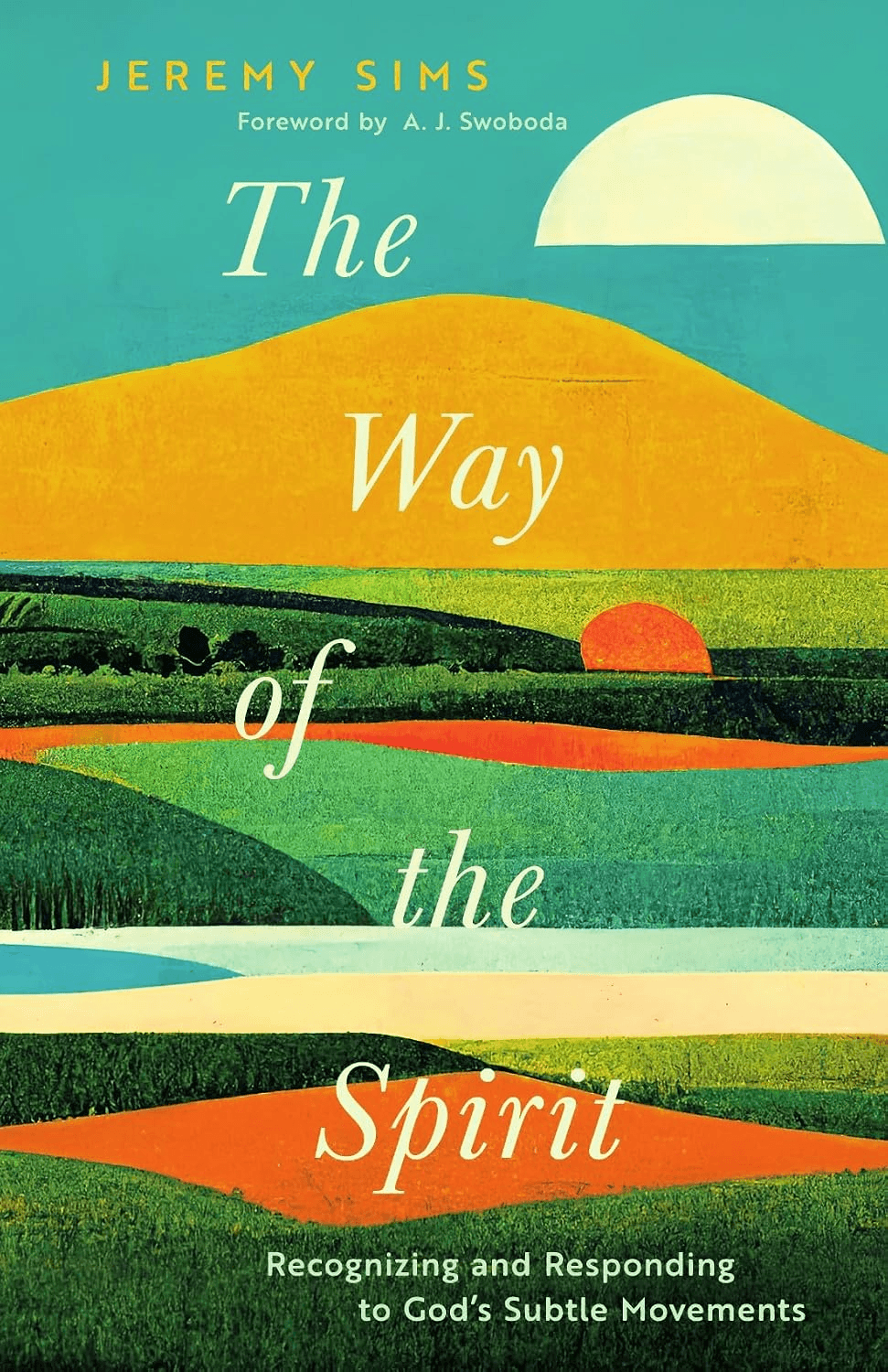
Taken from “The Way of the Spirit” by Jeremy Sims. Copyright ©2026. Used by permission of InterVarsity Press.