A Word Aptly Spoken — Why We Should All Become Students of Communication
Tim Muehlhoff and Todd Lewis
4 min read ⭑
In the movie “Cast Away,” Chuck Noland (played by Tom Hanks) is a FedEx troubleshooter who finds himself in trouble when his Pacific-bound jet violently crashes in a tropical storm. As the only survivor, he is stranded on a deserted island that will be his home for the next four years. To survive, he learns to build a fire, chart weather patterns, spear fish and even perform minor surgery. As months turn into years, Noland realizes his greatest threat is not a lack of nutrition or protection from the elements but his utter aloneness. The daily communication he had with coworkers, family and lover is gone. He yearns to be acknowledged by another. His desperation leads him to form a relationship with the movie’s most unlikely character, Wilson. Wilson is a volleyball that washes up from the crash. With a bloody palm print as a crude face, Wilson becomes a lifeline of communication. Every decision — thoughts of suicide, dangers of escaping into the Pacific waters, rationing of food — is discussed in detail with Wilson.
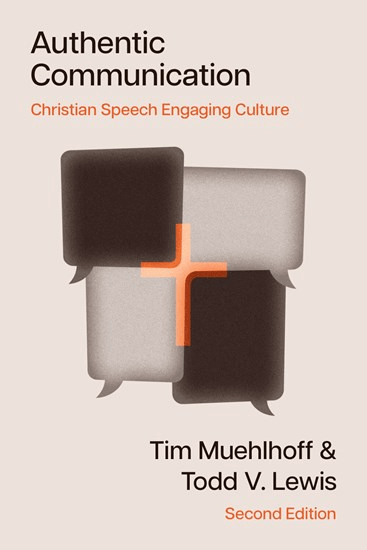
In his four years of seclusion, Hanks’ character comes to appreciate what most of us seldom think about: the necessity of communication. Communication is for most of us a routine part of everyday life that we take for granted. After all, we’ve been communicating our entire lives, haven’t we? One of the goals of our book “Authentic Communication” is to help students studying communication at the university level challenge and undo the naturalness of communication. As students and professors who have dedicated ourselves to exploring the field of communication, we need to challenge our propensity to take communication for granted.

Kateryna Hliznitsova; Unsplash+
However, communication majors aren’t the only ones who should be interested in communication. Christians inside and outside the university need to reclaim a deep appreciation for human communication. The central claim is that through the study and practice of communication we accomplish crucial aspects in the life of a believer.
When reading the Scriptures, we immediately encounter challenging commands and expectations given to all believers. Paul informs us that in the Christian community, “if one part suffers, every part suffers with it” (1 Cor. 12:26, NIV). If a dispute arises between us and another believer, we are asked to “[speak] the truth in love” and deal with conflict and anger before the setting of the sun (Eph. 4:15, 25-26, NIV). A husband is asked to love and sacrifice for his wife (Eph. 5:25) just as Christ loved and sacrificed himself for the church. In return, a wife is asked to respect her husband (Eph. 5:33) with the same reverence reserved for Christ. All believers are called to be harmonious, sympathetic, brotherly, compassionate and humble in spirit (1 Pet. 3:8). Remarkably, God has entrusted his gospel to human communicators and asked that it be taken to all people groups (Matt. 28:19-20).
As followers of Christ, how are we to accomplish these daunting commands?
Part of the answer will be a constant reliance on the Holy Spirit, prayer and a deep understanding of the Scriptures. However, it will also require that each of us become students of communication. What unifies each of these biblical commands is that communication skills are necessary to fulfill them.
The command to share in the suffering of others entails our empathizing with each other. Communication scholars define empathy as the ability to project into another person’s point of view in an attempt to experience that person’s thoughts, feelings and perspective. Empathy is a foundational communication skill. Paul’s call to resolve conflict requires that believers understand two important communication concepts: communication spirals and the power of words. A positive spiral is a pattern of communication in which positive, confirming messages are reinforced and reciprocated between individuals. If we want a person we are experiencing conflict with to listen to our version of the disagreement, then we must listen to that person’s. The idea of communication spirals is not new. In a letter to the church in Galatia Paul tells us that what we sow we will most certainly reap (Gal. 6:7).
“Just as a metalsmith carefully studies how precious metals such as silver and gold can be brought together to form fine jewelry, so we ought to study the wonderful complexity and mystery of human communication.”
Those seeking to resolve interpersonal conflict must also understand the power of words. The writers of the Book of Proverbs say, “The words of the reckless pierce like swords” (Prov. 12:18, NIV). Readers are advised, “Starting a quarrel is like breaching a dam; so drop the matter before a dispute breaks out” (Prov. 17:14, NIV). If we are to resolve conflict, we must understand the distinction drawn by the Scriptures between a productive dialogue and a quarrel.
Paul’s command for husbands and wives to love and respect each other requires a broad array of communication skills. According to Brette Sember, JD, former New York state attorney, of the nineteen most common reasons causing divorce, poor communication ranks toward the top of the list. Edward Dreyfus, a clinical psychologist, further affirms that “being able to communicate well requires both good transmission skills (articulation) and good receptive skills (listening). Without both, communication will be, at best, difficult.” If Christian marriages are to be distinct in a culture of divorce and we are to fulfill our calling to love and respect each other, then we must communicate in ways that bring honor to Christ and health to our marriages. The call to communicate God’s story to a diverse world requires careful consideration of the fundamentals of persuasion and person-centered communication.
One of the ancient writers of the Book of Proverbs states that “a word aptly spoken” can be compared to “apples of gold in settings of silver” (Prov. 25:11, NIV 1984). Just as a metalsmith carefully studies how precious metals such as silver and gold can be brought together to form fine jewelry, so we ought to study the wonderful complexity and mystery of human communication. What took Chuck Noland four years to learn on a deserted island, we can discover by exploring how communication theorists and the Scriptures approach what we do every day — communicate.

Tim Muehlhoff is a professor of communication at Biola University in La Mirada, California, where he teaches family communication, interpersonal communication, persuasion and gender. Tim is senior director of the Winsome Conviction Project. His books include I Beg to Differ, Eyes to See and Winsome Persuasion.
Todd Lewis is professor emeritus in the Department of Communication Studies at Biola University. During his 41myears of teaching, he specialized in persuasive communication, coaching intercollegiate speech and debate, and the application of rhetorical theories to popular culture events.
Taken from “Authentic Communication” by Tim Muehlhoff and Todd Lewis. Copyright © 2026. Used by permission of InterVarsity Press.