If You Stop, You Will Not Disappear
John Starke & Jena Starke
5 min read ⭑
We must not compartmentalize our work from our rest. Sabbath is the center of gravity for our week. But the reverse is also true: that how we think about and experience our work inevitably shapes how we think about and experience our rest. The six days have consequences for the one just as the one has for the six.
If we want to receive rest as a gift, we have to name the cultural scripts that have shaped our restlessness. Here are three of the most powerful ones. Each one offers a promise — fulfillment, success or survival — but all of them warp how we work and distort how we rest.

Andrea De Santis; Unsplash
Work Is What I Want to Do in Order to Be Happy
You’ll often find this script at work within well-being culture. It places my desires and aspirations as the operational center of my work and my outlook on it. Anything that stands beyond my own desires or against them feels oppressive or disorienting. It puts enormous pressure on my work to provide this fulfillment — an expectation that becomes unlivable when work inevitably involves mundane tasks, difficult people or seasons of drudgery. When this happens, it feels like failure or proof you’re in the wrong profession or environment.
This cultural script makes work into a tool for self-expression and emotional payoff. But the Bible’s imagination for work puts us in the realm of God, humanity and creation. We are called to make something of this world and aim for the flourishing of the lives around us.
A script that primarily values happiness and self-expression has no room for the nobility of unrewarded caregiving or hidden work. Nor does it allow for seasons of chronic illness and suffering. It leaves no space for the dignity of painful obedience, or the beauty of perseverance when joy is delayed. The goal of work cannot be happiness alone. Not because happiness is bad; it’s just not big enough for what we were created for.
Work Is What I Must Do in Order to Find Meaning
This script thrives in the world of achievement culture. The difficulty is that it’s a half truth. The desire to find meaning in our work is good. It reflects our identity as image bearers. But the distortion of this truth is when work becomes the place where we try to earn our identity. We are no longer working as beloved image bearers; we’re working to prove we matter.
Derek Thompson puts it this way:
At this point, the idea of hustle culture makes sense. The longing to matter through our work leaves no space for limits. We tell ourselves, If I stop, I disappear. If I slow down, I’ll be passed over. That’s not a calling, that’s a trap. When our work becomes the source of our meaning, we slowly turn our desktops into altars, our deadlines into liturgies and our promotions into sacraments. Work becomes a temple and achievement our god. But the god we’re serving never rests, never blesses and never says “well done.”
“God loves us, not because of our work. You are more than what you produce and more than who you work for.”
Interestingly, the Book of Ecclesiastes says this script turns our good work into toil. The author was not someone who hated his work, but someone who gave himself fully to it, only to find it hollow when detached from God:
I made great works. I built houses and planted vineyards for myself. ... I also gathered for myself silver and gold. ... Then I considered all that my hands had done and the toil I had expended in doing it, and behold, all was vanity and a striving after wind (Ecc. 2:4, 8, 11, ESV).
Here is a man who lived the script: work as self-expression, work as legacy and work as ultimate meaning. But instead of satisfaction, he finds hebel — vanity, vapor and emptiness. He doesn’t just say it was tiring. He says it was toil. This is not a condemnation of work itself — it’s a diagnosis of disordered love.
Work Is What I Would Never Do if I Had a Choice
For many of us, this script isn’t simply a mindset; it’s survival. It is often found in working-class families where work and labor aren’t forms of self-expression. This script is born in economic uncertainty and shaped by generational exhaustion. You work not because you love it, but because people depend on you. That kind of sacrifice is not meaningless. In fact, it’s deeply Christlike.
The danger of this script is that the weariness can lead to resentment, detachment and even a loss of dignity. It divorces us from God’s intentions in our work, whatever that work may be. We were made to bless the world as we have been blessed by God, whether it be bagging groceries, fixing engines or raising kids. As we said before, we often judge the significance and meaning of our work based on its social status. But Christ leads us in a different way.
Scripture doesn’t romanticize work, and neither should we. It tells the truth about toil and discouragement. It helps us make sense of when our plans fail or our dreams die. But we are made in the image of God, following the way of Jesus. Christ found it deeply meaningful to take the form of a servant and wash feet. The first two scripts wouldn’t allow us to see that as fulfilling or successful. This third script wouldn’t allow us to see it as dignified.
God doesn’t idealize our work, but he does see it. We are beloved and blessed (Gen. 1:28), called to give order to chaos, love to neighbors and attention to goodness. The script, work is what I’d never do if I had a choice, slowly erodes our soul and distances us from what God wants for us. Over time, we stop expecting God to be present and good. But God loves us, not because of our work. You are more than what you produce and more than who you work for.


John Starke is the lead pastor at Apostles Church Uptown in New York City. He wrote The Possibility of Prayer and The Secret Place of Thunder.
Jena Starke is the administrator at Apostles Church Uptown in New York City.
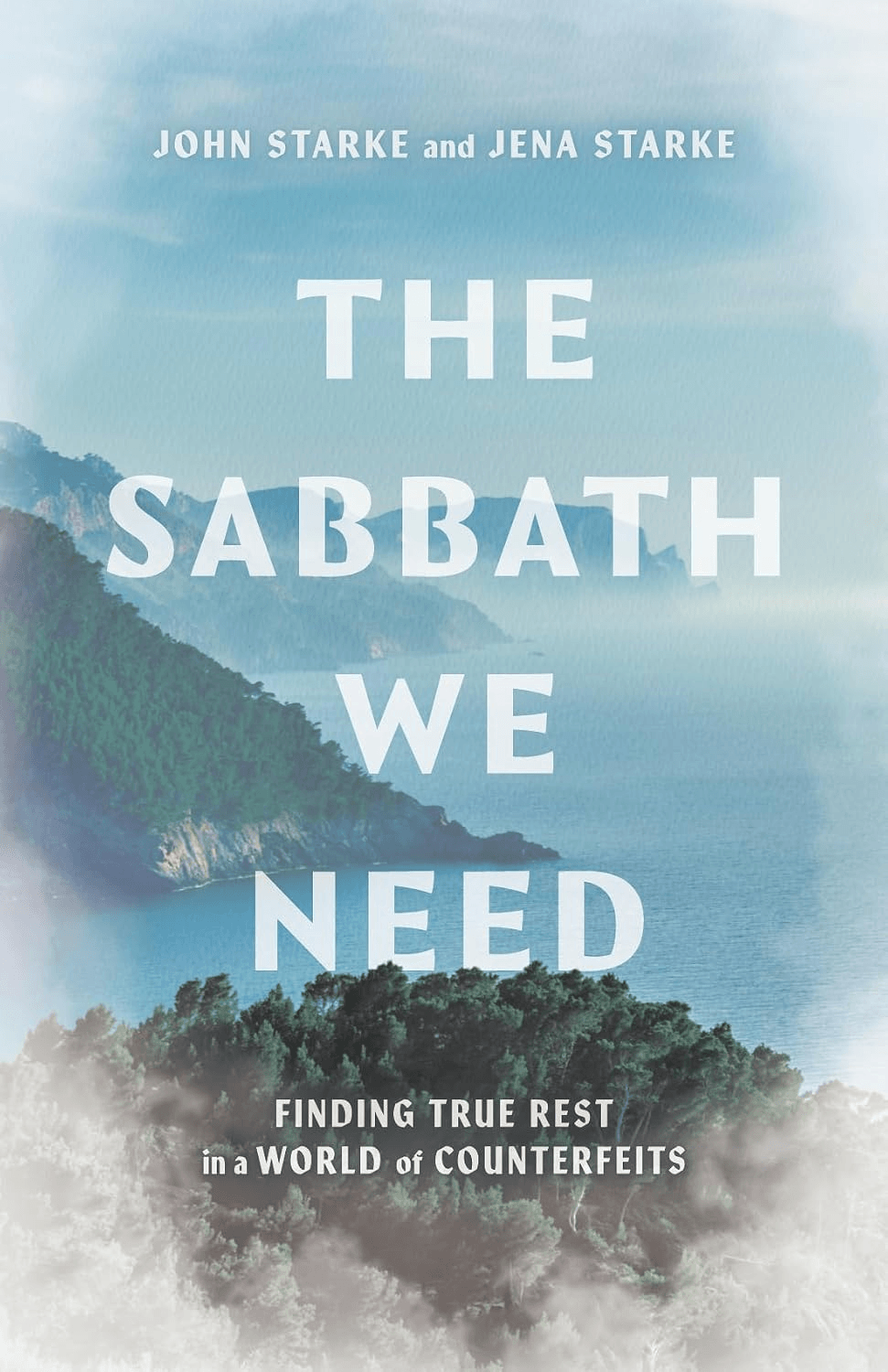
Taken from “The Sabbath We Need” by John Starke and Jena Starke. Copyright © 2026. Used by permission of InterVarsity Press.