The Beauty — and Power — of Restorying Your Story
Mary DeMuth
5 min read ⭑
For a long time, I could not find a redemptive thread running through my train wreck of a story. How do you reconcile that your father was a sexual perpetrator, a narcissistic sociopath with psychopathic tendencies? How does that fit into a story of redemption?
It doesn’t.
At least, not on the surface. This restory has taken years to unearth.
You see, I am a writer, and he was a writer — a far better one than I’ll ever be.
I am an artist, and he was a photographer — a far better one than I’ll ever be.

Annie Spratt; Unsplash
His creativity flows through me — but God has redeemed it. God has taken what caused my father’s deepest forays into evil (pornography in both realms) and transformed them into prose and art for the Kingdom of God. I am deeply humbled by the discovery, the most powerful restory I’ve experienced. My vocation goes far deeper than a spiritual-gift inventory — it’s the coded part of my soul, the way God knit me in my mother’s womb, the way I process pain. As I look back on my life, I realize so much profound healing has happened through these gifts he’s given me.
Let that sink in. The gifts God has given you are the shape of your redemption. He uses our unique makeup to bring healing to our hearts through the power of the Spirit within. You may have heard of spiritual pathway — those ways we connect to God. (There are many lists, but common ones include worship, nature, solitude, study, community and service). But what about healing pathways? One of the ways God heals you is through how he has created you. Your story restories you. Your personality and gifts are things God uses to bring you to wholeness. Once you meet Jesus at the climax of your story, you have a new mind to consider the ways he will (slowly and gently) shape your healing journey to the dimensions of your soul.
If the Lord had shown me all I would have faced in my healing journey at the outset, I would have run clear away. I certainly would not have predicted that in my quest for healing, I’d write dozens of books. Or paint hundreds of pictures. Or sing thousands of songs. Or speak to many, many people on and off stages. All these creative endeavors were God’s Mary-shaped way of helping me heal.
What about you?
How has God gifted you?
What makes you stand out from others?
What is unique in your story that no one else has?
How have your trials informed your triumphs?
What has God uncaged you from?
How have you been set free? How is your healing journey different from your friend’s or your family member’s?
There is no formula to discern these unique healing pathways; it’s more of an investigative — yet joyful — journey of discovery.
Remember, if this is hard to discern, ask a friend. Their words may just unstick you.
When I realized that God used some of my father’s gifts within me to bring me boatloads of healing, I had a greater appreciation for the story-weaving capabilities of the Lord. He can take what the enemy of our souls meant for our demise and utterly transform us for the better. How can that be? It, again, causes me to remember him as my first love, the One who can create beauty from chaos.
I cannot recount how many times I cried out to God, trying to make sense of my story. Sometimes he was silent. But even in that holy quiet, he was working. You see that kind of longing and fulfillment in David’s cry for help: “Hear me, Lord, and have mercy on me. / Help me, O Lord” (Psalm 30:10). Do you relate? But look what happens after his outreach of longing: “You have turned my mourning into joyful dancing. / You have taken away my clothes of mourning and clothed me with joy, / that I might sing praises to you and not be silent. / O Lord my God, I will give you thanks forever!” (Psalm 30:11,12). From graveclothes to dance outfits, from weeping to praising. When we meet Jesus in the climax of our stories, these possibilities begin and they are shaped just like us. He doesn’t redeem us into someone else — he makes us the healed version of ourselves. We become more like ourselves every day on this powerful healing journey.
“While it is important to be retrospective and introspective when we look at our own stories, eventually the Holy Spirit within us can’t help but empower us to look for the needs of others.”
Pivot from You to Them
After the climax of our stories, we can pivot from mining our own story toward becoming passionately interested in the stories of others. Our So what? often stretches beyond our own stories into the stories of others. Before meeting Jesus, I lived in my head — something quite easy to do for an only child — but when I met Jesus, a new group of friends opened up to me, and I began caring for their needs and struggles. The Scriptures are clear that once we are dynamically changed by Jesus, a shift toward sacrificial service occurs. We are restoried to help others find new stories. Consider these powerful verses:
We sacrifice ourselves for the needs of others. “I was hungry, and you fed me. I was thirsty, and you gave me a drink. I was a stranger, and you invited me into your home. I was naked, and you gave me clothing. I was sick, and you cared for me. I was in prison, and you visited me” (Matthew 25:35,36).
We consider service a privilege. “Even the Son of Man came not to be served but to serve others and to give his life as a ransom for many” (Mark 10:45).
We understand how joyful it is to give. “I have been a constant example of how you can help those in need by working hard. You should remember the words of the Lord Jesus: ‘It is more blessed to give than to receive’” (Acts 20:35).
We delight in serving others. “Love each other with genuine affection, and take delight in honoring each other” (Romans 12:10).
Freedom informs our service. “You have been called to live in freedom, my brothers and sisters. But don’t use your freedom to satisfy your sinful nature. Instead, use your freedom to serve one another in love” (Galatians 5:13).
We understand helping others is what Jesus would do. We follow his example. “Don’t look out only for your own interests, but take an interest in others, too” (Philippians 2:4).
We serve because we understand God’s justice. “God is not unjust. He will not forget how hard you have worked for him and how you have shown your love to him by caring for other believers, as you still do” (Hebrews 6:10).
While it is important to be retrospective and introspective when we look at our own stories, eventually the Holy Spirit within us can’t help but empower us to look for the needs of others. And that’s the most powerful part of being restoried.
We are blessed to be a blessing.
We are healed to become healers.
We are graced to demonstrate grace to many.
We are transformed to become agents of transformation.
We are empowered so we can cheer on the power we see in others.
We are loved so we can shower others with unconditional love.
We are given hope so we can instill hope in others.
We are forgiven so we can become forgivers.
We are settled so we can help others find peace.
We are restoried so we can play a part in other people’s restory journeys.

Mary DeMuth is a literary agent, daily podcaster at PrayEveryDay.show, Scripture artist, speaker and the author of over 50 books, including The Freedom of Surrender: 40 Devotions for a Joyful Life in Christ.
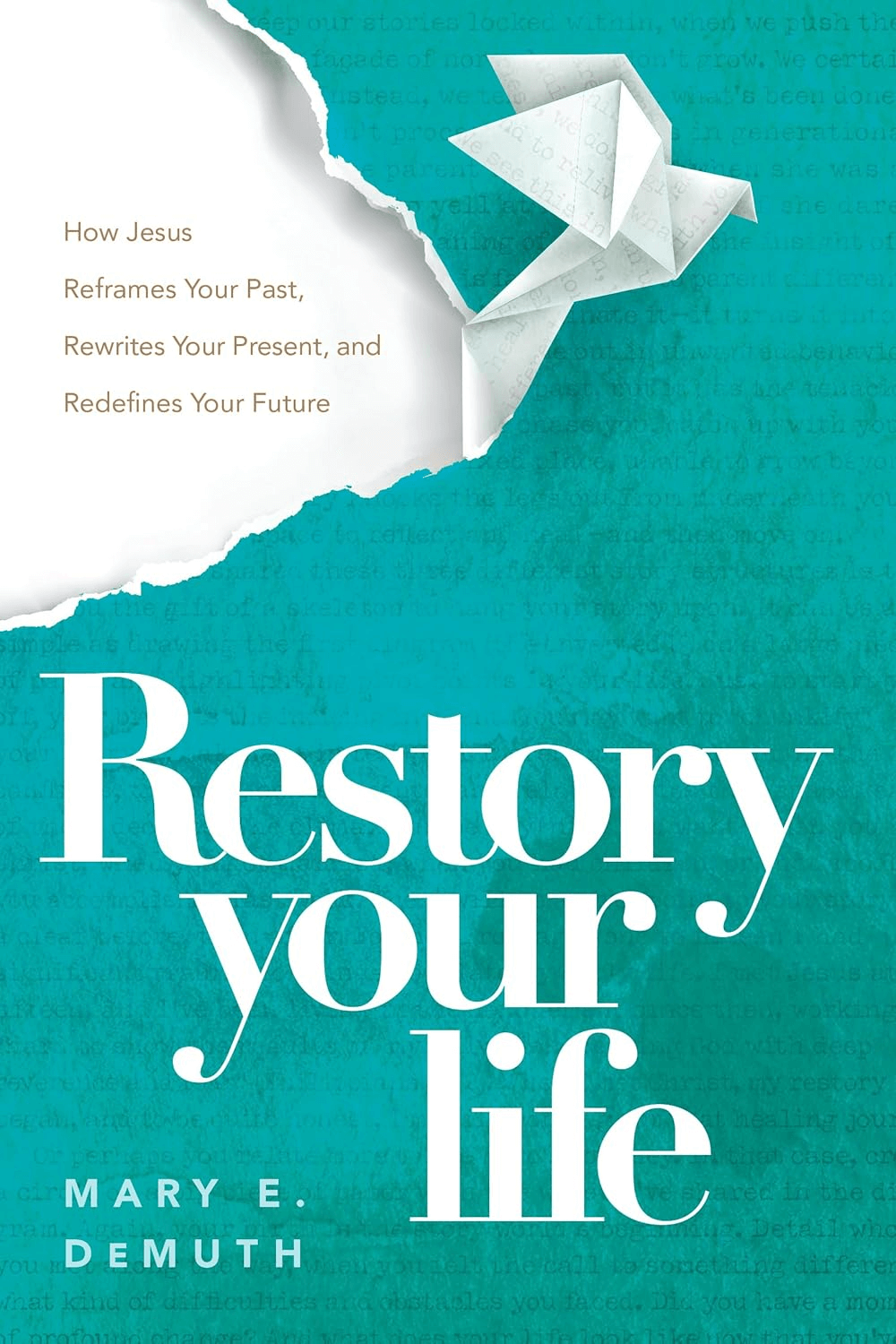
Taken from Restory Your Life by Mary DeMuth. Copyright © 2026. Used by permission of NavPress.