The Weight of Being Yourself: Life Beyond Proving
JENNIFER J. CAMP
4 min read ⭑
I will not tire of this — my fascination with people and my desire to understand what it means for them to feel alive, curious and filled with wonder. People who live fully awake to the weight of their selves are irresistible. There is nothing more attractive, alluring and captivating.
Can you think of someone in your life who feels the weight of their identity? They know who they are because they’ve let themselves feel it. They are not ashamed. They make no excuses about their personality — feeling neither insufficient nor too much. They know they are loved as they are, so shame has no hold on them.
These people have discovered something paradoxical: they are deeply themselves while simultaneously holding their identity loosely. They are not self-focused to the point that their true self vanishes. Instead, they are others-focused and yet love themselves too — knowing that they can only love another person to the extent that they appreciate their mark upon that person’s life. Not because they need that other person to validate their worth, but rather because they know, deep down, that they are part of something bigger. How remarkable is that?

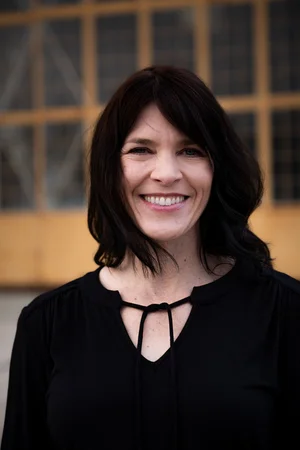
Unsplash+
And even if they can’t fully understand what that “bigger thing” is, they are unafraid to experience it. How could they not? This life is holy and wonderful, and yes, they want all of it. Why wouldn’t they?
I am mesmerized by this attitude — and you can feel it in the people around you. The rowing coach whose praise for his athletes is not only about how fast they can move a boat, but about their character: He wants his athletes to know that he sees their hearts; they are valuable and wanted; they are worth being here. The friend who loves with a wholehearted beauty that makes the pain in your heart bearable. She helps you stand. She knows there is a beauty to you that you can’t even see, and she will fight for you to see it, too.
You can feel the people who love you wholeheartedly. There is an ease and generosity to them that makes being vulnerable and honest possible. People like this make me feel safe — like I can share the most fragile parts of my heart, and there is space for those parts of myself to land.
Our hearts are breathtakingly beautiful. They are tender and robust, resilient and fragile. They can hold uncomfortable, painful realities while remaining open and moving toward hope for a better day.
Watching these people has made me wonder: how do they do it? How do they remain so open and present? I’ve been asking these questions with particular urgency lately as I face my own transitions — dear friends moving away, kids moving back home, people I love getting older. Within me, I hold the weight of memory, love, hope and loss. Who am I, and who will I become? How will I live open-hearted, willing to bear love’s sadness and joy — with the capacity to feel fully and not shut down when everything is changing and I can’t control a thing?
I’m learning that perhaps the focus on what is here, what is now, and the hope of what is to come steers my heart to safety. The memory of the past, both the beautiful and the terrible, does not hold the hope I need. The past is not safe. From it, I glean wisdom and feel gratitude — but to remain present and focused on loving others around me, I must live surrendered and open to what is to come: all the unknown, the good, complex and beautiful, even if I can’t see it yet.
“This is the paradox I keep returning to: true freedom comes through surrender. Real identity emerges when we stop grasping for it.”
This sounds like spiritual language because it is. For me, these questions about identity and wholehearted living are inseparable from my relationship with God. In a recent conversation with him about these things, I hear him speak this:
“You are not your own, yet you want, desperately, to be your own. To stand with authority in my name, you must bend low. If you do this, all you do and love will be blessed, and you will be blessed.”
And I am reminded of the freedom offered to us when we combine the bearing of selflessness with our true, solid identity in Christ:
You, my brothers and sisters, were called to be free. But do not use your freedom to indulge the flesh; rather, serve one another humbly in love (Galatians 5:13).
This is the paradox I keep returning to: true freedom comes through surrender. Real identity emerges when we stop grasping for it. As I struggle with this alongside Jesus in the pages of my journal, feeling fear, resistance and doubts in my heart, I look into his eyes, see his kind face:
“Wait. Listen for my voice. Don’t rush.”
And as I ask him how I can love wholeheartedly, with this freedom that comes from loving others as much as myself, he responds:
“You know.”
I think I do know. The people I described at the beginning — the ones who feel the weight of their identity and love wholeheartedly — they’ve learned to hold themselves the way God holds them: with love, without shame, present to both joy and sorrow. That’s the kind of aliveness I’m reaching for. That’s the weight I want to bear.
“The more we get what we now call ‘ourselves’ out of the way and let Him take us over, the more truly ourselves we become.”
—C. S. Lewis
Who in your life loves wholeheartedly — someone who seems to carry the weight of their identity with ease? What do you notice about them? As you contemplate with Jesus, ask him: What keeps me from living this way? What am I afraid of losing if I surrender?

Jennifer Camp is a poet and listener who delights in investigating the deeper places of the heart. She founded Gather Ministries with her husband, Justin, is Editor-at-Large of Rapt Interviews and manages Loop Collective, a community for women who reject complacency and pursue connection with God.