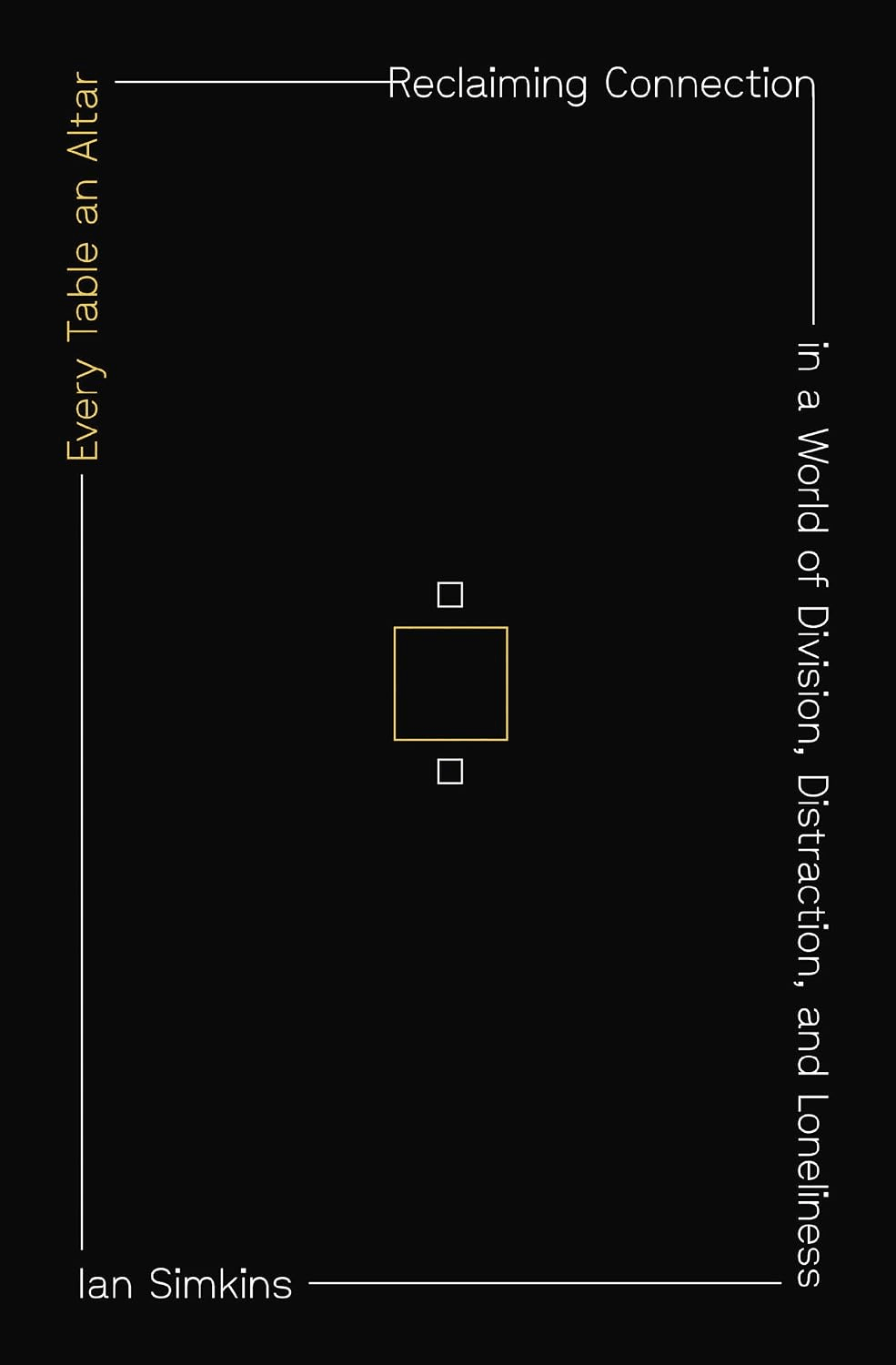
What a Dive Bar Taught a Pastor About Church
Ian Simkins
6 min read ⭑
When we all moved into our little Elgin, Illinois, house in 2006, four roommates fresh out of Judson University, I remember passing by an obscure little building in our neighborhood on a couple of occasions. It didn’t have any visible signage or markings, except for an old neon sign that was never lit. After a few weeks, our curiosity got the best of us, and we decided to investigate this mysteriously bland building.
The first time we approached it, the place was obviously closed. We peered through the windows with the hesitation of kids spotting roadkill for the first time. In the murky darkness, we could make out what appeared to be a bar of some kind, but we couldn’t decipher much beyond that.
Our second visit was much more successful. This time, all the lights were on, and the door was unlocked. Still unsure if entering was wise, we decided to give it a go. Upon entering, we found a standard dive bar atmosphere, about an eighth of the normal size. A few people were scattered throughout, a half-functioning dart game in one corner and a small television from the early 1980s mounted on the wall in the other corner. It still felt dark, even though all the lights were on.

Anastase Maragos; Unsplash
There was a strange haze hanging in the air. Feeling a bit out of place and knowing full well that every person there was aware that we weren’t “regulars” by any stretch, we sat down at the bar anyway. Within 30 seconds, a man named Dave approached us. “You guys new here?” he asked with a warm smile. “Yeah, we just moved to the neighborhood,” one of my roommates said.
“Well, welcome, I’m Dave.” He shook each of our hands. “Let me introduce you around.” And that’s exactly what he did. He proceeded to introduce us to literally every person in that bar. He would point someone out. “That’s Mike. He works at the plant. Just had his second kid.” We’d run over to shake Mike’s hand. “And that’s Sarah over there. She’s a nurse at Sherman.” Another handshake. “Tom’s the one by the dartboard — retired firefighter, best stories you’ll ever hear.” Within 15 minutes, we’d met every single person there and knew a fraction of their stories as well.
We ended up staying for more than three hours. Actually staying, not just being polite. Talking, sharing, laughing and even crying with the fine people of this strange establishment. We heard stories of all sorts of people from all walks of life, with varying degrees of absurdity. We played darts with Tom the firefighter, heard about Mike’s sleepless nights with his newborn, listened to Sarah talk about what it’s like to work in the ER on a Saturday night. We shared our own stories of faith and struggle too.
I walked away from that experience stunned. I don’t know why we were surprised by the connection we found there. We’d already seen how small the space was, already felt how cramped and worn-down everything seemed. But somehow that made it better. Made it real. I remember specifically thinking, If the church could begin to live out the kind of love, acceptance and devotion to community that I saw at this little unmarked bar, it could change everything.
I know I’m not the only one who has had an experience like this. There’s something deep-seated in our humanity that utters a yes when we see this kind of connection lived out. And here’s what I’ve come to believe: The unmarked bar was giving me a glimpse of something God designed to be central to human flourishing. It was showing me the table.
If you grew up in church like I did, you probably learned about a person who got invited to parties. That he was accused of being “a glutton and a drunkard, a friend of tax collectors and sinners” (Matt. 11:19, ESV). That the religious leaders of his day were arguably less scandalized by his miracles than by those he chose to eat with.
It’s true. In Luke’s gospel alone, we see Jesus either at a meal, going to a meal, leaving a meal or making a meal. Luke gives seven distinct meal scenes, each one a window into the kingdom. If you read Luke straight through and don’t get hungry, you’re probably not reading it right. The table wasn’t peripheral to Jesus’ ministry; it was central. And what happened at those tables didn’t just change individual lives; it changed the world.
“We don’t need to wait for the perfect moment. We don’t need a bigger house or nicer dishes. We don’t need to have our lives together first. We just need to show up. To be present. To make room.”
Here’s what we know: We’re more connected than ever and more isolated than we’ve ever been. We have hundreds of “friends” online and almost no one we can call at 3 a.m. We conduct entire relationships through screens. We measure intimacy in likes and shares. The Survey Center on American Life found that the percentage of Americans who say they have no close friends has quadrupled since 1990. Fifty-four percent of people report sometimes or always feeling that no one knows them well. Forty percent say they have zero close friends at all. Zero.
For someone whose job involves being around people constantly, I’ve somehow escaped the epidemic. But I haven’t. I know what it’s like to stand in a crowded room and feel completely alone. To have a calendar full of meetings and a heart empty of connection. To be so busy doing the work of ministry that I forget to actually be present with the people I’m ministering to and with. I’ve scrolled through my phone at 11 p.m. looking for something, anything, to fill a void I couldn’t even name. I’ve preached sermons about community on Sundays and eaten meals alone in front of a screen on Mondays.
On my best day, I need God as desperately as I did on my worst day. And on my best day, I need people just as desperately too. So when I cite these statistics, I’m not pointing fingers; I’m confessing. This crisis isn’t just “out there”; it’s in here too. In me. Maybe in you. We are the most entertained, overstimulated, hyperconnected and profoundly lonely generation in human history. We’ve traded presence for productivity, community for content and face-to-face friendship for the algorithm’s recommendations. And somewhere along the way, we’ve lost table spaces — at home, at church, at work and everywhere else.
Over the last 50 years, while society has been growing more prosperous and individualistic, our social connections have been dissolving. Emily Esfahani Smith from The Atlantic describes the price for our social disconnection: “We volunteer less. We entertain guests at our homes less often. We are getting married less. We are having fewer children. And we have fewer and fewer close friends with whom we’d share the intimate details of our lives. We are denying our social nature, and paying a price for it. Over the same period of time that social isolation has increased, our levels of happiness have gone down, while rates of suicide and depression have multiplied.”
Sixty years ago, the average dinnertime was 90 minutes. Today it’s less than twelve. We’re not just lonely. We’ve lost the very rhythms that used to hold us together. This isn’t just a cultural problem; it’s a spiritual crisis.
When we lose the table, we lose something God designed to be central to human flourishing. We lose the place where strangers become friends, where enemies become family, where the hungry are fed and where the lonely are seen. We lose the space where presence — real, embodied, unhurried presence — becomes the medium through which love is expressed and grace is experienced. The research confirms what our hearts already know: Teens who experience frequent family dinners have lower rates of drug and alcohol use, fewer symptoms of anxiety and depression, and are less likely to attempt suicide. Family meals are associated with better nutrition and lower obesity rates among children. And here’s the remarkable part: These benefits show up regardless of how functional the family is. Even imperfect tables matter.
The table, for Jesus, wasn’t just about food; it was also about formation. It was about mission. It was about proclaiming that the kingdom of God had arrived, not someday in some far-off heaven, but right here, right now, at this table, with these people.
Early Christianity understood this. For the first three centuries of the church, believers didn’t just meet in large groups; they met in homes, gathered around tables and broke bread together. The Greek word koinonia, often translated “fellowship,” means “sharing in common.” And what they shared most often was a meal. The Eucharist, the Lord’s Supper, Communion — no matter what you call it — wasn’t an addendum to worship. It was worship. The table was the focal point.
Over time, the church evolved. Structured gatherings and larger assemblies brought new forms of worship and community. And while these served important purposes, we risk losing something essential when the table is no longer central.
Wherever people gather with intention, wherever presence is offered and received, wherever we make space for connection, a table appears. We don’t need to wait for the perfect moment. We don’t need a bigger house or nicer dishes. We don’t need to have our lives together first. We just need to show up. To be present. To make room.

Ian Simkins is the lead pastor of The Bridge Church just outside Nashville, Tennessee. He and his wife, Katie, have three boys who keep their home incredibly loud and their table beautifully full.
Adapted from “Every Table an Altar” by Ian Simkins. Copyright Ian Simkins. Copyright © 2026. Used by permission of Zondervan.