Richard Kannwischer
5 min read ⭑
When our daughters were preschoolers, we lived in San Antonio where there are only two seasons: hot and summer. To survive those endless days, we hired Emily, a seminary student, as a live-in nanny. She had a Mary Poppins energy and won our kids over instantly.
One of our favorite things to do as a family was to visit SeaWorld. We had season passes and a whole system, including parking strategies, stroller logistics, snack pacing and show sequencing to keep everyone happy. On one of those Saturdays, we went together with Emily to show her how it all worked.
The first show we saw was called “Believe.” Think rock concert lighting, soaring sea creatures and a power ballad straight out of an ‘80s movie soundtrack. I watched my daughters’ faces fill with wonder. I’ll admit that I was getting swept up in the moment.

Robert Clark; Unsplash
The music swelled: “Believe / If we all just try, and reach out, we can touch the sky / Together, we’ll find a way, to light the way, for a brand-new day.”
We stood and clapped along with the rest of the audience — except for Emily. She sat motionless, arms crossed.
She said, a little too loudly, “Believe in what? Believe in a whale?”
Spell broken. Seminary students: great in the classroom, terrible at theme parks.
But she was right. Belief isn’t beautiful just because it’s loud or inspiring. It matters what you believe and who you believe in.
That moment shook loose something important: There’s no such thing as belief in general. Faith always has an object.
Later that year, during Sunday worship, my colleague (a wise, seasoned pastor) invited the congregation to recite the Apostles’ Creed. His invitation always began the same way: “Let us stand and say what — and in whom — we believe.”
It was such a small shift in phrasing, but it never failed to center me.
Faith isn’t just an idea; it’s a relationship. It’s not just a list of beliefs; it’s a personal allegiance.
Faith isn’t simply agreeing with a set of propositions. It’s trusting someone with your whole self.
Everyone Has Faith in Something
Not all faith is created equal. Some trust in success, even though it can vanish overnight. Some trust in themselves, but we all break eventually. The Christian story doesn’t just ask you to have faith; it invites you to anchor it in someone unshakeable.
One of my favorite ways to relax is to play golf. It’s also a fun way I connect with people I’d otherwise never spend four hours with. At my congregation, we call this “unexpected togetherness.”
Here’s a typical sequence:
Hole 1: We exchange names and pretend we might break the course record.
Hole 2: Someone starts cursing like a Wall Street trader on a losing streak.
Hole 3: They ask me what I do. I say, “I’m a pastor.”
Holes 4-18: I win because they’re trying not to curse anymore and it throws them off their game.
One day, after I told a guy I was a pastor, he said, “Well, I’m not a person of faith.”
I smiled and said, “Yes, you are.”
He looked confused.
“You may not believe in God,” I continued, “but you believe in something — yourself, success, your ability to control outcomes. Everyone has faith in something.”
He joked, “Well, I believe in you,” as I stood over a shot in the sand trap. I prayed for a miracle shot; however, I bladed the ball into the next zip code, nowhere near the hole.
Later, I found a quiet moment and said, “We all put our trust somewhere. My advice? Put it in something that’s truly reliable.” As the American sociologist Robert Putnam put it: “Trust without trustworthiness is just gullibility.”
Faith isn’t admirable unless the one you trust is worthy of it.
Agreement or Amazement?
In Matthew’s Gospel, Jesus finishes the Sermon on the Mount, and the crowd is amazed — not just by his words, but by his authority (Matt. 7:28-29).
Soon after, a Roman centurion approaches him. His servant is gravely ill. He says to Jesus, “Lord, I do not deserve to have you come under my roof. But just say the word, and my servant will be healed” (Matt. 8:8, NIV).
Jesus is stunned: “Truly I tell you, I have not found anyone in Israel with such great faith” (Matt. 8:10, NIV).
This Roman soldier (an outsider) believes in Jesus’s authority more than the insiders do. That amazes Jesus.
Let that sink in: God can be amazed by your faith.
“There will be moments when it’s natural, when belief feels like breathing. And there will be moments when it’s hard, when doubt and fear feel louder than God’s voice.”
For a long time, I treated faith like a theological checklist. Saying the Creed was like reciting the right answers to a quiz.
But Jesus doesn’t gather people around and say, “Just agree with me.” He says, “Follow me.”
The difference is between compliance and commitment. Compliance is blindly accepting. Commitment is a living, breathing decision made each day.
Faith is not agreement. Faith is trust. Faith expands life into amazement.
Who Will Go with Me?
In 1859, a French acrobat named Jean François Gravelet, also known as “The Great Blondin,” stretched a 1,300-foot-long tightrope across Niagara Falls — two inches wide, with no net.
He didn’t just cross it once. Over time, he did it blindfolded, with a wheelbarrow and even while cooking an omelet in the middle. He crossed it about 300 times.
One day, after a particularly daring crossing, he asked the crowd, “Do you believe I can carry someone across on my back?”
They roared with applause.
Then he asked, “Who will go with me?”
Silence.
Only one man — his manager, Harry Colcord — agreed.
Before stepping out, Blondin said, “Be a part of me. If I sway, sway with me. Do not try to balance. If you do, we will both die.”
That’s faith. Not cheering. Not agreeing. Staying close. Deciding and then going.
What Do You Really Believe?
Philosopher Michael Novak says we all live with three levels of belief:
Public convictions: what we say we believe.
Private convictions: what we think we believe.
Core convictions: what we actually believe, revealed by how we live.
Rick Warren puts it more bluntly: “You only believe the parts of the Bible you actually put into practice.”
That quote always gives me pause.
Let me be clear: I’m not saying we earn grace. This isn’t about trying harder, but it is about trusting deeper.
That’s why I use this phrase: Because I believe in God, I will trust him.
Reciting “I believe in God” does not just mean “I believe God exists.” It means much more. It means, “I will act like he’s good and trustworthy.”
He doesn’t ask you to balance on the rope. He asks you to let him carry you across.
A Prayer for Trust
The invitation is to trust God. I recognize trust doesn’t happen all at once. Sometimes it begins in a single moment — whether an act of surrender, a whispered yes or a desperate plea. Other times, it unfolds slowly, like morning light breaking through fog.
Jesus invites both.
“Follow me” is both a first step and a lifelong journey. Faith begins with a decision, but trust deepens over time.
There will be moments when it’s natural, when belief feels like breathing. And there will be moments when it’s hard, when doubt and fear feel louder than God’s voice.
But here is the promise: The One who calls you is faithful (1 Thess. 5:24, NIV). And he will carry you.

Dr. Richard Kannwischer is the pastor of Peachtree Church in Atlanta, Georgia, and author of Cultivate. For more than 25 years, he’s been recognized as a gifted communicator whose greatest passion is helping people understand how God’s story speaks with clarity, depth and relevance to their everyday lives. Known for making complex theological truths accessible and engaging, Richard brings rich insights that encourage audiences.
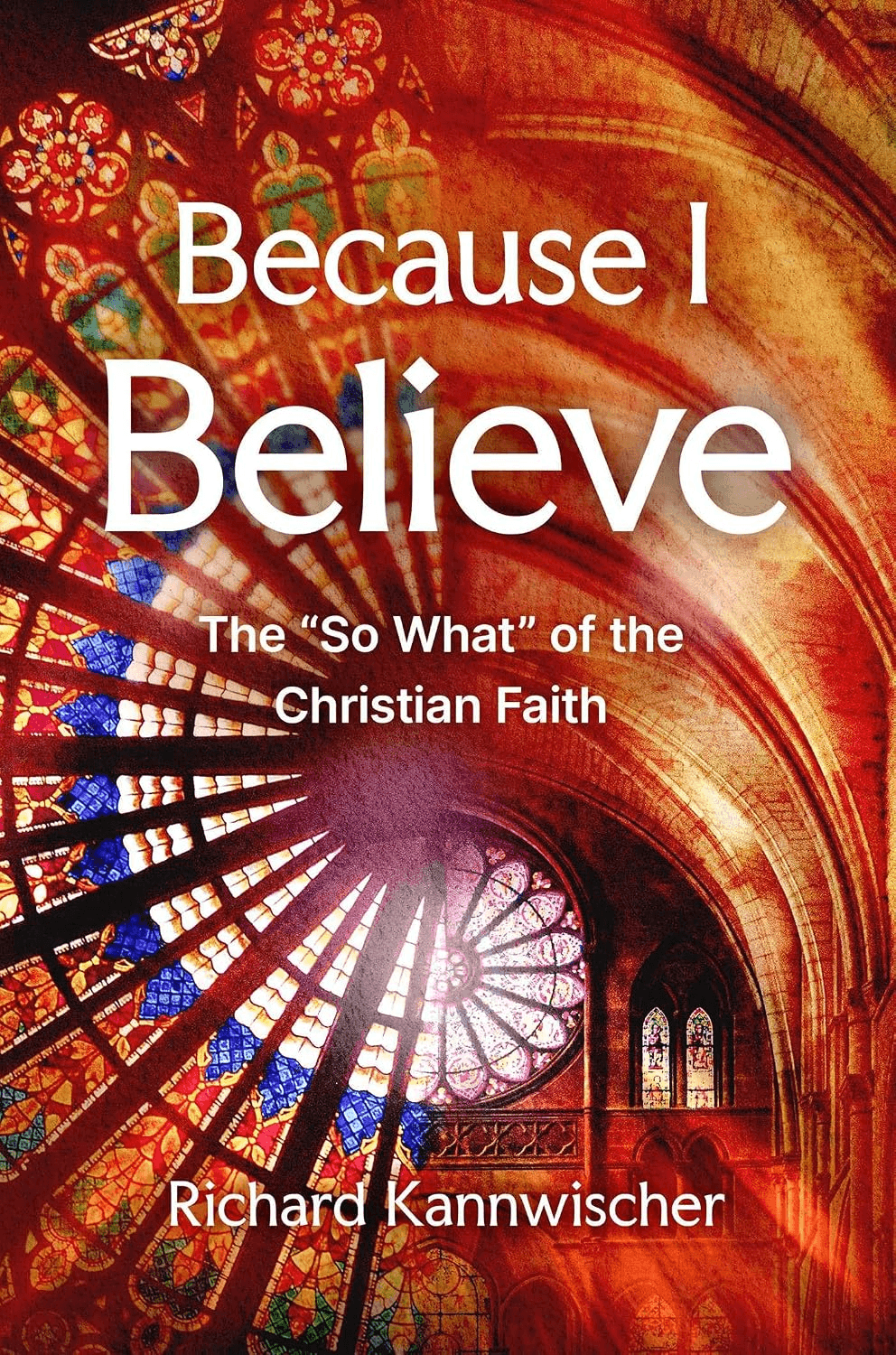
Adapted from “Because I Believe” by Richard Kannwischer. Copyright © 2026. Used with permission of the author.