The Sweet, Poisonous Berry: How Idolatry Works and Dies
Scott Sauls
21 min read ⭑
Idolatry is not just a failure to obey God; it is a setting of the whole heart on something besides God. This cannot be remedied only by repenting that you have an idol, or using willpower to try to live differently. Turning from idols is not less than those two things, but it is also far more. Setting the mind and heart on things above means appreciating, rejoicing and resting in what Jesus has done for you. —Timothy Keller
At the very core of who we are, we are worshipers.
Whether or not we realize it, our hearts are always offering devotion to someone or something. John Calvin once wrote, “Man’s nature, so to speak, is a perpetual factory of idols.” Put another way, we are continually crafting substitutes for the God who made us. His observation reveals a sobering truth: When God is not at the center of our affection and trust, something else inevitably takes his place. And yet we were created for one great purpose: to know, love and worship God alone.
Beneath every longing we carry — every ache for beauty, meaning or connection — is a deeper, more primal desire: a yearning for our Creator. As the apostle Paul writes in Romans, “For from him and through him and for him are all things” (Rom. 11:36). Everything begins and ends with him.
This is why idolatry is far more than just a moral misstep. It is a rupture in relationship. It is our hearts seeking life in what cannot give it. And yet into our restless idol-chasing, Jesus enters — not as a scolding judge but as the Mercy King. He comes not to shame us but to shepherd us home. He exposes and confronts the futility of our false gods not to condemn us but to lead us back to the only one worthy of our worship: himself.

Unsplash+
He does this not with the force of a sword but with the tender strength of his scars. His rule is built not on domination but on deliverance. This is the beauty of his kingship: He reigns by redeeming, not by crushing. When we wander, he doesn’t discard us. He restores us. He reorients us toward the wisdom of St. Augustine’s prayer, “You have made us for yourself, O Lord, and our heart is restless until it rests in you.”
From the very beginning, idolatry has marked the human story. In ancient times, people bowed before carved images of stone or wood. Today our idols may wear different disguises, but their power is just as real. Careers, relationships, achievements or material wealth can quietly rise to take the throne of our hearts. Idolatry takes hold anytime we entrust our deepest hopes, identity or sense of worth to anything — or anyone — other than God.
What Is Idolatry? And Why Only a Mercy King Can Defeat It
Idolatry, at its heart, is giving something — or someone — a place in our lives that belongs to God alone. When he says to us, “You shall have no other gods before me” (Ex. 20:3), he is not asking to be first in a lineup of priorities; he is inviting us to live with him as our one and only.
This isn’t because God is needy or threatened by competition. Far from it. His demand for exclusivity is born of love, not insecurity. As C. S. Lewis once observed, “God made us: invented us as a man invents an engine. A car is made to run on petrol, and it would not run properly on anything else. Now God designed the human machine to run on himself.” We weren’t created to run on applause, ambition, relationships or riches. We were made to run on God.
And yet how often we try to fuel our lives with lesser things. The result is always the same: breakdown, confusion, disappointment. Still, the King who made us for himself does not recoil from our messes. He moves toward us. Not with folded arms and furrowed brows but with nail-scarred hands and mercy in his eyes. Jesus, the Mercy King, steps into our disordered loves and misaligned loyalties not to condemn but to rescue. “You shall have no other gods before me” is not a threat. It is an invitation. It is the wooing voice of the one who alone can satisfy the ache we keep trying to soothe with counterfeits. His glory and our good are not at odds; they are wonderfully aligned.
The first commandment was radically countercultural when first spoken. After four hundred years in Egypt — where gods were assigned to the sun, the Nile, and even the Pharaoh — the Israelites had soaked in a worldview in which divinity was everywhere and in everything. So when Yahweh declared himself to be the only true God, it was revolutionary. Yet even after witnessing God’s power in their deliverance, the people still longed for something tangible, predictable and controllable. In the wilderness, they crafted a golden calf — a toxic blend of their craving for money and power (Exodus 32). They wanted a god they could see, manage and define. But the irony, then and now, is this: When we try to control our gods, they end up controlling us.
Though we may not bow before statues today, the impulse hasn’t changed. As Origen once said, “What each one honors before all else, what before all things he adores and loves, this for him is his god.” Our modern idols may not look like golden calves or carved images, but they are no less present — or powerful. The human heart, as much as ever, remains susceptible to giving ultimate devotion to things that were never meant to carry that kind of weight.
For some, the idol is comfort. We organize our lives around ease, convenience and the absence of discomfort. We may not say it out loud, but often our greatest annoyance is being inconvenienced or disrupted. When comfort becomes ultimate, anything that challenges our peace feels like a threat, be it a hard conversation, a needy neighbor or a call to sacrifice.
For others, the idol is control. We find our sense of security in having a tight grip on our schedules, our children’s futures or the five-year plan we’ve mapped out in our minds. But when life inevitably veers off script — and it always does — we spiral into anxiety or anger because the thing we worship has failed us.
Still others may idolize reputation. We bend over backward to keep people impressed, afraid of letting others down or being misunderstood. We pour energy into maintaining a certain image — whether as the capable parent, the wise leader, the steady friend — believing our value is bound up in how we are perceived. But this kind of living chips away at the soul. The pursuit of image becomes a treadmill: No matter how fast we run, we never quite arrive.
These are just a few of the gospels of our age: comfort, control, approval. But they are gospels that cannot save. They promise peace, identity and worth, but in the end, they don’t deliver. Because only Christ can tell us who we are. Only Christ can give us the safety, the love and the meaning our hearts crave. And unlike the idols we chase, he doesn’t demand that we keep proving ourselves worthy of him; he invites us to rest in his finished work.
At its root, idolatry is self-deception. It’s the liar and deceiver within whispering, “God isn’t enough. You need more.” But idols always promise more than they can deliver. They stir longing but never satisfy it. From Eden onward, this has been the pattern. Adam and Eve believed the lie that they could become like God if only they seized autonomy. And in the end, the knowledge they gained did not empower them. It shattered them.
Idolatry doesn’t just disappoint. It enslaves. It speaks with a sweet voice but tightens its grip the more we reach for it. We check our accounts for peace, our phones for significance, our titles and salaries for identity. But still, we’re restless. We tell ourselves we’re in control, but deep down we sense the truth: We are being handled by the very things we thought we could handle.
Even when we see the truth about our idols, breaking free can feel impossible. Idols don’t just shape our behavior; they shape our wants and identities. And this is why we need more than discipline or willpower. We need deliverance. We need someone stronger. The grip of idolatry may be fierce, but there is one whose grip is stronger still. A Mercy King who does not merely reveal the emptiness of our false gods; he conquers them. On the cross, Jesus did not simply unmask idolatry; he disarmed it. As Genesis 3:15 foretold, the serpent has been crushed beneath the feet of the risen King. Sin and death have been defeated. Our idols, once enthroned in our lives, have lost their claim — not because we tried harder but because Jesus triumphed on our behalf.
Idols that once enslaved us no longer have the right to rule, because our freedom has been purchased not with silver or gold but with the blood of the Mercy King.
How Idolatry Starts
Idolatry rarely announces itself with loud rebellion. More often, it begins quietly — through subtle shifts in our thoughts, priorities and choices. Like addiction, it unfolds slowly. One small compromise leads to another, and over time the cumulative effect pulls us farther from the God who made us. It’s like the proverbial frog in a pot of slowly boiling water, unaware of the danger until it’s too late.
The apostle Paul offers clarity in Romans 1:18,19: “The wrath of God is being revealed from heaven against all the godlessness and wickedness of people, who suppress the truth by their wickedness, since what may be known about God is plain to them, because God has made it plain to them.”
To understand this sobering passage, we must first understand the nature of God’s wrath. It is not impulsive, unpredictable or cruel, as human anger so often is. Rather, it is holy, deliberate and just. God’s wrath is an expression of his deep love, a form of moral opposition to what harms us. God is like a skilled physician who refuses to tolerate a spreading cancer: His anger toward sin is rooted in his commitment to heal and restore. When God “gives people over” to their desires, it is not because he is indifferent but because he honors our agency. It’s as if he says, “Even though it breaks my heart, I will let you go your own way.” This form of passive wrath is not about exacting punishment but about letting us experience the natural consequences of our choices. And sometimes it is this kind of pain that wakes us up to our need for something better — someone better.
God does not desire coerced obedience; he longs for willing, trusting sons and daughters. His wrath, even in its severity, is measured and purposeful. Yet rather than respond with repentance, we often suppress the truth we already know. Sometimes this suppression comes from the desire to remain in control. At other times it stems from a kind of intellectual dishonesty — a refusal to acknowledge what is plain about God because doing so would require surrender.
In this sense, idolatry is a form of self-sabotage. We trade wisdom for foolishness and truth for a numbing illusion. Theologian David Wells put it bluntly: “Worldliness is whatever makes sin look normal and righteousness look strange.”
Even atheism is not free from the need for faith. Sir Fred Hoyle, the famed British astronomer and no friend to religious belief, once admitted that the odds of life originating by chance were as unlikely as a tornado assembling a Boeing 747 from a junkyard. And yet like many others, he chose to believe in randomness over a creator. Belief in a godless universe requires its own leap, one that many are still willing to take.
But idolatry doesn’t usually begin with outright denial of God’s existence. More often it begins with a quiet resistance to the truth of Scripture. As 2 Timothy 3:16 reminds us, “All Scripture is God-breathed and is useful for teaching, rebuking, correcting and training in righteousness.” When idolatry creeps in, we start to elevate our opinions, experiences and preferences above the authority of God’s Word. We embrace mantras like “follow your heart,” “live your truth” or “let your conscience be your guide” — phrases that sound wise but subtly dethrone God as the one true guide for life.
The book of Judges gives us a haunting picture of what happens when truth is replaced by individual preference and impulse: “In those days there was no king in Israel. Everyone did what was right in his own eyes” (Judg. 17:6 ESV). Proverbs echoes this with a solemn warning: “There is a way that appears to be right, but in the end it leads to death” (Prov. 14:12).
This is the tragedy of idolatry: It’s not just misguided affection, it’s a fundamental exchange. David Foster Wallace, in his 2005 commencement speech at Kenyon College, captured this dynamic with alarming clarity:
In the day-to-day trenches of adult life, there is actually no such thing as atheism. There is no such thing as not worshiping. Everybody worships. The only choice we get is what to worship. And the compelling reason for maybe choosing some sort of God or spiritual-type thing to worship — be it J.C. or Allah, YHWH or the Wiccan Mother Goddess, or Zeus — you get the idea . . . is that pretty much anything else you worship will eat you alive. Worship money and things, if they are where you tap real meaning in life, then you will never have enough. Worship your body and beauty and sexual allure, and you will always feel ugly. And when time and age start showing, you will die a million deaths before they finally grieve you. The whole trick is keeping the truth up front in daily consciousness.
Idolatry is always a tragic exchange: the truth, beauty and life found in God and his Word traded for illusions that cannot keep their promises. Like the Israelites in the wilderness, we often misplace our trust, only to find ourselves farther from the life we were created to live.
What we hope will heal us ends up haunting us.
Where We Are Most Susceptible to Idolatry
If you find yourself weary from chasing things that never seem to satisfy — if you’ve felt the hollow ache that follows the worship and service of anyone or anything that is not God — take heart. You are not beyond Christ’s mercy. The very idols you struggle to let go of are the ones he came to overthrow. He doesn’t shame those who return to him, he welcomes them. He lifts. He restores. And the battle you feel burdened to fight? He has already fought it for you.
Idolatry often finds its way into the places where we feel most insecure, vulnerable or afraid. It preys on our longing for love, for worth, for stability. But the question isn’t whether we will love or desire — because as human beings, we inevitably will. The more pressing question is what — or whom — we will love and desire most.
Augustine’s idea of the “ordering of loves” speaks directly to this. When God holds the highest place in the hierarchy of our affections, everything else falls into its proper place. Paradoxically, when we fear God above all, we find we have nothing to be afraid of — not even him. It is the turning away from him, not the turning toward him, that leaves us most exposed.
Identifying the idols that quietly take root in our hearts requires honesty before God and with ourselves. This work of self-examination is not meant to shame but is meant to invite us into greater freedom and wholeness.
Ask yourself:
1. What do I believe I must have to be happy?
2. What creates anxiety or fear in me whenever it feels threatened, uncertain or out of my control?
3. Where do my time, energy and resources naturally flow without resistance?
4. In what areas am I tempted to ignore, adjust or reinterpret Scripture to align with my desires?
These questions are not tests to pass but invitations to listen — to pay attention to what our hearts may be clinging to. Beneath every false god is a longing for something good. And beneath every longing is the voice of the Mercy King wooing us, calling us back to himself.
“We are, by design, worshipers — always giving our hearts to someone or something.”
Idolatry always disguises itself as something good, something we’re meant to enjoy, but it quietly demands more than it should. It asks for what only God is entitled to.
One of Scripture’s most poignant pictures of this slow drift is found in the life of King Solomon (1 Kings 11). Gifted with wisdom, wealth and favor, Solomon had every reason to remain faithful. But over time his heart grew divided. Power, prestige and the lure of many wives and concubines drew him away from single-hearted devotion. He began to build altars to foreign gods — chasing influence, security and the illusion of happiness. But instead of flourishing, his soul fractured. The kingdom he had built with God’s blessing began to unravel.
Solomon’s story is sobering not because of some scandalous rebellion but because of how ordinary it feels. His downfall didn’t happen in a moment. It came through a series of small compromises. Priorities shifted. Affections blurred. Convictions softened. And little by little, he wandered.
That same quiet drift shows up in our desire to be liked and included. We tell ourselves that if we can earn the approval of others — if we’re agreeable enough, impressive enough or easy enough to be around — the ache inside will finally subside. So we adapt. We edit ourselves. We silence convictions, soften our edges and present only the parts of us we think will be accepted.
But even when others embrace us, something inside us can still feel off. Because over time we lose touch with the unique, “fearfully and wonderfully made” individuals God made us to be. The counterfeit sense of belonging we’re chasing gets buried beneath a growing sense of disconnection from our true selves. In seeking to belong, we may find ourselves lonelier than before — not because others have dismissed or belittled us but because we’ve quietly started to dismiss and belittle ourselves.
Brené Brown once said, “Fitting in is about assessing a situation and becoming who you need to be to be accepted. Belonging, on the other hand, doesn’t require us to change who we are; it requires us to be who we are.” But idolatry flips that script. It convinces us that changing, compromising or performing is the necessary price of acceptance. And in the end, it offers connection but delivers loneliness.
Like the serpent in Eden, idolatry attaches itself to something good — a longing for love, meaning or community — and quietly poisons it. It drains what was meant to be a gift and leaves us chasing shadows. It always promises more than it can give. And it always leaves us wanting.
The Impact of Idolatry
Idolatry, once rooted, inflicts harm on both individuals and communities. Elevating created things above the Creator leads to spiritual disorientation and profound misery.
Idolatry also distorts our identity. When we replace God with anything else, we lose sight of who we are as his image-bearers. The first of the Ten Commandments reflects God’s design for human flourishing. Living according to his will brings wholeness, but when we turn to idols, we dishonor God and harm ourselves. Idolatry is like a fish taken out of water. Just as a fish cannot survive outside its natural habitat, we cannot thrive outside God’s will. We become like fish gasping on dry land: restless, suffocating and slowly dying. While idolatry may offer temporary pleasure, it accelerates our spiritual decay, much like savoring and swallowing a sweet but poisonous berry.
King Solomon’s life is offered to us as a warning. Despite Solomon’s being the wisest man who ever lived, his heart was drawn away by his desire not for a woman in particular but for women in general, as demonstrated by his harem of a thousand wives and concubines. He even constructed temples for the gods of his foreign wives, trading his devotion to the God of Abraham, Isaac, Jacob and his father, David, to serve his insatiable libido. This divided loyalty led to the eventual downfall of his kingdom, serving as a sobering caution: Even the most gifted among us are susceptible to the lure of idolatry.
Idolatry’s impact extends beyond the individual to entire communities. When families, organizations or societies prioritize power, fame or wealth over virtues like justice, mercy and humility, decay becomes inevitable. People begin to view one another as competitors or tools for personal gain rather than as fellow image-bearers of God. This shift fosters division, exploitation and confusion.
Politics is another realm where idolatry can cause catastrophic relational and societal harm. When political power becomes an idol, leaders may prioritize their agendas over the well-being of the people they serve. History is full of rulers who oppressed their citizens to maintain lordship. When the pursuit of power eclipses God’s call for justice, mercy and faithfulness, the fallout can be devastating not just for individuals but for entire nations.
The promises that idols make are enticing, but ultimately empty. Idolatry leaves us spiritually starved and relationally isolated. What promises satisfaction brings only greater emptiness.
In the end, idols don’t just disappoint. They destroy.
How Idolatry Dies
Idolatry doesn’t have to hold us captive forever. The grip it has on our hearts, habits and hopes can be broken — not through striving but through a quiet, deliberate, ongoing exchange: replacing what is false with what is true.
Paul speaks directly into this process in Philippians 4:8, where he writes, “Whatever is true, whatever is noble, whatever is right, whatever is pure, whatever is lovely, whatever is admirable — if anything is excellent or praiseworthy — think about such things.” Elsewhere, he calls it the renewal of our minds: “Do not conform to the pattern of this world, but be transformed by the renewing of your mind” (Rom. 12:2).
Orienting our thoughts toward God and his truth is the first and essential defense against the lies that threaten to take root in us. But this is not a passive posture. It requires intentionality: focused attention, quiet persistence and often spiritual battle. Paul describes this dynamic in 2 Corinthians 10:5: “We demolish arguments and every pretension that sets itself up against the knowledge of God, and we take captive every thought to make it obedient to Christ.”
These arguments and pretensions are subtle and persistent. They rarely sound evil; more often they sound almost right. But anything that seeks to replace God’s voice with a lesser one must be confronted and replaced with the truth found in his Word.
I remember a season during graduate school when worry consumed my inner life. Anxieties about my health, my future and whether my life would be meaningful took up most of my mental and emotional space. During that time, a wise and compassionate mentor shared a simple but transformative insight with me: “When intrusive thoughts come, you must talk to yourself more than you listen to yourself.”
That sentence became a lifeline. Slowly it became a daily — sometimes minute by minute — practice. Rather than simply allowing my anxious thoughts to narrate my story, I spoke back to them, grounding my words in Scripture. Philippians 1:21 became a kind of anchor: “For to me, to live is Christ and to die is gain.”
What I began to see was this: My fear of dying young wasn’t just about mortality; it was rooted in a false belief that my life would be incomplete without certain accomplishments, milestones or moments. But as I rehearsed God’s truth to my soul, I was reminded that even Jesus — the most complete and impactful person who ever lived — walked the earth for only a little more than thirty years. And he did so with his eyes on “the joy set before him” — a joy that would not be fully realized until he returned to the Father in glory (Heb. 12:2).
That truth reoriented me. It reshaped how I viewed both life and death. I found myself drawn to the promises of Scripture that remind us that no matter how beautiful life becomes here, our best days are still ahead. Revelation 21 tells us that in the new heaven and new earth, our King will “‘wipe every tear from [our] eyes. There will be no more death’ or mourning or crying or pain, for the old order of things [will have] passed away,” and everything will be made new (Rev. 21:4,5). Paul echoes this in 2 Corinthians 5:1, assuring us that when this “earthly tent” of ours fades away, we have awaiting us “a building from God, an eternal house in heaven.”
This is how idolatry loses its power: when we allow God’s truth to lovingly dismantle the lies we’ve been living by. It’s also an act of surrender, a humble acknowledgment that only God has the right to define our lives and write our stories.
For me, much of my struggle with idolatry came down to control. I wanted to hold the pen. Deep down, I wasn’t sure I could trust God to author my story well. But slowly, and with more faltering steps than I care to admit, I’ve been learning to hold my dreams, relationships, reputation and ambitions with open hands. In that openness, I’ve discovered a kind of freedom that control could never offer.
Jesus has done for us what no idol ever could. On the cross, he didn’t simply pay the penalty for our sin, he shattered sin’s power. The idols that once claimed authority over our lives no longer have the right to rule. The Mercy King has paid our ransom in full.
Letting go, then, isn’t just an act of faith.
It’s the doorway to peace.
It’s the pathway to fullness.
It’s how we begin to live free.
Jesus Is the Answer
Even when our faith falters, Jesus remains unwavering. He does not recoil from those who stumble, he draws near with compassion. The very idols we wrestle to release are the ones he gave his life to free us from. His mercy is not reserved for the spiritually strong, it is extended to the weak and faltering. He is not only the King we worship but also the Savior who bends low to lift us when we fall.
And even when we return to the very idols we once walked away from — “As a dog returns to its vomit, so fools repeat their folly” (Prov. 26:11) — even when we return to the things that will never love us back, his mercy remains and his love awaits our return.
There is only one thing in this world that cannot be lost: Jesus Christ, the Mercy King. Jobs come and go. Relationships change. Health falters. Success fades. Our lives are but a breath (Job 7:7). But through it all, Christ remains — unmoved, unchanging and endlessly faithful. This is why the first commandment — “You shall have no other gods before me” — is an invitation. It calls us away from what cannot hold us, into the arms of the one who always will.
Unlike idols that demand and deplete, Jesus reigns and rescues. He is not merely a better alternative to false gods, he is the rightful King who alone deserves our total trust. His rule is marked by tenderness, yet his authority is absolute. To turn from idols is not just to reject deception; it is to make our way back home. It is to bow before the only one whose power is matched by his mercy.
No idol can do for us what Jesus has already done:
Idols demand our sacrifices; Jesus became the sacrifice.
Idols punish failure; Jesus forgives us in our failure.
Idols take life; Jesus gives it back, full and eternal.
He alone is worthy. He alone endures.
Idolatry is the greatest threat to human flourishing. It distorts our relationship with God, with ourselves, and with the world around us. It promises fulfillment but leaves us empty. It offers power but makes us slaves. Yet even when we fall into its grip, there is hope.
Jonah’s story reminds us of this. After running from God and sinking into the depths of his rebellion, he cried out from the belly of a great fish with this sobering confession: “Those who cling to worthless idols turn away from God’s love for them” (Jonah 2:8). And yet even there, in a place of isolation and helplessness, the Mercy King found him. God didn’t abandon Jonah to the consequences of his idolatry. He heard his cry, lifted him from the depths and gave him an opportunity for a fresh start. That is the mercy of God: patient, pursuing and persistent, even when we run in the other direction.
If idolatry is the disease, worship is the cure. Our hearts were made to adore, and when we cast aside false gods, we must fill that space with the one who actually satisfies. Forsaking idols is not merely about denouncing misplaced loves; it is about awakening to the only love that has the strength and resolve to have and to hold us. It is shifting our gaze from fleeting distractions to the infinite beauty of Christ, the one who is worthy of every breath, every thought and every longing of our hearts.
We were made for more than the empty chase. When we set our gaze on Jesus, we do not trade joy for duty; we trade chains for freedom, worry for peace and hunger for satisfaction. Like the psalmist who declares, “Whom have I in heaven but you? And there is nothing on earth that I desire besides you” (Ps. 73:25 ESV), we discover that in Christ, we already have what our hearts have been searching for all along.
This is why he is the Mercy King. He is not just the antidote to our idolatry; he is the destination our hearts have always longed for. His mercy makes his rule desirable and his authority makes his mercy powerful. The more we behold him, the more our idols lose their appeal. He rules not only because he is worthy but because he alone can save.
Therefore, for the love of God and for the sake of your soul, “Dear children, keep yourselves from idols” (1 John 5:21).

We are, by design, worshipers — always giving our hearts to someone or something. When God is not at the center, idols inevitably fill the void. These false gods — whether comfort, control, success or approval — promise peace but lead to restlessness. Idolatry is more than misplaced affection, it is a deep fracture in our relationship with God, others and ourselves. It begins subtly, grows quietly and enslaves deeply. But Jesus, the Mercy King, does not leave us in our self-made prisons. He enters our stories not to scold us but to save us. With nail-scarred hands, he disarms our idols, heals our fractured hearts and invites us into freedom. To turn from idols is not merely to reject deception but to respond to mercy — to rest in the one who is both strong enough to rescue and kind enough to restore.
Three Questions
1. Where do your thoughts, fears or hopes most often drift when you’re anxious or uncertain? What might that reveal about what your heart is trusting in?
2. How does the picture of Jesus as the Mercy King — both strong enough to defeat your idols and gentle enough to restore you — reshape your view of repentance?
3. What subtle shifts in your life (priorities, habits or thought patterns) might be signs that your heart is quietly drifting toward something other than God? How might you respond today?
One Action Step
This week choose one recurring and intrusive thought, habit or behavior that may be shaped by an idol (such as control, comfort or approval). Each time it surfaces, pause and pray, “Lord, I surrender this to you. Reorder my loves. Help me trust that you alone are enough.” Then replace that moment with a concrete truth from Scripture — such as Philippians 4:8 or Psalm 73:25 — to realign your heart with the Mercy King, who reigns to redeem.

Scott Sauls is the founder and president of Healthy Leaders Inc. and the Sycamore Leaders Community in Nashville, Tennessee. Previously, he served as senior pastor of Christ Presbyterian Church (Nashville) and as a lead pastor at Redeemer Presbyterian Church (New York City). Scott also planted and pastored two churches in Kansas City and St. Louis. He also shares insights on faith, leadership and culture through his weekly blog.
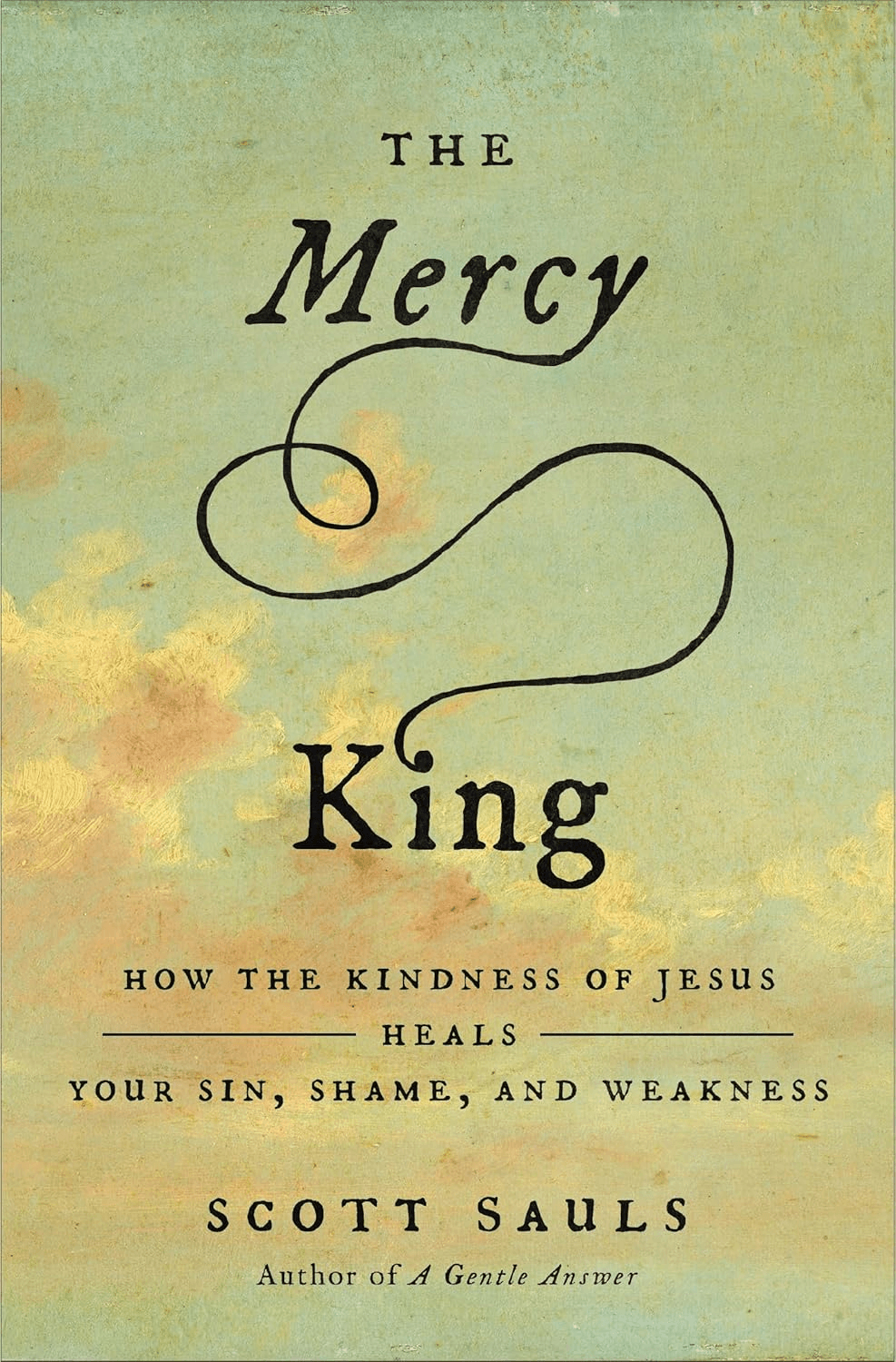
Taken from “The Mercy King” by Scott Sauls. Copyright © 2026. Used by permission of Zondervan.