Where Shame Says 'Keep Away,' God Comes Close
Toni Kim
4 min read ⭑
Think about a building that is condemned. It is beyond repair. The crisscrossing yellow tape sternly warns all who come near: Danger! Keep away! This place is beyond hope. Whether through neglect or vandalism or catastrophe, the building is now useless. Someone has determined that it is not worth salvaging; the only recourse is to condemn it to destruction.
Most of us have voices that make us feel rejected like that. For some of us, condemnation comes in our own voice: You call yourself a Christian, but if anyone ever found out x about you, they would know you’re a fake. For others, it can be our dad’s voice or our mom’s voice. It may be the voice of a stepparent, a sibling, a teacher, a coach — or even a pastor or church leader. There are voices that jeer at us and tell us that we will never amount to anything. They could include something someone said or did to you when you were in third grade that still haunts you. Some of us feel condemned for big, horrendous things, but it is remarkable how often we feel condemned for things that seem insignificant.
Condemnation and conviction are not the same, and we need to learn to discern the difference. There is overlap between them, but we must differentiate them. There is no condemnation for us who are in Christ Jesus, but that does not mean our sin is no big deal. When we sin, we must repent. We need the Holy Spirit to convict us of our sin, so that we can repent and receive forgiveness, cleansing and restoration. When we feel rejected for something that is not sin, like having a heart attack, this is clearly not of God. This is unhealthy shame that we can reject.

YW Studio; Unsplash+
Godly Versus Worldly Sorrow
This is how Paul describes the differences between condemnation and conviction:
Even if I caused you sorrow by my letter, I do not regret it . . . because your sorrow led you to repentance. For you became sorrowful as God intended. . . . Godly sorrow brings repentance that leads to salvation and leaves no regret, but worldly sorrow brings death (2 Cor. 7:8-10, NIV).
Sorrow can be godly or worldly. One results in repentance, and the other in death. Paul’s letter hurt his readers — “but only for a little while” (2 Cor. 7:8, NIV). The repentance of the Corinthians made it clear they had a godly sorrow. Very often, our shame has nothing to do with sin at all. When that is the case, the sorrow we feel does not require repentance, because there is no sin for us to repent of. Here, Paul was talking about a situation that did require repentance from sin.
When sin and our feelings of shame overlap, we need the Holy Spirit to convict us of our sin. This conviction of sin tends to be specific, pointing out what we did or neglected to do that was wrong, hurtful or dishonoring to God or to one made in his image. It is also always coupled with an invitation to confess our sins and to be cleansed and restored. Conviction leads us to repentance without regret and keeps our focus on what a great Savior Jesus is. Conviction is the healthy shame that leads to repentance and restoration.
By contrast, condemnation is a type of unhealthy shame that keeps the focus on yourself and how bad you are. Usually, those accusations of sin are very general, like You’re a selfish jerk, or You think only of yourself, or You are a hypocritical Christian. There are often nuggets of truth, but they become totalizing indictments. Rather than pointing you to hope, Satan makes global allegations that cause us to spiral in upon ourselves, internalizing our failures and sense of unworthiness.
“When we are at our lowest, when our hearts and spirits are broken, God rescues us and carries us close to his heart.”
This is the true litmus test: Where is the focus? Sometimes we think the Holy Spirit is convicting us of how bad we are, and we spiral down into self-hatred and loathing. Does that sound like God’s will for you? Or does that sound more like someone who wants to keep you from hearing the voice of the Good Shepherd? The Holy Spirit does not condemn us. We need to stop accepting the condemning voice of the stranger. “Resist the devil, and he will flee from you” (James 4:7, ESV). Instead of letting our thoughts imprison us in self-recrimination, we can echo Jesus: “Get behind me, Satan!” (Matt. 16:23, ESV). Sin does not get to define who we are or condemn us to be stuck in negative, unhealthy shame.
The Voice of the Good Shepherd
Some of our struggles with shame can be overcome by simply remembering certain truths, like the fact that things out of our control are not cause for shame. Other times, we need repeated assurances from God of his unconditional love for us. We need to remember that Jesus the Good Shepherd laid his life down for us. He took the condemnation that we deserved, and instead clothes us with his righteousness, the robes that mark our inheritance as God’s beloved children and heirs.
The prophet Isaiah shows the tender care of God: “He tends his flock like a shepherd: He gathers the lambs in his arms and carries them close to his heart; he gently leads those that have young” (Isa. 40:11, NIV). God our Shepherd actively seeks after us: “I myself will tend my sheep and have them lie down. . . . I will search for the lost and bring back the strays. I will bind up the injured and strengthen the weak” (Ezek. 34:15-16, NIV).
The Good Shepherd has a tender spot for the lost, injured and weak. He is “close to the brokenhearted and saves those who are crushed in spirit” (Ps. 34:18, NIV). When we are at our lowest, when our hearts and spirits are broken, God rescues us and carries us close to his heart.

Toni Kim is the director of spiritual care at the National Association of Evangelicals. Previously, she served over 20 years as a pastor in Vancouver and Boston.
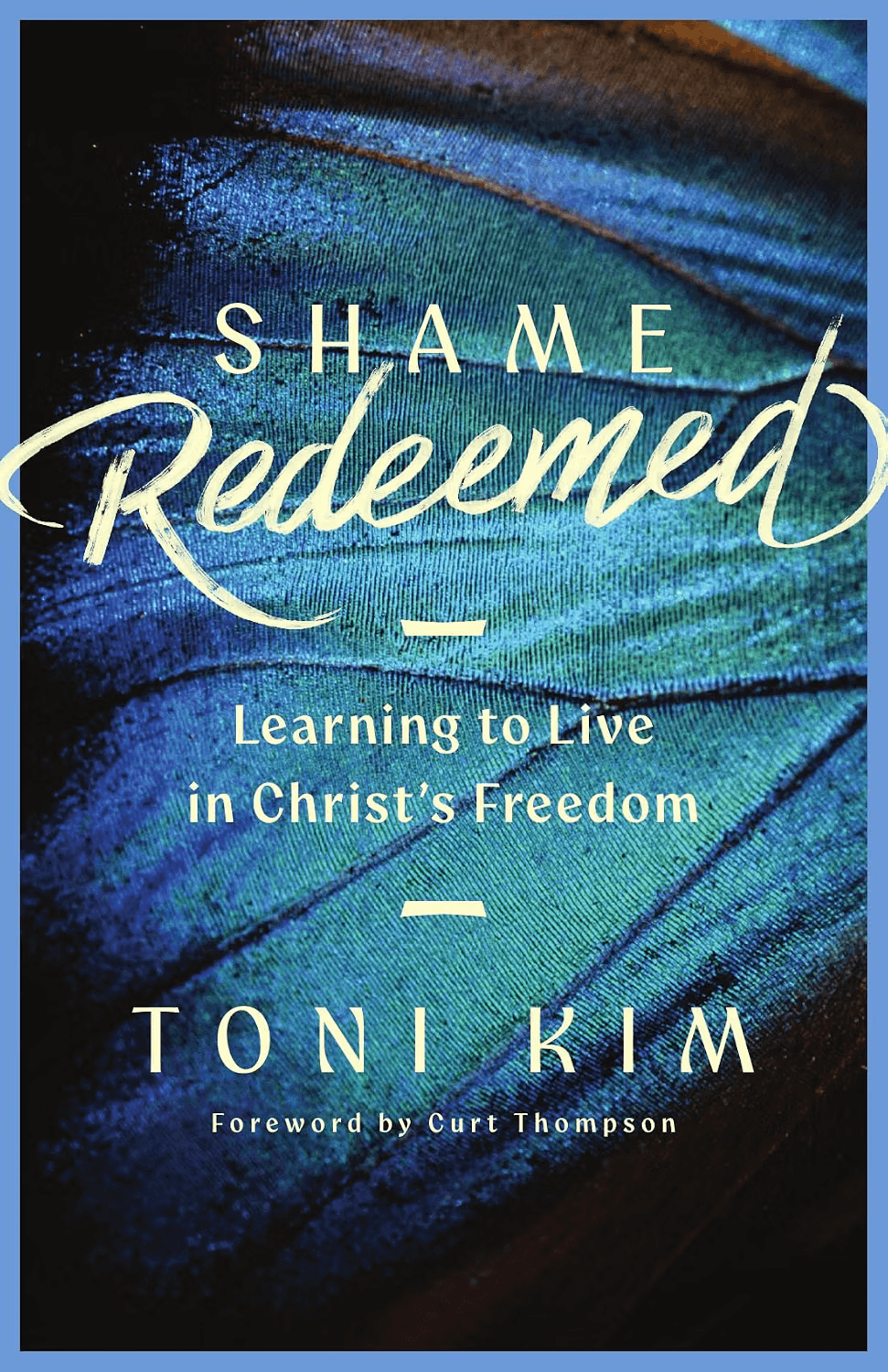
Adapted from “Shame Redeemed” by Toni Huang Kim. Copyright © 2026. Used by permission of InterVarsity Press.