Miracles, Order, and the Hand That Holds Both
JD Lyonhart
12 min read ⭑
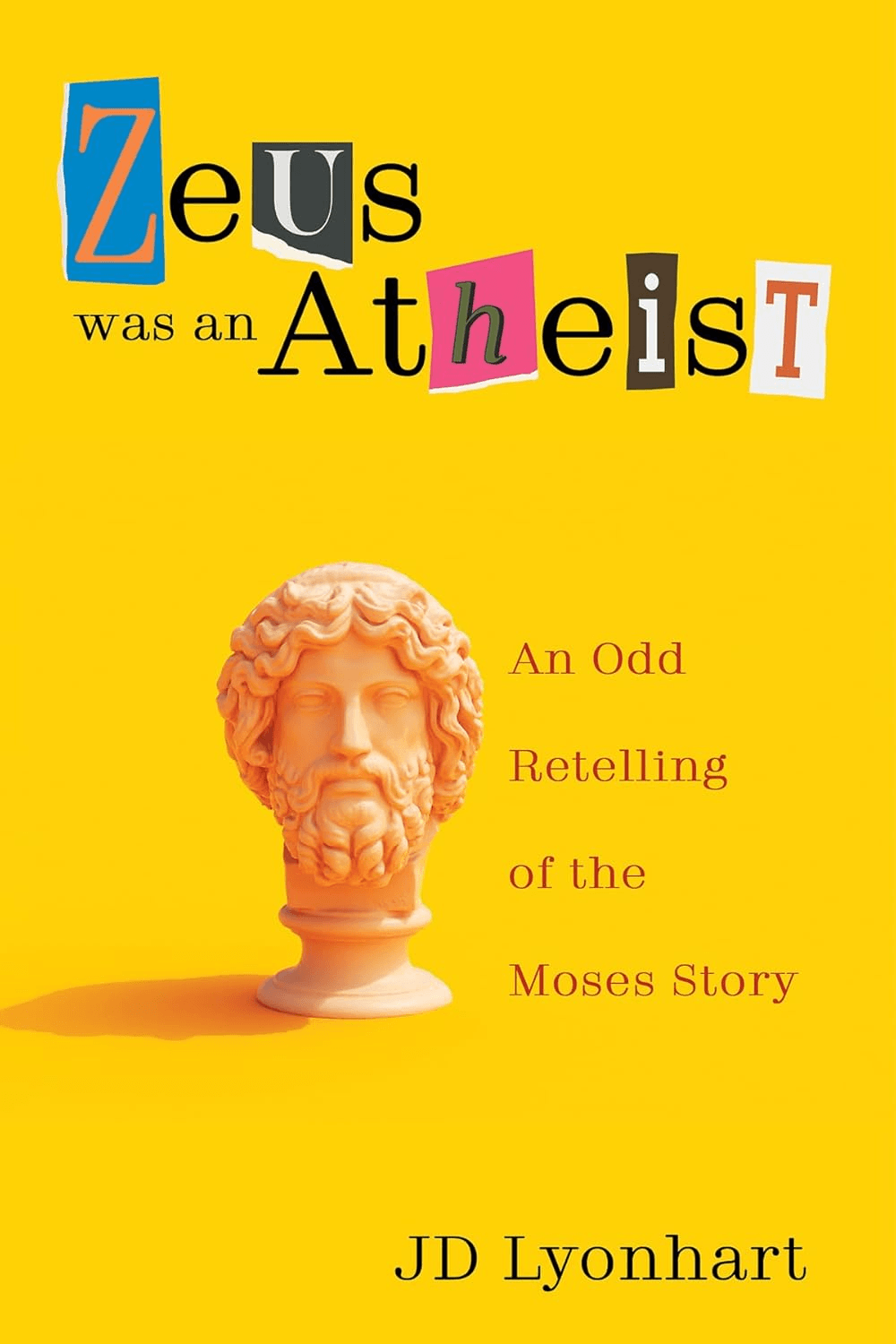
This excerpt is taken mid-story from “Zeus was an Atheist: An Odd Retelling of the Moses Story,” a creative retelling of Moses’s life from his perspective. Here we find Moses reflecting upon his childhood and the gods of Egypt.
Ten plagues. Ten miracles. Ten reasons to let us leave.
The cost of holding tight to our reins became too great, and so the Egyptians finally let God’s people go.
Dawn brings rejoicing in the slave camps, as we gather what little we have — food, clothing, tools, heirlooms — in whatever carts we have, leaving the homeland of our oppressors behind.
Thousands stream through the streets, finding confidence and elation in our now-visible numbers. Long had the vastness of our population been a source of hushed fear, for we knew all too well what Egypt does to the newborn sons of those minorities who become too many. But not today — today we stroll out the city gates with pride that the children of Abraham have become as numerous as the stars in the sky. The twelve sons that came down to Egypt centuries earlier now leave as twelve tribes, walking side-by-side.
However, not all our tears spring from joy. Even an oppressed people may come to love the land of their oppressor. Egypt has been our home for centuries, with the same family of slaves often living in the same mudbrick shack or on the same street for generations. Many have never even left the city before, and would not know East from West without the pyramids to dot and define their horizons.

JD Lyonhart
Looking back now as the last of those pyramids dip beneath the sand dunes, I feel a twinge of sadness, the same sadness I’d felt as a younger man fleeing Egypt for Midian. Even now, I still feel small before their stature and awed by their heavenly height.
The tallest of them reaches nearly 500 feet, requiring decades of construction, planning, and calculations. I’d learned all the details during my education in the royal household; I’d learned how humanity used things called fractions, squares, right angles, ratios, and grids to help pierce sky.
And how fantastic is it that these mathematical marvels, dreamed up in an architect’s mind, actually work in the material world?
How amazing is it that reality is rational — that systems of abstract numbers and concepts whirling about in the human mind so perfectly parallel nature?
How unbelievable that a mathematician, standing at the base of the pyramids, can know their height from angles, ratios, and equations alone, without ever needing to go up and actually measure it with a rod.
How remarkable that Egyptian astronomers can calculate where the moon will be 700 days from now, and how long a moonlit shadow the pyramids will cast, for night is one with their geometry.
The Egyptians see the pyramids as testaments to their own brilliance, but those peaks draw the eye upward to something greater still; to the mathematical structure, logic and intelligence that permeates all things. Our mental reason maps onto material reality — the world is shaped like a thought.
* * *
With the pyramids well behind us, we recede further into the unknown, eventually coming to the shores of the Red Sea. Yet no sooner have we left Egypt than Egypt comes roaring to us.
A thundering erupts from back whence we came, and we pause to count and wait for a lightning that never strikes. The elderly begin to groan first, for they know the thundering of chariots better than anyone; they know that Egypt will never freely give this freedom sought. Pharaoh will never stop milking his prized calf, nor let it simply wander off. It’s either return to the fold or face the slaughter.
Hooves beat and hills tremble and children cling to withered knees that long to buckle. Mothers begin to wail for their children, children look to their fathers for hope, and their fathers do nothing but shudder. Shudder and look to me.
“Do something, Moses!” they wail, as if I were the one in control. “You got us into this mess to begin with, Moses! Were there not enough graves in Egypt, so you brought us here to die? You should have let us stay in Egypt!”
Enemy behind us, sea before us, everyone looks to me. And I look to God. For if you cannot look behind you, nor in front of you, then all you can do is look up.
A cool breeze begins to drift in, picking up salt and sand and speed. We feel it in our chests and upon our brows, hair flapping up and everywhere. Gusting, it gathers into a wall of wind, making our carts wobble back and forth on their wheels and the animals buck and brey in fear.
The sea itself soon sloshes back and forth, as if stirred by an invisible hand in the night. Those waves usually rise and fall, but now they’re only falling — down, down, down, undressing that sea bottom, glimpsed only by long-drowned sailors.
God clefts the Red Sea left from right, gap-toothing Poseidon. I AM does the impossible and insane and miraculous with what is.
At first, petrified, we peer but dare not venture into that newly shallowed ground. Yet the roaring of hooves and chariots behind soon jars us back. We have no choice. Walk through water or bleed out on the sand.
We begin trudging through, initially trying to bring our carts and belongings, then giving up and abandoning them on the harsh, uneven seafloor. We cannot take anything with us on this journey.
Reeds, rocks, crabs and corals line the depths, along with old sunken ships, whale skeletons, untold trinkets and treasures, and pieces of fallen trash from ships above. Floating nearby are dolphins, sharks, squids and monsters that don’t yet have names. Occasionally, a fish swims too close, slipping through the walls of water out into thin air, plummeting hundreds of feet down on top of us.
The moon’s reflection bounces back and forth between those walls of sideways water like a hall of mirrors.
Yet we have little time to gawk with wonder, for Pharaoh and his men have also descended into the deep. The sound and fury of their moist stomping carries well along the water walls, quickening our pace and heartbeats.
We’re running now, sprinting through the final reeds, desperate to make it out before dawn, before Pharaoh catches up and dashes our children against coral and rock. I keep up the rear, partially to make sure no one is left behind, and partially because I’m eighty, exhausted, and leaning more than ever upon my sinking staff.
And as the last of us stumbles breathless upon dry land, the wind and the waves fall down upon Pharaoh’s army, seconds before their swords would have surfaced and fallen upon us all.
Chants of “Miracle! Miracle!” echo round from my fellow Jews, as I, hyperventilating, collapse upon the earth.

My face slaps wearily against moist sand, one half of my lungs filling with air and the other with salt water, until I turn and vomit the sea.
Cheek to cheek with the shore, I glance sideways at a horizon that, from this angle, no longer looks horizontal but vertical.
Seeing the planet at a slant, I watch my fellow Jews seem to walk sideways along the shore like horizontal bats.
Amidst this weary, cockeyed daze, I begin to wonder: why doesn’t everything just fly off into space? What holds us to the earth like a mother to her breast?
What stops the tide from rising all the way up to heaven? Indeed, from this sideways angle, blue sky is no longer up nor Red Sea down. Rather, one has become a wall on the left and the other on the right, meeting in the middle like a standing kiss yet making no further advance.
Why does this sideways ocean stay walled on one side, instead of spilling over and filling the sky? What hidden spirit keeps it at bay? What power, unbeheld, holds everything else in place?
Why do we call it a miracle when God holds back the Red Sea east from west, yet not when daily up from down? Is not the latter, as a constant and consistent act, the truer showmanship of strength? Anyone can lift a water bucket for a moment; the more impressive feat is to do it all day without stopping.
I’ve often conceived of God’s involvement in the world as a disruption of the natural order. God is where nature isn’t — miracles are matter interrupted. Yet what if God’s reason and structure and design are seen not merely in his interruptions, but in that which he interrupts?
They say it’s a miracle if a soothsayer levitates, yet is not the greater miracle the natural laws by which she usually clings to the earth?
They say it’s a miracle when Set or Zeus randomly throws lightning bolts, but is not the greater marvel the consistent and seasonal cycles of rain, sun, steam and cloud?
“What is this reason that reigns even when there’s no world to reign over? What is this thoughtfulness that thinks before any matter was yet born to be thought about?”
They call it a miracle when a comet rips the sky, yet is not the more cosmic marvel the very constancy of the planets in their yearly circles and stride?
They say it’s divine wrath when a tsunami breaks, or an act of God when the seas part. But is it not more astounding that the tides rise and fall every day without fail, or that the Nile floods and impregnates the land each year with fresh harvest?
Perhaps God’s handiwork is seen not only in interrupting the natural order, but in that there is such an order to begin with. Interruptions can help a conversation along, but you can’t build a whole conversation out of them.
We take for granted that things make sense, but it is perhaps the most baffling thing of all. Violations of natural law may be awesome to watch, yet it’s the very existence of such laws that truly point to the need for a lawgiver.
Yes, God parted the Red Sea, left from right, but he’s also the one parting it up from down, ever before and after that day. God can miraculously mess with the order of things, but he’s also the one who rended order from the mess to begin with.
Unpeeling myself from my sand puddle, I rise to my feet, head to the front of the crowd, and take back the reins, leading the people onward to the promised land. These first hours on the other side of the sea are exhausting but full of collective energy and excitement from the night’s events.
Yet, it only takes a few days in the desert for our initial high to come back down. Our legs soon grow tired from traveling all day with no place to lay our heads at night. Food in the desert is scarce and water scarcer. A mild grumbling begins to grow in the background, with many starting to act irrationally and in self-interest.
I reassure the people, reminding them that God just parted a sea before our very eyes — surely these new concerns are nothing he can’t handle.
“Let him handle it then!” they retort, “Make God perform another miracle! Let bread and water appear!”
And God does perform miracles. Repeatedly. Over and over, the people are provided for in the desert. Yet the only thing as constant as the miracles is their grumbling, for barely have their stomachs been filled and gullets wet before they turn to the next day, the next meal, the next thing they want and demand and need.
Some even contemplate returning to Egypt and to the stability of bondage. Others question the miracles, calling them hallucinations or mirages — a false oasis in the desert. Others still wonder whether there is any divine plan or higher intelligence at all. And the desert feels like a good place for such questions — a seemingly chaotic wasteland, with little life or structure amid random configurations of dust brushed round by even more random winds.
Perhaps that’s why, surrounded by desert sand, parts of Egyptian mythology came to suggest chaos reigns over all. Every night, the serpent, Apep, symbol of chaos and darkness, threatens to swallow up the sun God Ra once and for all.
In fact, many believe that chaos existed before intelligence; that raw matter was here before any mind. Some say all that was in the beginning was material disorder, with intelligence only coming about later on, when thinking creatures sprang from the chaos.
And yet, even amid chaos, reason sings. For even if all that existed was sand blown aimlessly through an empty desert, logic would still prevent two pieces of sand from existing in the exact same spot at the same time. And if we knew all the variables there were to know, the movement and trajectories of that sand could be charted mathematically. And when one dust particle collided with another, the rational laws of cause and effect would still decide their scrambled fate. So even this desert follows the laws of logic — chaos is no more chaotic than a child running wild within the structured order of her crib. Reason does not desert any part of her creation.
In fact, logic and reason must have existed long before this unruly desert, and even long before the universe and matter itself. How do I know that? It’s simple, really.
You see, before matter existed, did matter already exist? No, of course not, that’s ridiculous — something cannot exist before it exists, you say. Something cannot both be and not be at the same time and in the same. That’s just basic logic.
Good, so you agree with me then that the laws of logic applied even before the material universe began? Otherwise, matter could have existed before it existed. Which may be illogical, but that’s only a problem if you assume logic exists even when the physical universe does not. Which means reason governs, even when there is no matter to govern. Before the universe was, logic IS. There are things deeper than matter; ancient laws born before the land.
What is this reason that reigns even when there’s no world to reign over? What is this thoughtfulness that thinks before any matter was yet born to be thought about? What is this cosmic intelligence?
Such thoughts are perhaps why, in contrast to Egyptian and Greek mythology, our Jewish story does not say that in the beginning was material chaos or dust swirling in a desert abyss.
Rather, in the beginning, the divine intellect spoke the world into existence. God said, “Let there be light,” and there was light. God said, “Let the waters teem with life,” and there was life.
For language is thought made audible — language is that which is in our minds slipping out into the world for all to hear. Words are the child of the mind, forged in the womb of thought, which may be why to think of something is to conceive it. In the beginning, divine thought became word, and through the word all things were made; through the divine language of logic, the syntactical structure of reason, and the grammar of mathematics.
But if, instead, we imagine the gods born from cosmic chaos, then at the heart of existence lies not divine intelligence but desert sand and dust swirling in the dark, and we should all be atheists.
And if we only imagine the gods as born within a broader and already intelligent cosmos, then we lose sight of the one who is that primordial intelligence itself. If there is a rationality higher than God, then that rationality must be the true God.
And if we imagine the gods solely as miracle workers interrupting comic order and regularity, we fail to see them as the very source of that order and regularity to begin with. Fail to see their presence in both the plagues and in the very pyramids that they plague, both in the miraculous parting of the sea and in its more daily sloshing.
And if we imagine the gods as finite minds trying to forever outwit one another — as Thoth or Athena at war — we miss the one who is Mind itself, the one whose thoughts structure reality, speak existence and give orders to the dawn.
The I AM who is not only Being but also Reason itself.

J.D. Lyonhart is a British-Canadian theologian, philosopher, author and ordained minister. He is an associate professor of religion and philosophy at the University of Jamestown, a fellow at the Cambridge Center for the Study of Platonism at Cambridge University and a co-host of the Spiritually Incorrect Podcast. In addition to The Journey of God: Christianity in Six Movements, he also authored Space God: Rejudging a Debate Between More, Newton, and Einstein, as well as MonoThreeism: An Absurdly Arrogant Attempt to Answer All the Problems of the Last 2000 Years in One Night at a Pub.
Taken from Zeus was an Atheist: An Odd Retelling of the Moses Story by JD Lyonhart. Copyright © 2026. Used by permission of Cascade.