
Kensi Duszynski
10 min read ⭑

“The mission throughout my vocational life has been to help people of faith grow as individuals, do relationships with intention and live mutually empowered, purposeful lives.”
Kensi Duszynski has spent two decades helping couples and individuals strengthen their relationships. As a therapist, coach, writer and ministry leader, she regularly shares about marriage, family legacies and mutuality. She’s also the host of the “Brave Marriage Podcast” and author of “The Roles We Play,” in which she shares her story of growing up in the evangelical community and how its views of marriage impacted her. She shares some of her insights below as she answers Rapt’s standard eight questions with honesty, humor and empathy. Read on to see what her favorite meal says about her, how she escapes the anxiety-perfectionism-burnout cycle and how she’s finding renewed passion through creative writing. We hope her words inspire you.
QUESTION #1: ACQUAINT
Food is always about more than food; it’s also about home and people and love. So how does a go-to meal at your favorite hometown restaurant reveal the true you behind your web bio?
There are so many good local restaurants in Lexington, Kentucky, but I’d have to say my favorite is J. Alexander’s. It’s an upscale-casual restaurant with Frank Lloyd Wright-inspired architecture and a midcentury modern vibe.
My husband, Evan, and I usually end up there on our anniversary and on special occasions. When we dine in, the servers are always professional and polite. The dimly lit atmosphere and oversize, candlelit booths make for a warm and intimate environment.
My favorite meal on the menu? The Tillamook cheeseburger and shoestring french fries. Like I said, upscale-casual. Perhaps this reveals that my taste for design is more refined than my taste for food.
Jonny Gios; Unsplash+
QUESTION #2: REVEAL
What “nonspiritual” activity have you found to be quite spiritual, after all? What quirky proclivity, out-of-the-way interest or unexpected pursuit refreshes your soul?
Really, is anything we do nonspiritual? I had a professor in college who repeatedly said, “We are biopsychosocial-spiritual beings.” That’s a helpful frame for me to remember that all areas of life are interconnected and impact all other areas of life. That said, the two “nonreligious” activities I love most are bird-watching and belly-laughing with friends and family.
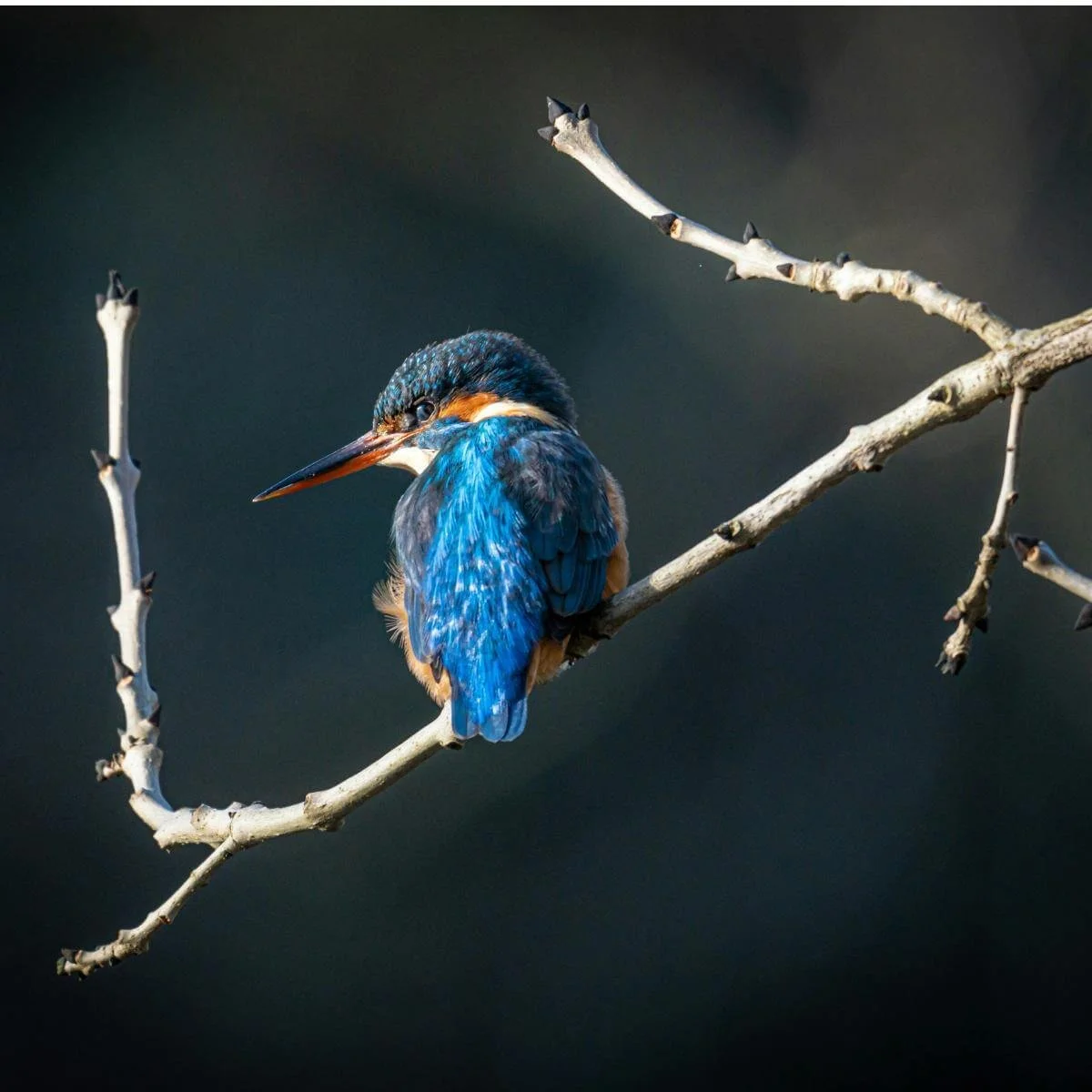
I started contemplatively bird-watching in 2020, when the world outside was quiet yet bursting with spring. Something about watching songbirds at our birdfeeders centered and grounded me in that season, reminding me that life was good and that things were going to be OK. There are such beautiful colors and varied species in our own backyards. These days, I don’t see or hear birds without the Spirit bringing to mind, “Look at the birds of the air” (see Matt. 6:26, ESV). It’s a life-giving practice to feel the peace of God settle into my nervous system.
The other everyday activity that brings me joy is belly-laughing with friends and family. We could be telling stories, singing karaoke, playing games, watching my niece and nephews act silly — whatever. I feel such delight, and so myself, when I’m laughing with others. I just returned from my doctoral cohort week, where my housemates and I made dinner on two different nights and enjoyed the company of friends. We ate dinner on the screened-in back porch and talked and laughed for hours. A cheerful heart really is some of the best medicine.
QUESTION #3: CONFESS
Every superhero has a weakness; every human, too. We’re just good at faking it. But who are we kidding? We’re all broken and in this thing together. So what’s your kryptonite, and how do you confront its power?
Recently, I used the acronym “APB” to describe the pattern I struggle with the most. APB stands for Anxiety-Perfectionism-Burnout. While people who newly meet me describe me as a calm presence, I can also sometimes feel paralyzed by social and existential anxieties (i.e., Am I liked? Wrong? Less-than? Will I ever overcome my neuroses to make the difference I want to make?). The way I try to quell these anxieties is with the broken logic of perfectionism: If I’m perfect, then no one can critique, criticize or condemn me — and then all my anxieties will go away. Of course, this is not true. It simply keeps me stuck in an unhealthy pattern of heart, mind and soul, whereby I resist the very thing that needs to be gently addressed — the wounds, fears and false narratives that keep me in hiding. Eventually, all this undue effort trying to solve for things I can’t control leads to burnout. My perfectionism crosses over from helpful protection to frozen paralysis to sheer exhaustion.
I was in my late 20s the first time my long-used coping strategy stopped working. I reached the end of my self-effort. It was scary at first. But from that place of depletion, Jesus met me in my humanity, was gracious and compassionate with me and began to teach me how to be more gracious and compassionate with myself. I am still learning to rest and receive from him, but the more I do, the more I trust him to tend the tender parts of my heart and soul.
At this point in my life, the gift of intimately knowing this pattern is being able to catch it sooner, do some journaling and patio sitting and practice choosing presence over perfecting things to death. I am still unlearning and relearning, but it’s a grace to me when I’m able to give out of the overflow of who I am instead of withholding out of fear of what I am not.
QUESTION #4: FIRE UP
Tell us about your toil. How are you investing your professional time right now? What’s your current obsession? And why should it be ours?
The mission throughout my vocational life has been to help people of faith grow as individuals, do relationships with intention and live mutually empowered, purposeful lives. I’ve done this through therapy, coaching, podcasting, pastoral care, teaching and writing. But in my work, I’ve noticed that, for most people, experiential learning/unlearning/relearning is key to embodying emotional, relational and spiritual health. It’s not for a lack of desire or want-to that we don’t change for the better; it’s that our brains and bodies don’t yet believe that “the better” is going to be for our good.
When I look at the teachings of Jesus, I don’t see him telling people what to do or how to live their lives. I see stories. I see questions. I see him meeting people compassionately in their resistance. I see him honoring human agency and autonomy. I see teaching moments that compel or repel people, based on their desires and habits of heart.
With that in mind, my current obsession is creative writing. I love crafting essays and pieces that connect the personal human experience to the experiences of the reader. I love storytelling for its ability to bypass our intellectual defenses and natural resistance to new ideas. Take these interviews, for example. I’ve enjoyed reading what other interviewees have to say. Certain words and recommendations have lingered not because they told me what to do but because they were willing to share who they are, what they do, what’s helped them and how they see the world.
I had this in mind when I wrote my first book, “The Roles We Play: A Memoir of Marriage, Mutuality, and the Legacies We Inherit.” Written through the lens of my personal journey with marriage/gender roles in Christianity, it contains professional observation, theological reflection and social commentary on what can be a tough topic to broach. Through sharing my story in ways that resonate with readers, I’ve hoped to bring them along with me, create space to think for themselves and invite their own conclusions from a more thoughtful, relational and nuanced place.
QUESTION #5: BOOST
Whether we’re cashiers or CEOs, contractors or customer service reps, we all need God’s love flowing into us and back out into the world. How does the Holy Spirit invigorate your work? And how do you know it’s God when it happens?
Last week, I had the opportunity to teach empathy to a group of college-aged student leaders. As I did, it occurred to me that I was able to be fully present with them in ways I wasn’t as a younger teacher. I used to strive through my own efforts rather than letting the Spirit lead. But I’ve been through enough in life now to know that I don’t bring anything exceptional except that which the Spirit brings through me. It’s presence, not performance or competence, that others relate to and learn from. Scripture says that where the Spirit of the Lord is, there is freedom (2 Cor. 3:17, ESV) — so I know God’s presence and Spirit are with me when I experience freedom to care, be present, connect and come alongside.
QUESTION #6: inspire
Scripture and tradition beckon us into the rich and varied habits that open our hearts to the presence of God. So let us in. Which spiritual practice is working best for you in this season?
I’m a contemplative person by nature, so silence and solitude, in any form, return my attention to God. I love being in creation. A good sunrise, sunset, mountain range or lake scene always inspires me. But not until my adult life have I begun to pay closer attention to the beauty of everyday life all around me: the intricacies of flowers, the color of birds, the species of trees. In creation, I experience awe and wonder. I feel simultaneously in touch with my smallness and finitude and connected to something larger than and outside of myself. Plus, there are so many nature metaphors in Scripture that it’s hard to sit outside and not think of my go-to meditations: Psalm 1:1-3, Psalm 23, Jeremiah 17:7-8 or Matthew 6:25-34.
I have also journaled for as long as I can remember. I journal from my patio when it’s nice out and from my living room chair when it’s not. My journal entries consist of questions, fears, confessions, gratitude, dreams and desires. All of it is prayer.
QUESTION #7: FOCUS
Looking backward, considering the full sweep of your unique faith journey and all you encountered along the way, what top three resources stand out to you? What changed reality and changed your heart?
To borrow from the psychologist who said, “There is nothing so practical as good theory,” I believe there is nothing so practical as good theology — and nothing so theologically profound as good art.
1. “All My Questions” by singer-songwriter Bethany Barnard. Written in the wake of her own grief and mental health struggles, Barnard’s album delivers a message of faith without forcing resolve. She offers real questions, real wrestling and real hope without needing to quickly tie up Good Friday sorrow with an Easter Sunday bow.
2. “God Speaks Through Wombs: Poems on God’s Unexpected Coming” by pastor and poet Drew Jackson. It’s a book of poetry and theological reflection on Luke 1-8. Informed by his experience as a Black man and written from the prophetic tradition, Jackson’s turns of phrase return to my mind as a profound picture of the gospel narrative and a powerful witness to the liberating love of God.
3. “Art and Faith: A Theology of Making” by artist and author Makoto Fujimura. Drawing on the narrative arc of Scripture, Fujimura makes the case that we were created to participate in the restorative, generative, reparative act of making all things new. Using the Japanese art of kintsugi as a metaphor, he suggests that redemption and beauty do not come from things being made perfect but from broken, lament-worthy things being made true, right and new.
I know you only asked for three, but I’d be remiss not to mention the way the writings of David Benner, Henri Nouwen and Anne Lamott have impacted me. When I read their work, I feel permission to be more honest and challenged to be more like Christ.
Certain things can be godsends, helping us survive, even thrive, in our fast-paced world. Does technology ever help you this way? Has an app ever boosted your spiritual growth? If so, how?
Does the Merlin Bird ID app count?
No, honestly, I have tried various apps designed for spiritual growth over the years. For me, they just don’t stick or aid in my relationship with God the way that being off my phone does. The same goes for social media: When I deleted my accounts seven years ago, whatever I lost, I gained back a hundredfold in the return of my interior life. I’m calmer, clearer and more attuned to the Spirit when my phone is out of sight, charging in a different room or getting cleaned in its phone coffin (my UV-C light phone sanitizer).
I do use the Spotify and Substack apps regularly to listen to music, audiobooks and articles that enhance my study and spiritual formation. There are so many brilliant writers, thinkers and artists I wouldn’t otherwise have access to if not for these platforms. But even these apps I delete from time to time when I need a break and can feel myself inputting to buffer — when what I likely need is to move my body, move through some feeling Substack Notes has just triggered and give my eyes and brain a rest!
I could be wrong, but I think I’ll always be drawn to physical books, a physical Bible and sitting still with a pen and paper in hand.
QUESTION #8: dream
God’s continually stirring new things in each of us. So give us the scoop! What’s beginning to stir in you but not yet fully awakened? What can we expect from you in the future?
God is stirring so many things in me that haven’t yet been fully awakened. I know that by May 2028, I will have finished a Doctor of Ministry project that will include more creative writing. I know that I want to continue cultivating my writing craft and learning to live the kind of life that generates thoughtful, courageous art. Beyond that, I think some dormancy will remain, and it might be a while before new things bloom. I will be just as surprised as you are at what God does next.
It’s taken time and intense reflection for Kensi to grow her understanding of presence over perfection. “I am still unlearning and relearning,” she says, “but it’s a grace to me when I’m able to give out of the overflow of who I am instead of withholding out of fear of what I am not.”
Can you relate? Psalm 139:14-15 says, “I praise you, for I am fearfully and wonderfully made. Wonderful are your works; my soul knows it very well. My frame was not hidden from you, when I was being made in secret, intricately woven in the depths of the earth” (Ps. 139:14-15, ESV)
Ask God today what parts of yourself — your heart, your mind, your passion — you might be withholding from others out of fear. Where might he be stretching you to give out of the overflow of how he expertly designed you?
Kensi Duszynski is a licensed marriage and family therapist and doctoral candidate studying spiritual formation and relational neuroscience. With a heart for the local church, she’s served her community as a therapist, coach, writer, educator, business and ministry leader, and host of the Brave Marriage Podcast. She is the author of The Roles We Play: A Memoir of Marriage, Mutuality, and The Legacies We Inherit. Kensi and her husband, Evan, are deeply rooted Kentucky natives.