
11 min read ⭑
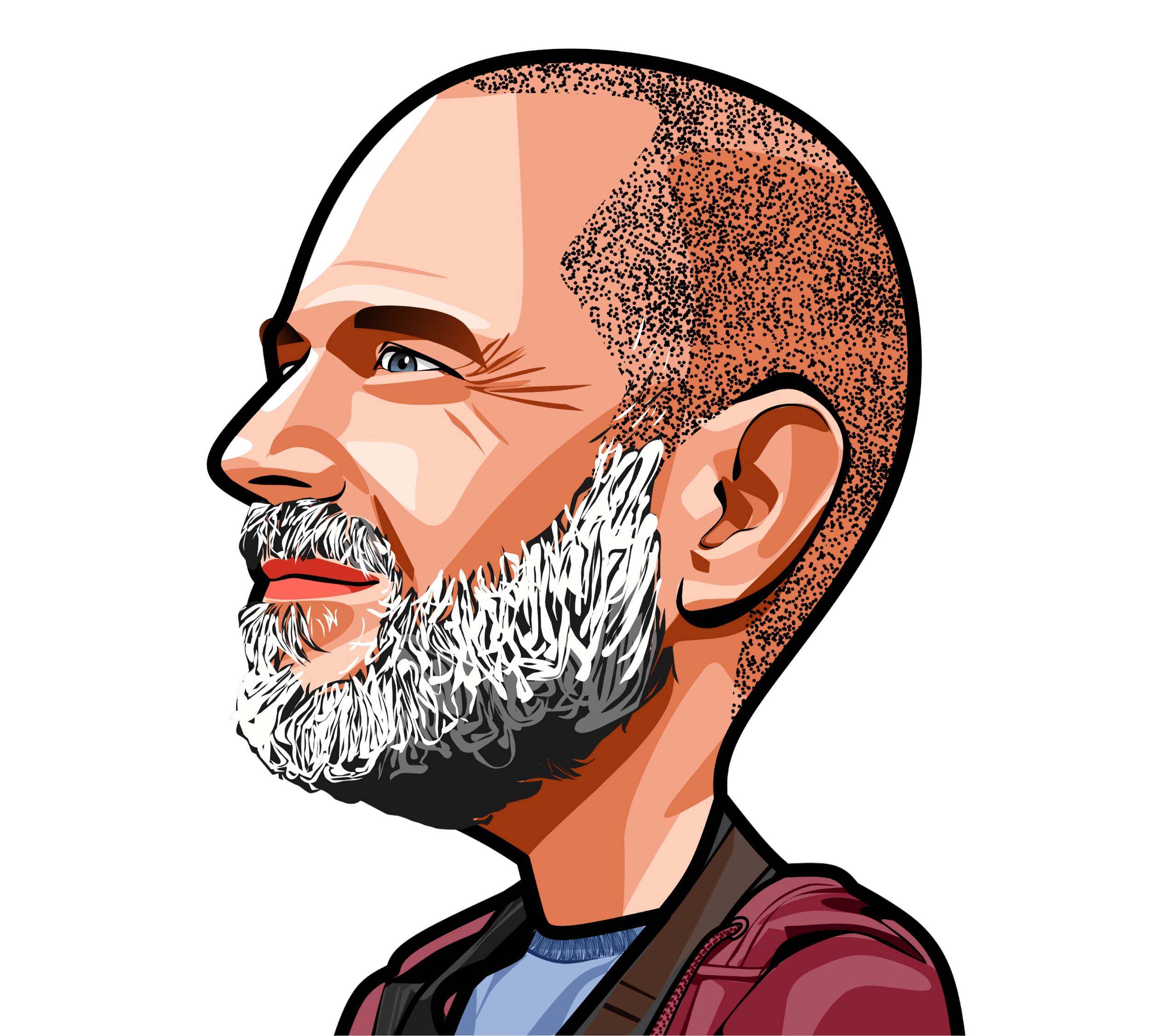
“As a writer, my work has centered on many subjects, from Ironman triathlons to soil to birding as a spiritual practice. At the heart of all of that work, however, has been a desire to reconnect our embodied lives with the life of God and the whole of creation.”
Ragan Sutterfield has been birding since childhood, so it’s no surprise that his work as a writer and Episcopal priest revolves around reconnecting the body with the earth and its Creator. In addition to writing for publications such as Christianity Today, Sojourners and The Christian Century, he’s also written five books, including “Cultivating Reality,” “This Is My Body” and his latest release, “Watch and Wonder: Birding as a Spiritual Practice.” In today’s interview, Ragan shares his favorite place to get locally sourced meals, his battle with the idol of impatience and his growing fascination with natural burial practices that make the reality of death — and Jesus’ victory over it — more concrete. This conversation happened for Rapt. You’ll only find it here.
QUESTION #1: ACQUAINT
Food is always about more than food; it’s also about home and people and love. So how does a go-to meal at your favorite hometown restaurant reveal the true you behind your web bio?
Whenever I have the chance to bring a guest out to a meal, I take them to The Root Cafe in Little Rock, Arkansas. I’ve been friends with the owner, Jack Sundell, for years, and I watched as he slowly and carefully fulfilled his dream of opening a restaurant that serves dishes made with locally grown ingredients. They have the best burger in town, and it is all the more delicious because I know exactly where the beef was raised. Although it is a business, Jack opened The Root as though it were a community nonprofit. He started with investment from friends and family rather than taking out a traditional bank loan.
The furniture is eclectic, gathered from garage sales and thrift stores. The art on the walls is all from local artists, and one piece was even painted by my wife at a community event. The Root has a special place in our story because before they even had a restaurant, The Root catered our wedding at the church where I now serve as a pastor.
The Root is the kind of place where any visit is likely to include seeing someone I know. I’ve lived in Little Rock off and on for most of my life, and people from all walks of life who love this place love The Root because it represents something of the soul of the city.
Doncoombez; Unsplash
QUESTION #2: REVEAL
What “nonspiritual” activity have you found to be quite spiritual, after all? What quirky proclivity, out-of-the-way interest or unexpected pursuit refreshes your soul?
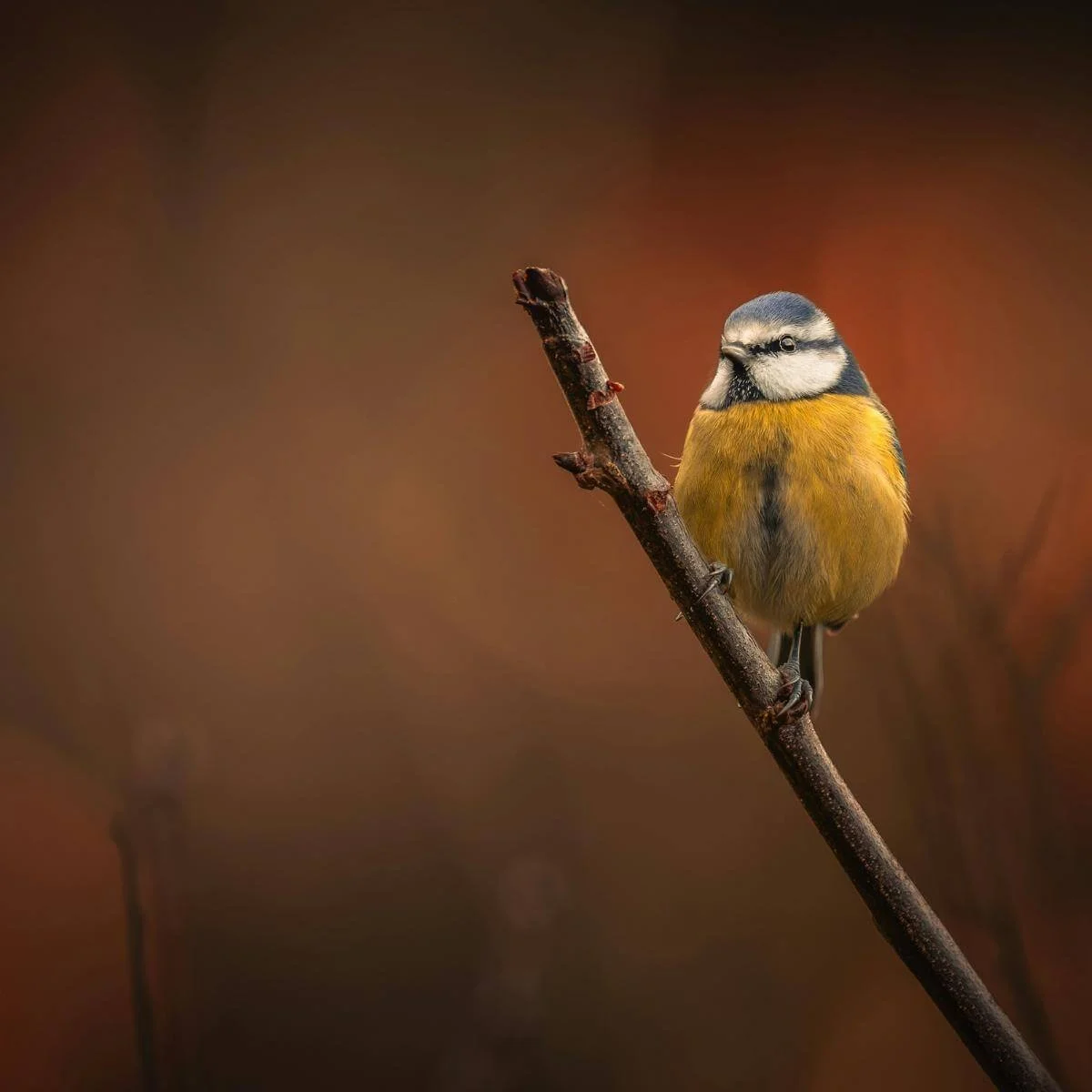
Since I wrote a whole book about it called “Watch and Wonder: Birding as a Spiritual Practice,” this feels a bit like cheating, but birding has been my surprising spiritual practice. I began watching birds seriously when I was young, so it was many years before I began to think about my time looking for birds in the woods and fields as something soulful.
As an adult, however, I couldn’t help but see that the wonder and awe I felt in the presence of birds was a call to prayer. I spend a lot of time with words, reading, writing and listening to people work through their emotions and spiritual wonderings. When I bird-watch, I’m able to step away from words and be present to the world in an immersive way that helps me forget myself and my worries. I’m able to simply be there, in that forest or field or mudflat, watching for motion, looking for the subtle difference in plumage that will separate one species from another, listening for the chirps and warbles that will reveal a bird hidden from view.
When Jesus calls his disciples to look to the birds, I think it was more than just to learn a metaphorical lesson about God’s provision. I think Jesus knew that if we look at birds, we can be pulled out of ourselves and into the grand community of creation. That, I think, is the best work a spiritual practice can do.
QUESTION #3: CONFESS
Every superhero has a weakness; every human, too. We’re just good at faking it. But who are we kidding? We’re all broken and in this thing together. So what’s your kryptonite, and how do you confront its power?
My weakness is impatience, which is often accompanied by anger. This would be a surprise to most people who know me because I come across as a very chill and relaxed person. But I am bad at waiting, and when things don’t work or move along at the pace I want them to, I turn to anger, even if I only express it internally. Sometimes that’s in traffic, sometimes at the self-checkout in a grocery store, but wherever it arises, I know it is doing my soul no good.
I read a line from the philosopher Derrida where he said that impatience is idolatry. That really stuck with me. I preached on the golden calf story in Exodus one Sunday recently, and I realized that impatience and idolatry were tied up closely there. Moses was slow to come back from Sinai, so the people responded with impatience and insisted on creating their own god.
I haven’t cast any golden calves lately, but when I’m unable to wait, I do often try to make things happen. In every instance in my life when I’ve done that, it has ended in failure. What I’m working on now is answering the call so common in Scripture to “wait on the Lord” (Ps. 27:14, NKJV). It is not easy, and I’m not very good at it. The danger of preaching on patience is that you’ll be held accountable. Ever since I preached that sermon, my family has been ready to remind me of it. “What was that sermon you preached?” they’ll say when they see me beginning to be impatient.
As a practical discipline, I am leaning into contemplative prayer where I just sit quietly for 20 minutes. Just sitting before God is painful. I peek at the clock, and I get antsy. But I’ve done it enough to know that it is doing something in me, slowing me down to a more godly pace, which, if the Bible is to be believed, is a slow pace.
QUESTION #4: FIRE UP
Tell us about your toil. How are you investing your professional time right now? What’s your current obsession? And why should it be ours?
As a writer, my work has centered on many subjects, from Ironman triathlons to soil to birding as a spiritual practice. At the heart of all of that work, however, has been a desire to reconnect our embodied lives with the life of God and the whole of creation. You could call it incarnational or sacramental work.
Recently, my desire to reconnect body and earth has turned toward burial practices. I believe that the body matters, and that the relationship between the body and the earth that has sustained it through its life is important. I’ve become very interested in the natural burial movement, especially conservation burial grounds that allow for the body to be laid to rest in a minimalist way while also preserving the surrounding land for wildlife. I’ve had the chance to visit several of these burial grounds around the country and am now working to establish one in my home state of Arkansas.
There can be a tendency to abstract our lives from creation, and I believe that this form of burial, placing the body in the earth in a simple, direct way, can make the reality of death more concrete. When I think about my own death or the task of laying a loved one to rest, this is the kind of burial that most marks the sacred reality of the body for me. Earth to earth — humus to humus — is where my attention has been drawn in my recent work.
QUESTION #5: BOOST
Whether we’re cashiers or CEOs, contractors or customer service reps, we all need God’s love flowing into us and back out into the world. How does the Holy Spirit invigorate your work? And how do you know it’s God when it happens?
There is a passage from Thomas Merton where he says that many poets never become great poets because they are trying to be some other poet. The same, says Merton, is true of saints. We read about someone who inspires us, and we think that the task is to become like them by doing exactly as they did rather than following God’s specific call to us. My way of living this out has been to follow the often odd, unique combination of leanings God has given me.
My interests are all over the place, from birding to endurance sports to burial practices, and yet when I live into those leanings authentically, I find the energizing breath of God moving me. Still, I am tempted to look at someone I admire and think that I should become like them by doing what they do. The answer is to listen to the unique interests and callings God has given me and live toward them as best I can.
For instance, I am preparing to lead a group of unhoused folks on a birding walk. I’ve done this before, and they loved it! If I had tried to be like all the amazing people I know who provide food or medical care to those on the margins, I might have done some good, but I also would probably find myself burned out. Instead, by offering the unique leanings that God has given me for the sake of service, I’m able to offer something that is life giving and helpful to people beyond their basic needs.
QUESTION #6: inspire
Scripture and tradition beckon us into the rich and varied habits that open our hearts to the presence of God. So let us in. Which spiritual practice is working best for you in this season?
One pillar of my spiritual life over the past several years has been praying with the Psalms every morning. My wife and I start our day with coffee and conversation, and we always close that time by reading the Psalms appointed for morning prayer in “The Book of Common Prayer.”
Sometimes the Psalms are beautiful and just right. Sometimes they are downers, full of anger or doubt. But whatever the mood they are expressing, I’ve found that through frequently praying with them, I’ve learned how to speak to God with honesty and the whole range of my human emotions. It has been key to pray the Psalms appointed because if I had to pick and choose, I would miss out on this full range.
After we read the Psalms together, I usually head out to my writing shed for 20 minutes of silent prayer before I take my high school-aged daughter to school. This rhythm of Psalms and silence is a pattern I can see following for the rest of my life, with a variety of other practices coming and going amid these core practices.
QUESTION #7: FOCUS
Looking backward, considering the full sweep of your unique faith journey and all you encountered along the way, what top three resources stand out to you? What changed reality and changed your heart?
Reading has always been key to my understanding, and there are three writers who have influenced me more than any others: The first is Wendell Berry. I first read him in college and had the privilege of visiting him at his farm in Kentucky on a few occasions. The essay collection “The World-Ending Fire” brings together many of my favorite Berry pieces, and his poetry collection “This Day” is one I return to often.
The second is Stanley Hauerwas. Hauerwas is another major influence I’ve had the gift of meeting and conversing with over the years. His books “A Better Hope” and “Resident Aliens” have deeply shaped how I understand the church and Christian life.
Finally, Dallas Willard has been an immense presence in my life and understanding. I never met him in person, but I have read and reread his books many times over. “The Spirit of the Disciplines” and “Renovation of the Heart” have been the books I’ve returned to most often.
Certain things can be godsends, helping us survive, even thrive, in our fast-paced world. Does technology ever help you this way? Has an app ever boosted your spiritual growth? If so, how?
I try to be fairly minimalist in my use of technology, especially apps, but one app that has been very helpful for my family’s life of prayer has been Lectio 365. With the season of life we’re in with teen and preteen daughters, sitting as a family before bed and listening to the evening prayers on Lectio 365 has been a great gift. It took a little while to get into, but after almost giving up, our daughters started asking if we could listen to that “Scripture thing.” We take it pretty easy, and one of our daughters likes to draw while she listens, but it has been a rich practice to listen to the Scriptures together.
I also benefit from listening to audiobooks on a variety of apps. I love reading paper books and spend most of my reading time turning actual pages, but I also enjoy audiobooks. Oftentimes, I’ll listen to books I’ve read before as a way of reminding me of the key insights I’d gained years before. “The World-Ending Fire” by Wendell Berry, for instance, is a great listen (read by the actor Nick Offerman), and I’ve reread Dallas Willard’s books in audiobook form several times.
QUESTION #8: dream
God’s continually stirring new things in each of us. So give us the scoop! What’s beginning to stir in you but not yet fully awakened? What can we expect from you in the future?
If I really follow the threads, I’ve been working toward writing and ministry centered on death for a long while. Eleven years ago, I published a short theological essay on green burial, and it has been a growing interest ever since. I’m a person who hopes, absolutely, in the Resurrection, and I believe that Christ has defeated the powers of death. But because of that, rather than despite it, I think that death is something that we should embrace as a reality of our creaturely, finite lives, entrusting it to God.
I’m feeling led to write on death and the burial of the dead as a Christian practice through which we can honor creation and await God’s restoration of all things. Part of that work, as I mentioned earlier, might be creating a burial ground where the body can return to the earth naturally. But I am also, at heart, a writer and thinker, so publishing articles and perhaps a book on the topic will be likely as well. I don’t have a clear idea just yet on how it will all shape up, but I am enjoying the work in the meantime and look forward to where God will lead my efforts.
Ragan views birding as spiritual practice — an opportunity to connect with God and the world he created. But the practice has other benefits, too. Research shows that bird-watching lowers stress and anxiety, improves memory and attention, and helps combat loneliness.
And it doesn’t have to be birding. Other studies indicate that simply being out in nature and paying attention to the details around you can accomplish many of the same things. Clearly, God has designed our bodies and spirits to work in harmony as we draw closer to him. We worship him with both.
Ragan Suttefield is a writer and Episcopal priest serving a parish in his native Arkansas. His work has appeared in The Christian Century, Plough, Christianity Today, Sojourners, The Oxford American and Birding. His books include Cultivating Reality, This Is My Body, Wendell Berry and the Given Life, The Art of Being a Creature and, most recently, Watch and Wonder: Birding as a Spiritual Practice. He lives with his wife, Emily, and two daughters, Lily and Lucia, with a menagerie of animals both domestic and wild.