
Sarah Bessey
on Avoidance, Ordinary Holiness, and Unexpected Callings
Justin Camp
11 min read ⭑

“Few things have changed my life like the experience of the Holy Spirit finding that imaginary line that I’d somehow drawn between what is sacred and what is secular and just erasing that whole binary with a grin.”
Sarah Bessey has spent years wading into the hard conversations — feminism, justice, church hurt, biblical interpretation. Her books have hit bestseller lists. She cofounded Evolving Faith alongside the late Rachel Held Evans. Her Substack newsletter draws thousands of readers who show up for what she calls “atrociously long reads” on everything from the stories of Jesus to trees.
You’d think someone with that resume would be a natural-born fighter. A person who runs toward conflict.
You’d be wrong.
“My kryptonite is probably avoidance,” she told me. “I once heard it described as being someone who will drive for the whole journey on a flat tire rather than pull over and change the darn thing. I can pretend that things are fine to an almost mythical level.”
That’s not what I expected to hear. Here’s a woman who has spent her career saying hard things in public spaces. And her deepest struggle is around avoiding hard things?
But that’s what made our phone conversation so rich. Sarah isn’t doing this work because it comes naturally. She’s doing it because God called someone who would never have chosen it — and she said yes anyway.
Prairie Roots
I started where we always start at Rapt: with food. Why do we do that? Because food is almost always about more than just food. It’s about people and home and love — the most important things in life. So, in our attempt to get behind the web bio and spark conversation about these kinds of things, we ask our interviewees to tell us stories about their favorite meals. Here’s what Sarah told us.
“I am quite a homey sort of person, so much more inclined to cook and eat at home,” she said. “My husband and I both grew up in families that just didn’t go out to eat much, so that was our base code setting. It was always a major treat to ‘go out’ somewhere — and usually there had to be some all-you-can-eat element to make it worth the spend, you know?”
She and her husband Brian have four kids — one young adult, two teens, and a middle-schooler — and they sit around their secondhand kitchen table almost every night. She’s not a fancy cook, she said. Just a family home cook with a battered recipe box of old favorites from her grandmother and her mom.
“My favorite meals are, honestly, those weekday evenings with my family around the table, talking about homework and their plans, music or books. Sometimes it’s magical with laughter and connection; sometimes it’s mundane and quick, but it’s always important.”
Not a fancy restaurant story. Not a celebrity chef experience. Just a family showing up for each other, night after night.
Her prairie kid roots show up in her food, too. “I really love Saskatoon berry pies and jams,” she said. “When it’s berry season around here, my freezer fills up quickly.”
Kev Fuentes; Unsplash
Slender Antennae
When I asked about the “nonspiritual” activities that refresh her soul, Sarah rattled off a list that sounded wonderfully old-fashioned: daily walks, baking, puttering around her house, long drives, NHL hockey games (of course — she’s Canadian), piles of novels, and knitting.
I asked more about the walking. She goes four or five kilometers a day, rain or shine or Calgary winter — though she admitted that when it hits negative fifteen, she retreats to the dusty treadmill in the basement.
“The wonderful poet Luci Shaw once wrote about how she has a ‘slender antennae’ always combing the air for messages,” Sarah said. “Being outside daily, within the seasons in my neighborhood, watching the sky in the mornings or evenings, paying attention to the wild roses, the turning of the aspens or whatever is going on around me, is one way I keep my own little antennae up for the Spirit, I think.”
I’ve been thinking about that image ever since. Slender antennae, combing the air for messages. What would it look like to walk through your neighborhood that way?
She also mentioned knitting and how people often find it strange.
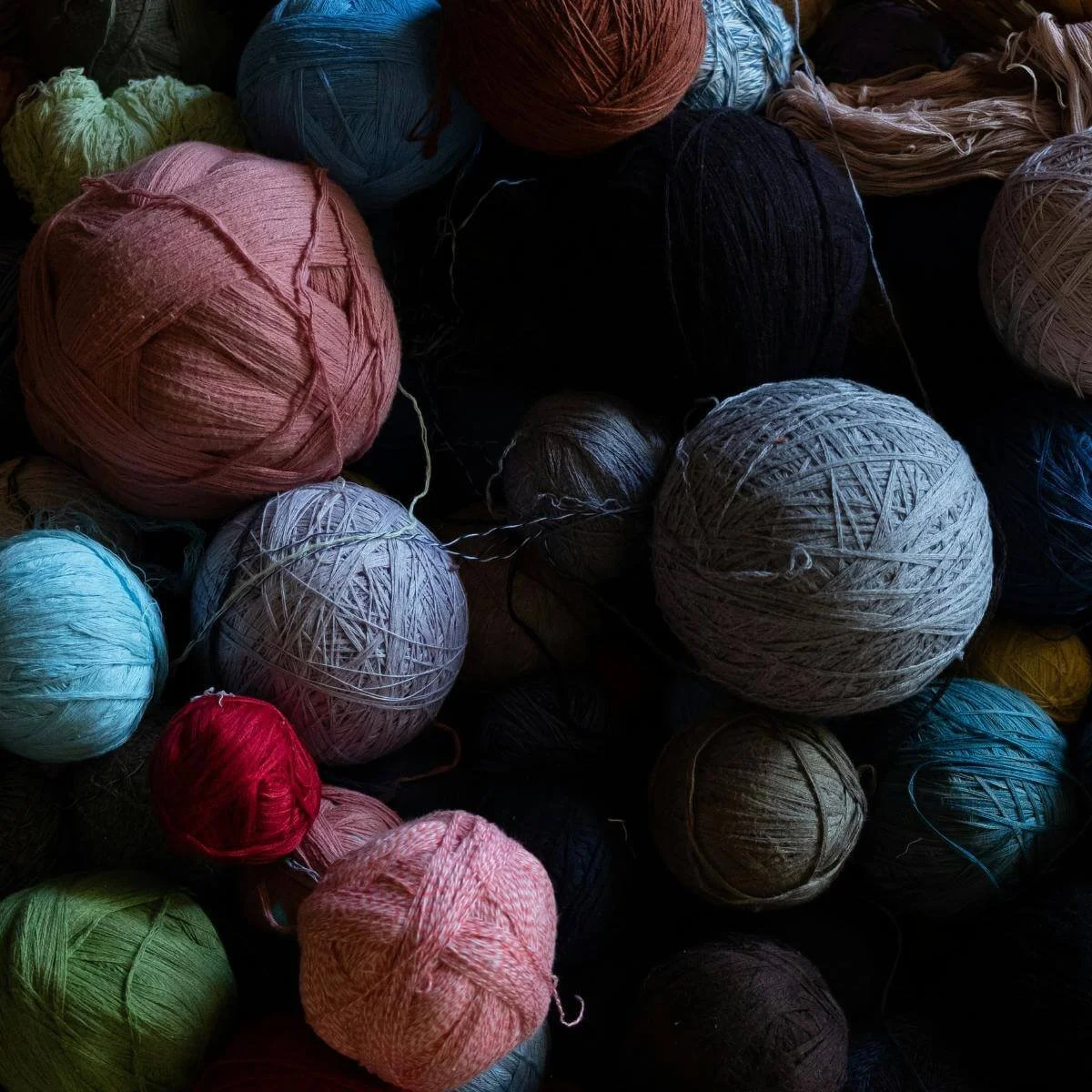
“It’s so slow! But I do love it. I love the steadiness of it. I love the metaphor of it — how each stitch is connected to what came before and what comes afterward. I love the tactile nature of it: the wool, the colors, the yarn stores, the patterns. I love the time it takes, and I often pray for whoever is the victim of my attempts while I’m working, too.”
She wound up her answer about he favorite “nonspiritual” activities by saying something that reminded me why she’s sold so many books and has so many subscribers: “Few things have changed my life like the experience of the Holy Spirit finding that imaginary line that I’d somehow drawn between ‘what is sacred’ and ‘what is secular’ in my life and just erasing that whole binary with a grin.”
Driving on a Flat Tire
I asked Sarah about her kryptonite — the weakness she’d love to be rid of forever. Her answer: avoidance.
“I know that the notion of 'besetting sins' has quite fallen out of fashion these days, but I find the language rather helpful for understanding those things that simply will not be self-managed or positive-talked away, despite our best efforts.”
Her flat-tire metaphor was perfect — and so relatable. She said she can pretend things are fine “to an almost mythical level.” And this idea of just avoiding hard things, of saying “it's fine, I’m fine, everything is fine,” is actually more harmful than she could have ever imagined.
“It is always a fight against my nature to just engage and to stay engaged in conflict, even when things are hard or complicated. It’s become the most reliable barometer of my own spiritual and relational health: am I avoiding or am I engaging?”
The woman known for wading into difficult public conversations struggles most with avoidance. I found that incredibly encouraging. God doesn’t call the equipped. He equips the called — even when the calling runs against our natural grain.
“It is endlessly hilarious to my friends and family that a big part of my vocation has been to wade into difficult topics and conversations like feminism or justice, church matters or biblical interpretation and its application in public and online. Out of all the people for God to call to that work, I would be the least likely.”
“Putting my hands to something almost always wakes up my soul again.”
Just a Writer
Over 20 years, Sarah has worn a lot of hats: preacher, teacher, conference creator, speaker, business owner, online columnist, blogger, social media presence, author. Before that, she worked for twelve years in financial services marketing and nonprofit development.
But these days? “I’m simply a writer. I just write books, I have a newsletter, and I’m incredibly happy with this slower pace and healthier rhythm.”
For a few years, she was traveling 20 weekends a year to preach, publishing daily online, showing up with hot takes for every main-character discussion on social media. “But the truth is that I am not cut out for that life.”
When her health forced a reset, she was reminded of what she really loves: following Jesus, loving her family, and writing as a vocation.
“The truth is that I’m not a great speaker or preacher or organizational leader, not really, let alone a traveler. I love being at home and having margin. I really value being the primary parent to our four children, particularly as my husband has an intense job.”
Right now, she’s shepherding her latest book, “Field Notes for the Wilderness: Practices for an Evolving Faith,” through the world. Behind the scenes, she’s finishing two other book projects — one as an editor, one as a writer — set for release in 2026 and 2027, respectively.
And then there’s her newsletter, Field Notes, which she’s tended for more than ten years. “I can't think of anywhere else online where people show up for atrociously long reads on everything from the stories of Jesus to trees, theology deep-dives and devotionals to book chats with dozens of asides and footnotes. So it's a special against-the-grain space.”
“I find my work incredibly life-giving now, with a good balance that is sustainable. It just took twenty years to get there!”
All Work Is Honorable
Sarah grew up in a home that placed a high value on work. Her late grandfather, who worked in a warehouse most of his life after World War II, used to drum into her that “all work is honorable.”
“Nobody cheered more for a ten-cent-an-hour raise than my family. I did not come from an environment with ministry and academia, let alone wealth, on the mind, so there wasn’t — there couldn’t be — this demarcation of what jobs mattered to God and which ones didn't. Work was honorable. Period.”
So whether she was working at Smart Set at Southcentre Mall on a Saturday in her youth or preaching on a Sunday morning, God was present and alive.
“I never in a million years expected to be in full-time vocational ministry, so I was conditioned to always be finding God’s presence in all work. It wasn’t a separate space to us, I guess. Everything from raising kids to doing laundry to writing a Bible study was open for grace, you know?”
“Putting my hands to something almost always wakes up my soul again.”
Prayer, Church, and Walking
When I asked which spiritual practice was working best for her right now, Sarah named three.
First, prayer. “Prayer, as a practice and a rhythm and a constancy, is always very near to me. I’m not sure why this has been a steady gift for most of my life, in one form or another, but I just rest in that grace now. Prayer is the conversation of my days — or perhaps the word ‘presence’ is more accurate.”
Second, the local church. After many experiences of church hurt, you’d think she’d be done. “Sometimes I’m as surprised as others that I’m not! But I just love the Church so much. And not just in a general way.” She loves her little church in Calgary — two of her kids are devoted to their youth group, never missing a service. She loves Sunday mornings, worshipping and praying together.
“The teaching is wonderful and yet is never curated just ‘for me’ in the way that choosing a podcast or training an algorithm reduces us to think of spiritual formation. I think there is something deeply good about the friction of community as part of our lives, however that looks.”
The friction of community. I love that phrase. We don’t grow by surrounding ourselves with people who agree with us. We grow through discomfort, struggle and sometimes disagreement.
Third, walking. She told me it looks different every day — sometimes worship music blaring, sometimes a pop culture comedy podcast, sometimes silence, sometimes crying for five kilometers while interceding for someone, sometimes calling her mum, sister, or friend for a chat.
“It’s just an hour every day when I try to listen to what my soul needs and simply say yes to it while my feet keep moving. It’s never convenient or easy to make room for that, and not everyone would call my walk ‘edifying’ perhaps, but there isn’t a time when I do it when I don’t feel better at ease, on a soul level, during and afterward.’
Sasha P; Unsplash
Books That Shaped Her
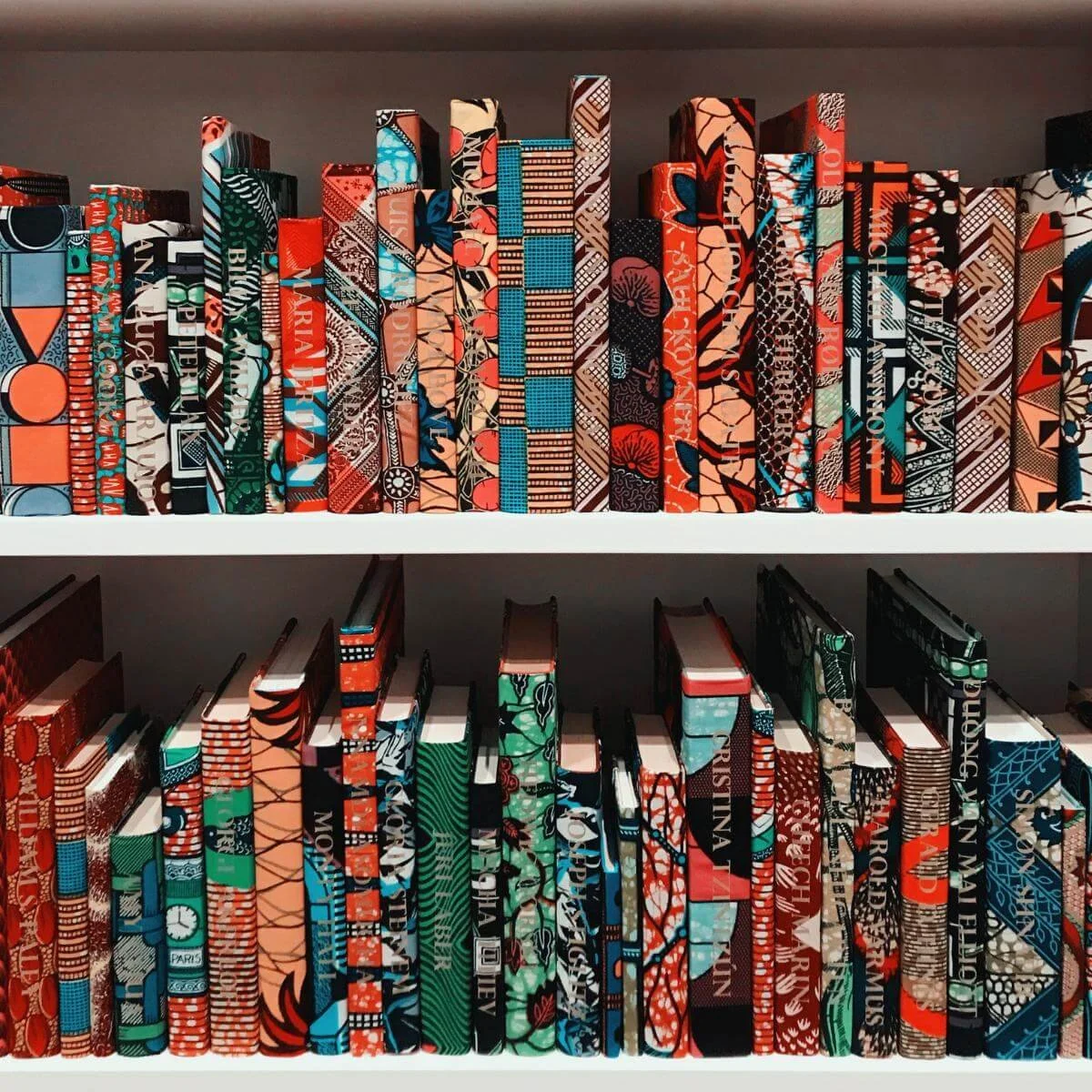
I asked Sarah about the resources that most shaped her faith. She laughed and said we could be there all day — she’s a “pseudo-hermit bookworm who tends to throw a book at every single question or wondering.” But she narrowed it down.
First: the “Anne of Green Gables” series by L.M. Montgomery. “I encountered those novels for girls when I was eight, and I think her way of seeing the world set my feet on a path that I still walk today. That series — and all of her novels, honestly — gave me such a beautiful framework for girlhood, womanhood, mothering, community, faithfulness, belonging, courage, self-sacrifice, calling, and everyday, ordinary beauty.”
Second: All of Brennan Manning’s work, particularly at a pivotal time in her twenties when she was detoxing from a very performance-based, striving sort of hustle in her discipleship. “Learning that I was loved as I am, and that this is the truest thing about me, healed a lot of how I related to God, and then to others as well.” She recommended “The Ragamuffin Gospel” and “The Relentless Tenderness of Jesus.”
Third: her friendship with Rachel Held Evans. “She was even better off the page or screen than she was on it, and that is saying something. Thoughtful, brilliant, self-deprecating, quick to admit when she was wrong, authentic and compassionate. I miss her every single day as my friend, but I also miss her as a spiritual leader, writer, companion and teacher these days.” For those who haven’t encountered Rachel’s work, she recommended “Searching for Sunday” or “Inspired.”
She also mentioned “The Quotidian Mysteries: Laundry, Liturgy, and Women’s Work” by Kathleen Norris — a slim volume of lectures that came to her when she was a young mom with three tiny ones in four years. “This pocket-size book gave me language for what I was experiencing in that season of my life as breastfeeding and raising babies was all braiding together with my vocation and my devotion to God and my work.”
Gen-X Tech Skeptic
For someone who got her start in the digital world as an early blogger and social media personality, Sarah is surprisingly offline these days.
“I watch the local six o’clock news and our national news programming. I still get a newspaper, for heaven's sake. I listen to the local CBC radio for my news. I don’t scroll entertainment sites that farm outrage anymore. I call people on the phone to talk. I hardly ever text anyone.”
She has way more boundaries now than she had twenty years ago. “As I’m raising our kids, I want to model thoughtful engagement without addiction and dependence, prioritizing connection over clicks, you know?”
That said, she does find some value in technology. She loves Spotify for audiobooks and music. “I hear people dog Christian music all the time — and I get that, as sometimes it can be derivative or repetitive — but man, have you gotten on Spotify and heard what is hiding underneath the radio play? The beautiful souls who are creating music that would never have access to an official record label or sponsorship deal? It’s so inspiring and resetting and bracing.”
Hands Unclenched
When I asked what’s stirring in her for the future, Sarah said she always knows God is preparing to do something new in her when she feels particularly quiet and inward. “And wow, I’m feeling that way right now.”
She’s writing in a very different way than before. Feeling more creative, freer, more empowered, but also more gentle with herself, with others, all of it — and more at ease.
But the biggest shift came from her work with Evolving Faith, alongside Rachel Held Evans and Jeff Chu.
“Jeff, in particular, always challenges me to remember and name what I want to be for in this world. To be for human flourishing. To be for connection. To be for beautiful sentences and true ideas and good food. To build and to create, to not cede the ground to fatalism and resignation or apathy or settle for less than being fully human.”
She doesn’t know what to expect for the future. But she knows she wants to move into this next season with her hands unclenched and her heart open.
“I'll be writing my way through it all, no doubt.”
A Final Thought
We all have a long list of things we’re against, don’t we? People and ideas and theologies and politics that we disagree with. It’s easier to define ourselves by what we oppose than by what we love.
But Sarah’s friend Jeff Chu keeps asking a better question: What are you for?
Sarah’s list is beautiful. She’s for human flourishing. For connection. For beautiful sentences, true ideas and good food. For building and creating. For not ceding the ground to fatalism.
What would your list look like?
This week, I encourage you to write it down. At least ten things you’d love to see more of in this world — things you’re praying Jesus would do in your heart and others’. Not what you’re against. What you’re for.
And if you struggle with avoidance as Sarah does — if you’re the type to drive the whole journey on a flat tire — maybe the invitation isn’t to try harder. Maybe it’s to trust that the God who calls the least likely will give you what you need when you need it.
Hands unclenched. Heart open through it all.
Sarah Bessey’s latest book, “Field Notes for the Wilderness: Practices for an Evolving Faith,” was a domestic and international bestseller. She is also the editor and author of The New York Times bestseller “A Rhythm of Prayer” as well as “Miracles and Other Reasonable Things,” “Out of Sorts: Making Peace with an Evolving Faith” and “Jesus Feminist.” One of the cofounders of Evolving Faith, Sarah also writes a popular weekly newsletter called Field Notes.