A Tidal Race: God’s Immensity Squeezing Into Your Days
Timothy Willard
12 min read ⭑
I am emerging from a strange season of suffering. I used to hate the word suffer because I thought it applied only to dramatic stories where life or death was on the line. But I was wrong. Not all suffering is Job-esque in its scope. Job lost his entire world in short order. But what about the humiliation of losing your job or your entire savings or the slow, enduring ache of depression you just can’t tell anyone about? That, too, is suffering.
We all suffer. We all lose heart. Sometimes, hope dims.
What shapes a person’s suffering more powerfully than its cause, says Paul David Tripp, is what’s in our hearts when we suffer. When Job tore his clothes and sat in the ash heap, he didn’t just demand justice; he began an interrogation. He had questions. He wanted to know why.
Why doesn’t the world make sense anymore?
I was asking the same thing.

Yana Kravchuk; Unsplash+
My season of suffering drove me to do what God wired me to do: research, dig, uncover, ask weird questions, ask hard questions and report from this strange frontier through writing and painting. I spent two years studying hope and light and how the wonderfulness of created things makes a difference in this cutthroat world of ours.
Whenever I prayed and asked God, Why? he filled my mind with memories. And not just any memories — the beautiful ones. You know the kind. The ones that don’t dim with age but somehow become more detailed and nuanced, like a pinot from the Russian River Valley. They’re the kind that are never far away. The kind that spring up when you listen to your favorite music.
So, my friend, let me tell you about one. It is almost inexpressible.
But I’ll do my best.
I Can Still Hear It.
A lone cellist sits center stage in a great hall. It’s the Sheldonian Theatre in Oxford, a 17th-century theater designed by the famed British architect Sir Christopher Wren. You feel the strength and precision of a cellist’s movements as she begins playing the Prelude from Bach’s Sixth Cello Suite. She’s not trying to remember notes; she’s trying not to get lost in her own love of the melody, and she’s smiling, and her head is moving side to side, and the audience is rapt. You shift to the edge of your seat. Before too many bars, you can’t wait to burst forth with your applause.
She climbs with the high notes, pressing her fingers up the neck of the instrument. She’s struggling and overcoming, all at once, in front of you, giving herself to the melody, the tempo, the performance. There is no stage, instrument or musician, only the overwhelming wonder of the sound. And you realize, in that moment, you’re not just at a concert; you’re sitting in one of those liminal moments, and you look around for an angel watching from the rear exit. You smile because everyone is smiling and crying and riveted, and it all climaxes in the final wonderful note.
Then, the concert hall erupts.
People call out “Bravo! Bravo!” And you jump to your feet and cheer and laugh because you want the moment to linger. You want it to stay forever. You want to move into it with everything you are, because you’re surrounded by a crowd of people feeling as you do — alive.
And all those wandering thoughts that occupied your mind at the beginning of the concert — the thoughts of regret, embarrassment, pain — they disappear in what you remember your first-grade teacher explaining to you as joy.
That was me, sitting beside my wife during what would be the final week of two years spent living in Oxford and studying, of all things, beauty. And that night, I didn’t just listen to the Prelude. I experienced it. And the notes hung in me like so many stars burning their celestial music in distant galaxies, alive and ringing. And the regret and embarrassment and pain? All mine. The regret is over what I could have done — had I only ... — a refrain that hums in your mind when you’re hard at work on an opportunity that God handed down from heaven itself. You know, the lies that tell you how unqualified you are, and how unproductive you’ve been, even as you have given yourself to the grinding tasks required to accomplish a big dream. The embarrassment is of letting that regret and all the lies land in your mind, even as God is offering more gifts — a cello, Bach, a grand hall. And the pain of it all. Who among us feels worthy of the glories God gives us? And the Sheldonian was a glory. It was our one concert during two years of the slog and sacrifice required to earn a Ph.D.
Afterward, my wife and I walked under actual stars and galaxies to the bus stop. The streets were quiet, but my whole body still felt like it was standing in the resonance of the music. And all I could think about was how the cellist poured herself into the instrument and how what came forth wasn’t musical notation on paper, but language — the message she played into the world, streaming from her spirit, energizing her arm, feeding her mind, touching her imagination, dying to be heard.
It was the end of a season for our family. Two years earlier, we bought one-way tickets to London and sold everything we owned for the treasure in the field: our house, two cars and many of our “things.” We put the rest in storage, not knowing if or when we’d return. The treasure is a life of chasing God, in this case, toward a degree. But he hadn’t provided a map or a guidebook. And now that our time in Oxford was closing, everything felt massive, Bach and the cellist most of all.
“It is my spirit that addresses your spirit.”
Those are Charlotte Brontë’s words, spoken from her imagination — through the character Jane Eyre. And that is how we speak to one another, isn’t it? Through spirit. Through song. Through writing. Through painting. Through vocation. And it is the fullness of the cellist’s spirit that pours into the music. She could not climb into the notes, but she poured as much of herself as she could into the sawing bow and addressed a crowd with her whole self, transfigured by a cello.
But What Now?
Even as I sit here typing, caught in the memory like it was yesterday, the world whispers to me, and honestly, I whisper to myself: So what, Tim? Why does transcendence even matter during tax season or when I’m getting my oil changed?
To which I respond, Why so cynical?
Just keeping it real.
(My inner dialogue gets spicy sometimes.)
But the question of why the transcendent matters is valid. Not only is it valid, but the answer matters tremendously. Because the emotion can feel fleeting. And that makes us question both its realness and its usefulness.
The world speaks to us in this register, and the way we speak to each other through the language of beauty is real. But where does transcendence go when the realness of a moment passes, as it did in the Sheldonian?
Is it like a fall breeze, here for the morning, gone by dinner?
Is it like rain, watering something beneath the soil of our souls? If so, when will I reap the harvest?
You’ve had transcendent moments. Moments that you can’t explain, but you goosebump and silent-tear and maybe murmur a prayer of gratitude. Think about what you do after a moment of transfixed wonder. Not right after the moment, but later on, the week or month after.
When I sit with friends around a fire here in Waxhaw, North Carolina, all these years later, that Sheldonian moment still holds. I still tell that story. Why?
Maybe because, like water nourishing a seed, the gift of a transcendent moment remains in us, so that we can draw from the moment around the fire with our friends, and speak of how God spoke to us once through a cello — no words, just music and a sense of him pouring into us, giving us the hugeness of himself in the smallness of a room built more than three and a half centuries ago. And that memory, that emotion, that soul atmosphere, then moves in on friends like a cold front, and rain falls gently on them. Nourishing them. And suddenly, the gang around the fire sits quietly, smiling.
“Really, God? You’re hitting me with this right now? Are you that unaware of my prayers, my cries, the agonies sitting heavily in my heart?”
Because they didn’t hear Bach that night at the Sheldonian, but they are hearing him now, through a story told, a memory relived, and you can see that all the beauty in the world is meant to draw us and others toward a God who can often feel far away and busy elsewhere.
And we need to remind each other. Because he is neither far from us nor too busy. His world, our world, moves around us almost like a lung breathing up and down with life — with his life — and sometimes the heaving is a cellist playing on a starry night in Oxford. And the stories we tell each other usher us to a place of longing — a place C.S. Lewis called Northernness or Joy or Sehnsucht — the type of longing that drives us to an emotional sickness. This is why the Sheldonian moment was so wonderfully tense and gritty and fearsome and beautiful. Because for the cellist, the world was heaving. And she was breathing with it.
And so was I.
Did You Know Your Soul Can Drink From a Storm?
Bach blew into my life like an unforecast hurricane. When I first heard the Cello Suites, about a decade earlier, I was driving home to Sugar Hill, Georgia, traveling south from a friend’s house in Hickory, North Carolina. I was neck-deep in my studies at Gordon-Conwell Theological Seminary — a five-year journey I never thought I’d be on. My Hickory friends are lifelongers from our undergraduate days. Hickory was close enough to Charlotte (and Gordon-Conwell), and staying with friends was better than a Holiday Inn Express. So, I didn’t mind the extra mileage.
I’d gotten on the road late, and Interstate 85 was a ghost town. The windows were down but the music up at 11 — because it goes to 11. My music choices vary, because my taste spreads out like a breakfast smorgasbord. When I cook, it’s flamenco. When I work out, grunge. Road trips? Can you beat Chris Stapleton? And sometimes, when I’m pensive and feeling the distance the road brings, I have to go with classical. And, on this night, I felt the distance. Maybe it was the nostalgia after conversations with old friends. Maybe it was the threatening weather — flashes of lightning on the horizon and rumbles of thunder. Whatever it was, I tuned my radio to the local classical station.
Then the rain fell, and I rolled up the windows.
I was lost in thought, not really listening to the music.
I remember a commercial break, the NPR kind with a voice-over that’s too buttery, followed by a plea for donations. Then, after the ad, a single cello shook me from my ruminative state: determined notes, fast like rain hitting my truck’s roof, chords with ringing open strings. A hurricane of something more than music filled my truck. The sounds rushed upon me like the early headwinds knocking over the trees of my expectations. The storm didn’t hit and fade. It grew, no, rose, taking on a shape not unlike a great spirit filling up the cab of my Ford Ranger.
I had lived that day like any other. I had eaten breakfast, listened in class, taken notes, laughed with friends and already felt the fullness of the weekend. But this? This was more than the greater-than sign while also not diminishing the less-than of everything else, because everything else wasn’t less-than; it just wasn’t greater-than. How can I tell you? It was as if the music wasn’t music at all, but vision.
And what almost made me laugh as I listened with eager ears and welling tears was that I had no idea what I was listening to or who was playing. Music Appreciation in college hadn’t prepared me for this!
The cellist’s playing set my heart on fire. I listened with rapturous intensity, both hands on the wheel, eyes locked on the road, the rain beating on the windshield. At minute three of the piece, I had to pull over to the side of the highway. I began to weep — not knowing quite why — and it ended in a beautiful, otherworldly climax I’d never heard in a piece of music before.
I sat there in my musty truck, rain pounding, transported.
I searched my phone for the local station to see what was being played at that moment. It was Bach’s Cello Suites, and this was the Prelude from Cello Suite No. 6 in D major. I returned home past midnight, but I didn’t go to bed. I stayed up, searched, found and bought Yo-Yo Ma’s 1997 recording of the Suites — he’s recorded them three times during his career — and played the Prelude again.
I have this saying I use often: “It’s my eggs and bacon.” Meaning, this thing, whatever it may be, is something I do daily, visit often or come back to with disciplined regularity. Bach’s Cello Suites are my eggs and bacon. For a time, Alison Krauss was — but now she’s more like a smoothie I enjoy in certain seasons. So, when I found out about the Sheldonian concert and that it would feature a lone cellist playing the Suites, it felt as if God wanted me to experience the very real, physical nature of Bach’s music. I think he also wanted to teach me something about him and the mystery of the whole world. And I began to wonder whether Bach’s musical nature was found in real nature.
Have You Ever Heard of a Tidal Race?
At the edge of the cold Atlantic, in the Saltstraumen, just southeast of Bodø, Norway, you can find one of the world’s strongest tidal currents, full of tumult, rage and mystery. There, the sea has really but one door. Between the open water and the deep Skjerstad Fjord runs a strait 2 miles long and 500 feet wide, and everything that goes in or comes out must pass through it. Twice a day the tide rises outside, and the fjord, with only that one door, cannot keep up. The sea can stand 3 feet higher than the fjord, but not for long. It pours. Fourteen billion cubic feet in six hours, at 25 miles an hour, the speed of a horse at full gallop. A tidal race. The water shears against the rock and against itself and spins into whirlpools as wide as two Ford Rangers end to end. Even large ships must wait. Finally the two levels meet, and the strait goes still, and for a little while nothing moves. Then the tide turns, and the fjord gives it all back.
The water heaves. The cellist heaved. Lungs drinking in air. A strange kind of emptying — the sea pushing into the narrows. And I wonder if that is what God was like when he emptied himself and became a man. Was it like what happens in the Saltstraumen narrows? The mass of the ocean driving into this confined space and the upheaval it creates. But what does this emptying, this pushing, teach me about God — you know, something I can actually use when I’m stuck in a mundane place where very little makes sense?
And this is the lesson I landed on.
The ocean pushes into a narrow space. It pours. And pours overwhelmingly. It fills and overwhelms the space.
And I am the narrows! This water, more suited to a wide, languid river, pushes into a narrow channel, and the water whirls and churns and rages. And I get to see and feel the ocean’s fearsome and rugged beauty. And this violent filling moves me away from myself and sets me beneath the stars and whispers to me, Remember, you are part of something much bigger, much grander and very much more violent.
Not the violence we find in movies. The violence of beauty — the assault of wonder, like the cellist on her cello wildly playing, the sound untamed and rising, like the water in the narrows, creating a maelstrom in our souls like that first-ever whispered “I love you” does in our hearts.
Of course, in seasons of deep pain, beauty offered like this can feel like a tone-deaf taunt.
Really, God? You’re hitting me with this right now? Are you that unaware of my prayers, my cries, the agonies sitting heavily in my heart?
And he responds, I am aware. And?
It’s the restraint in his response that gets me. That sets me off. Why can’t he just address what I need right now? Why the mind games? Why the cellist emptying herself like the ocean into the narrows?
Love, Tim. Turn up the music. You’ll see.
I Still Drive to the Sawing of the Prelude.
And when I do, I’m back in my truck in the beating rain, caught in astonishment. I’m back on the quiet streets of Oxford, ringing as a star with music poured into me, a spirit addressing my spirit.
The day after the Sheldonian revelation, I walked the River Thames early in the morning. A rowing team sliced the water in rhythm. Nine spirits moving in unison, pouring strength into oars, movement upon water. Strength limited by carbon fiber and fiberglass and oarlocks given to breaking, and palms given to bleeding and tearing and building calluses in the torn places — a giving up of themselves for their brothers in the boat. A poetic glide caught in the Port Meadow air.
I smiled as their music caught me unaware.
Where did the bowing echoes go last night? Did the notes just evaporate like dew into the painted sky?
Well, somehow they found their way to this river. In the cadence of my footfalls along the river path, in the speed of that boat and its crew, in the island sky drifting overhead.
And God’s Spirit addresses mine, making me a better man, a man of gentle and humble heart. Because his magnitude and beauty aren’t just out there in the ether; they’re in the notes, in the bowing, in a channel overcome by tidal movement. A giant force by itself is just magnitude. But a giant force with a good and worthy aim, like speed or splendor or sound, is love.
The declaration of God’s creations teaches me. And sometimes, I find it helps to turn it up to 11.
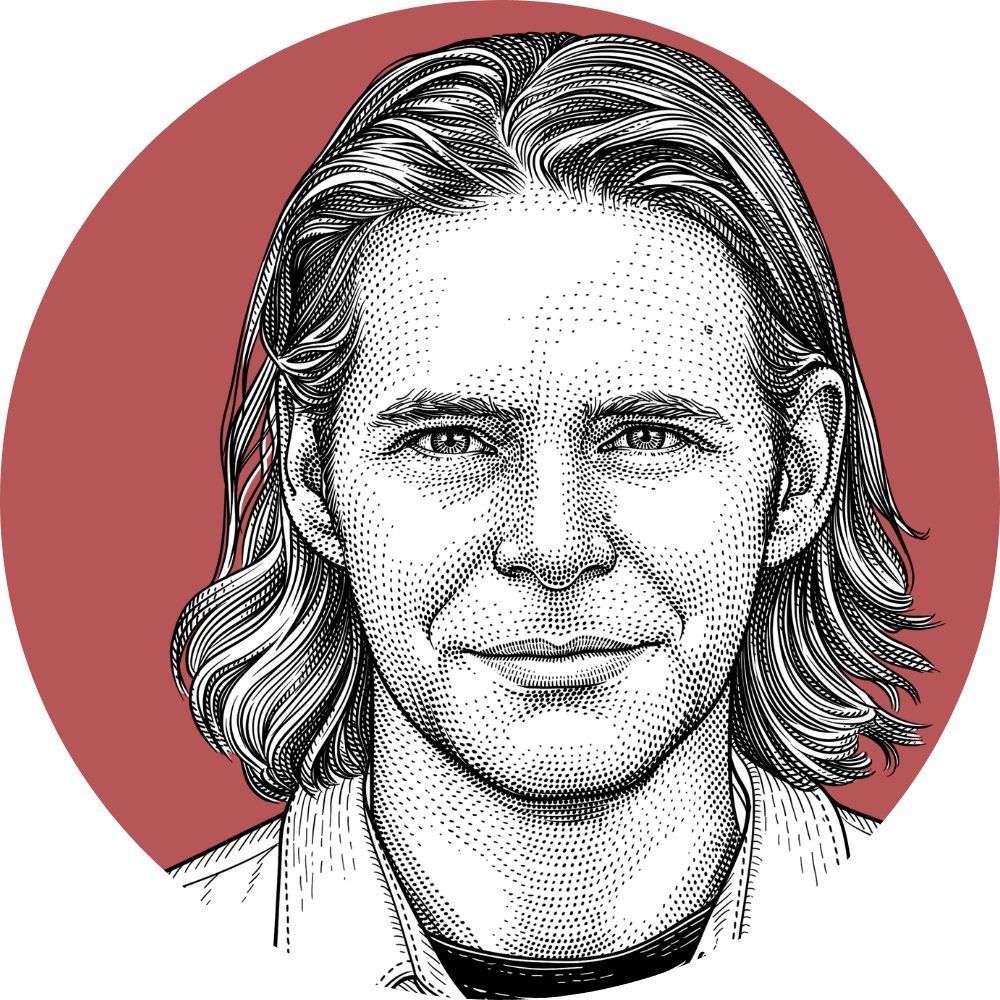
Timothy Willard is Rapt’s Writer-in-Residence. He studied theology at King’s College London, where his research explored beauty and imagination in the writings of C.S. Lewis. He also spent two years living and studying in Oxford and has written four books, including The Beauty Chasers, Veneer and Home Behind the Sun. He lives in Waxhaw, North Carolina, with his wife and three daughters.