God Already Set the Table. Will You Come?
Adriel Sanchez
4 min read ⭑
A friend teased that when I preached through the Book of Leviticus, I should have titled the series “How to Shrink Your Church in Twenty-Seven Weeks!” That was better than another series through Leviticus I had heard about, cleverly titled “Living Levitically,” something no believer this side of Jesus’ resurrection and ascension should attempt. Those old covenant ceremonial rituals ended with the once-for-all sacrifice of Jesus. Plus, you wouldn’t want to incite the animal-rights folks!
Fortunately, our church didn’t shrink any more than usual when I taught through Leviticus, and in fact we all learned new things. For starters, did you know that “Leviticus” isn’t the book’s Hebrew title? The original title of Leviticus is taken from the very first word of the Hebrew text, vayiqra. It’s an imperfect sequential verb that translates to “and he called.” Of course, that’s a strange way to title a book, so our English Bible takes the title given in the Septuagint, the Greek translation of the Old Testament. That title is ΛΕΥΙΤΙΚΟΝ, from which we get “Leviticus.”
It’s worth considering the book’s original title, though. Vayiqra — “and he called” — tells us something important about the order of worship. Worship is always our response to God’s call. The sequential verb connects the book to what came immediately before it. Leviticus picked up where the Book of Exodus ended, and Exodus had just climaxed with the completion of the tabernacle. After it was finished, we read, “Then the cloud covered the tent of meeting, and the glory of the LORD filled the tabernacle. And Moses was not able to enter the tent of meeting because the cloud settled on it, and the glory of the Lord filled the tabernacle” (Ex 40:34-35, ESV). Here at last they’ve gathered around the heavenly tent, and God’s glory is so palpable that not even Moses can draw near. It seems to have been a lot of work for nothing. Exodus ends, but the story is clearly “To Be Continued. …” What would happen next?

Frank Flores; Unsplash
The Role of Host
And he called. Who called? God called from the glory-filled tabernacle and invited humanity in. The point is, God is once again taking the initiative and calling sinners to worship. Actually, the word I used, invited, is too weak. This isn’t the kind of thing Moses could ignore. God doesn’t call us to worship like we invite people over for dinner. The heavenly summons issued by God can be refused only at great cost to our souls (see Heb. 12:25). Tragically, we can excuse ourselves from even the most divine banquets (Luke 14:18-20), so take heed. Prudence demands that we obey the call to worship, and wisdom asks that we recognize who occupies the role of host when the church gathers.
Imagine this awkward scene: You have invited my family to your house for dinner. You’ve made sure everything is in order, and you’ve spent hours preparing a wonderful feast for us to enjoy. As you’re putting the finishing touches on the meal, the doorbell rings, and I appear through the peephole holding a bottle of wine, with my wife and kids next to me. As you open the door, we exchange pleasantries, and you exclaim, “It’s so good to have you over tonight as a guest in my home!” Perplexed by your greeting, I insist, “Oh no, it’s good to have you!” You think it strange but brush the comment aside. Then, throughout the evening, you notice that I’ve assumed the role of host. I cut the turkey and pour the drinks. Fumbling through the kitchen, I ask, “Can I get you anything else?” As the night goes on, you begin to feel like a stranger in your own home, and you can’t help but be confused and perhaps a little offended. You had heard pastors could be socially awkward, but nothing prepared you for this! Imagine that every time you invited me over, it was the same story.
“We are awkwardly creating an atmosphere for God to inhabit, busying ourselves with the role of host and wondering if God is going to show up on Sunday.”
Will You Come?
As we begin thinking about the worship service, it’s important to make clear who is calling whom to what. Are we God’s hosts, or are we his guests? The focus in the 20th century has been on our calling God down through song. The title of one contemporary worship song is illustrative: “Holy Spirit, You Are Welcome Here.” We are awkwardly creating an atmosphere for God to inhabit, busying ourselves with the role of host and wondering if God is going to show up on Sunday. But the question in biblical worship is never if God will show up, but if you will. He has issued the call and set the table; will we be at the banquet? Worship in both Testaments is always man’s faithful response to God’s greatness and redemptive love. It’s our answering the clarion call of creation to look beyond its beauty to the One who made it, and to find in him true rest and salvation.
Leviticus doesn’t just remind us that God calls us to worship; there’s another fascinating tidbit about how the book is structured compared to the rest of the Pentateuch. Leviticus lacks the chronological markers and sequence you find in the books that surround it. The tabernacle worship was, in a sense, timeless. This is not to say that it wasn’t organized around morning and evening, and annual festivals. Rather, worship is meant to bring us into a kind of alternate space and time where, as the hymn “Turn Your Eyes Upon Jesus” says, “the things of earth will grow strangely dim in the light of his glory and grace” — even deadlines! We don’t often think about “holy time,” but time was the very first thing to be sanctified in Scripture (Gen. 2:3).
The call to worship is a call to enter God’s Sabbath rest.

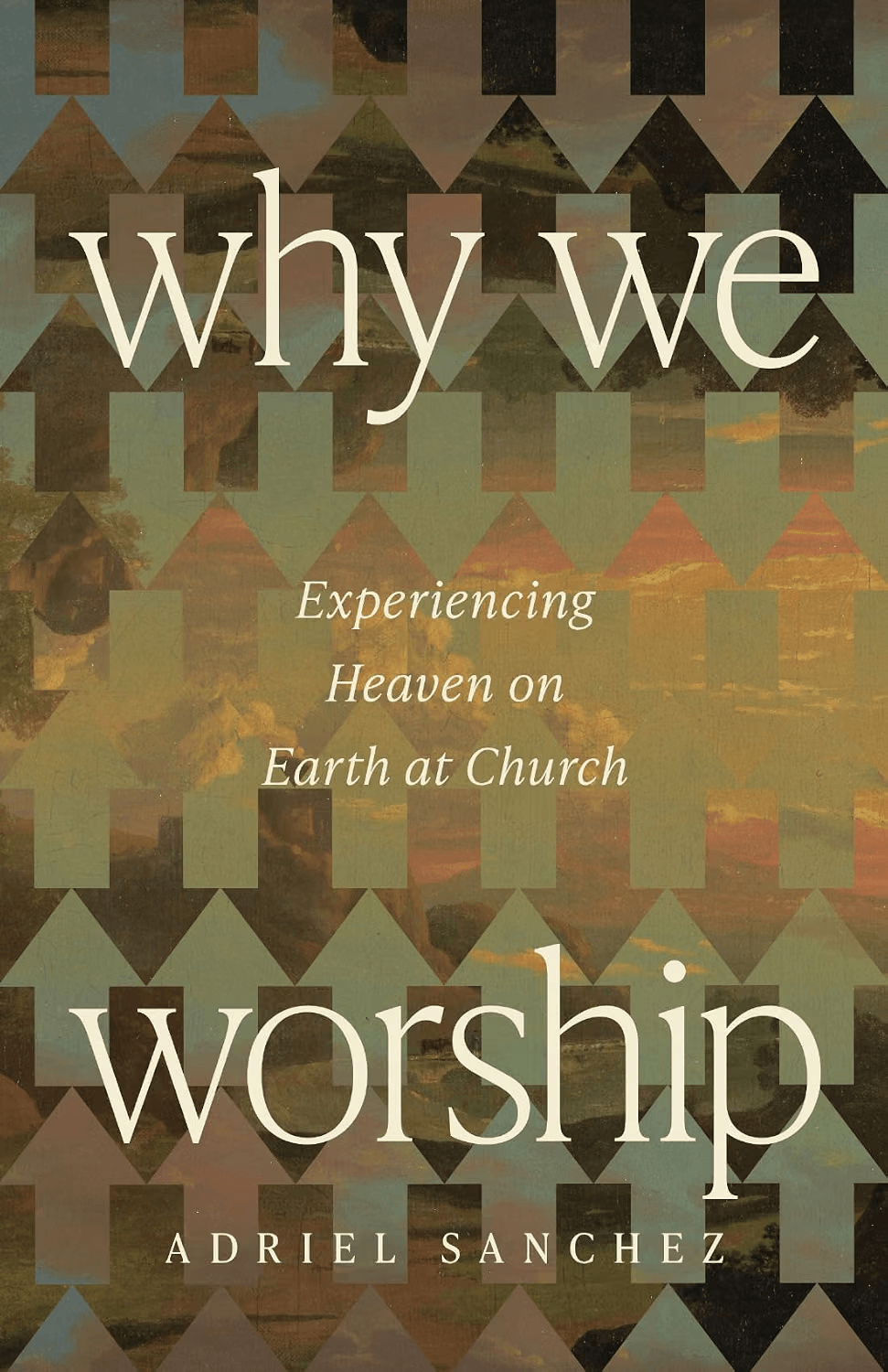
Adriel Sanchez is the senior minister at North Park Presbyterian Church in San Diego and hosts the Core Christianity podcast with Sola Media. He wrote Praying with Jesus: Getting to the Heart of the Lord’s Prayer and has written for Christianity Today, Modern Reformation Magazine, Credo Magazine and Tabletalk Magazine.
Taken from “Why We Worship” by Adriel Sanchez. Copyright © 2026. Used by permission of InterVarsity Press.