Chasing Fireflies, Catching Glimpses: The Presence You’ve Been Missing
Gary Selby
6 min read ⭑
When I was in early middle school, that phrase, derived from Philippians 4:7, haunted me. We talked a lot about the peace of God; we sang about it; we preached sermons about it. But I didn’t feel it. Like most junior high kids, I was riddled with doubt and longing, plagued by insecurity, desperate for a place to belong. In my obsession, I would ask anyone who would listen, “What is this peace that passes understanding?” and more importantly, “How do I get it?”
When I look back over the course of my life and career, I see that same longing everywhere. I can remember in my early work as a minister feeling so unequal to the task and praying to feel God’s presence. I wanted not simply to know about God’s presence — I already had that. I wanted more. I asked for God’s presence and love to be the water I swam in and the air I breathed. In a way, my whole career as a scholar has been driven by the same passion. I studied the sermons of Martin Luther King Jr., captivated by the way they drew audiences into an almost ecstatic sense of transport. When he stood in the pulpit of the Mason Temple in Memphis that April evening in 1968 and proclaimed, “I’ve been to the mountaintop, and I’ve seen the Promised Land,” those folks were not thinking about Israel on the verge of the Jordan; they were in the moment, they were Israel, King was Moses, and they were poised to witness God’s mighty work in their own day. Later I brought that same search to the study of the New Testament, examining ways Paul and the other New Testament writers used language not to explain doctrinal concepts but to invite people into the visceral experience of those doctrines. For example, at the end of Romans 7, having argued about the role of the law in bringing us to the point of utter helplessness to create our own righteousness, Paul launches into a dramatic performance of despair over his inability to get it right. In that moment, we’re no longer evaluating the claims of his argument; instead, we’ve been transported into the experience, pacing back and forth, pounding our fists, crying out in desperation for someone to rescue us from this body of death.

Susan Wilkinson; Unsplash+
In every case, what I was looking for was something beyond the concept; I ached for the experience. Nowhere else did I feel that longing more, however, than in my own spirit, seeking a deep, settled sense of well-being as God’s beloved. Peace that passes understanding.
It was only much later that I began to realize that what I had been looking for could be found in the traditions of mysticism, in the lives of those women and men of God in Scripture and even into our own day who somehow penetrated into the cloud to experience the presence of God unmediated by words and abstract ideas. People such as Moses and Isaiah, Hagar and Ezekiel, Mary and Stephen, Paul, Bernard of Clairvaux, Hildegard of Bingen, Julian of Norwich, Teresa of Avila, Thomas Merton, Howard Thurman, and so many others. Julian of Norwich went from gazing at a crucifix as she lay dying to being transported bodily to the foot of the cross, where she was overwhelmed by the love of God and Christ for all people and by the assurance that no matter what, “all shall be well.” Teresa of Avila spoke of being transported into the “sheer beauty and sweetness of the Beloved’s presence,” overcome with “rapture and awe.” Thomas Merton recounted that famous moment at the corner of Fourth and Walnut in downtown Louisville when he was “suddenly overwhelmed with the realization that I loved all these people, that they were mine and I theirs.” African American scholar, pastor and civil rights leader Howard Thurman spoke of sitting for “many hours alone” in his rowboat on the river as a child in Daytona, Florida: “There would come a moment when beyond the single pulse beat there was a sense of Presence which seemed always to speak to me. My response to the sense of Presence always had the quality of personal communion. There was no voice. There was no image. There was no vision. There was God.”
These mystics describe being transported into a direct encounter with the presence of God. It wasn’t as if they stopped being conscious or aware, and they certainly possessed a rational conception of God in their mind. But in these encounters they found themselves carried into an immediate experience beyond words or concepts — indeed, beyond description. They came away from those moments knowing deep in their bones the reality of God’s grace, and they were filled with a pervasive love for the world and a passion for whatever mission God was calling them to. They also lived with a lifelong yearning and ache for that bliss of God’s presence. Although I didn’t have the language to put it into words, this was what I longed for — my own version of the mystical union with God.
“The person who helped me bring these threads of beauty, mysticism and theophany together was C.S. Lewis.”
At the same time, as I look back, I realize that I had encountered something like that mystical experience, even at an early age. It came in moments when I was in the presence of beauty and joy. Chasing fireflies on summer nights as a child. Gazing out on the mountains of southwest Virginia as my family drove south to visit my grandparents in Alabama. Being hit by that first crush on a girl. Getting lost in the haunting harmonies of the English rock group Yes on my record player when I was in high school. Pulling onto the property of the church camp I attended as a young person, Camp Wamava, early in the morning: You’d drive for several miles through the woods on a gravel road, pass through the gate, and suddenly the forest would open onto a green pasture shrouded with mist as the path wound up and disappeared over a low ridge. I felt it one fall morning riding on a commuter bus into Washington, D.C., when I happened to look up to see a stand of trees afire with blazing autumn yellows and reds, all sheltering a small reservoir. I’ve felt it in the presence of beautiful music or as I’ve contemplated certain works of art. Elsewhere, I’ve described how moved I am by the sight of an Adirondack chair by the sea, by the faint smell of woodsmoke on a cold, brisk morning, or by the laughter of friends and family around my table.
These and so many more experiences represent my own glimpses of the mystical encounter — moments of awe and bliss, moments of excruciating longing, moments when I have had the sensation of being lifted out of myself and all my troubles, when the separateness I typically feel from all things and all people seemed to melt away as an illusion. Over the years I’ve described these experiences to people of all ages, and I have yet to find someone who hasn’t felt these stirrings. The problem, however, was that they seemed to have no connection to my life in God. They were glimpses of bliss, but nothing in my religious upbringing even hinted that they might be theophanies, encounters with the presence of God.
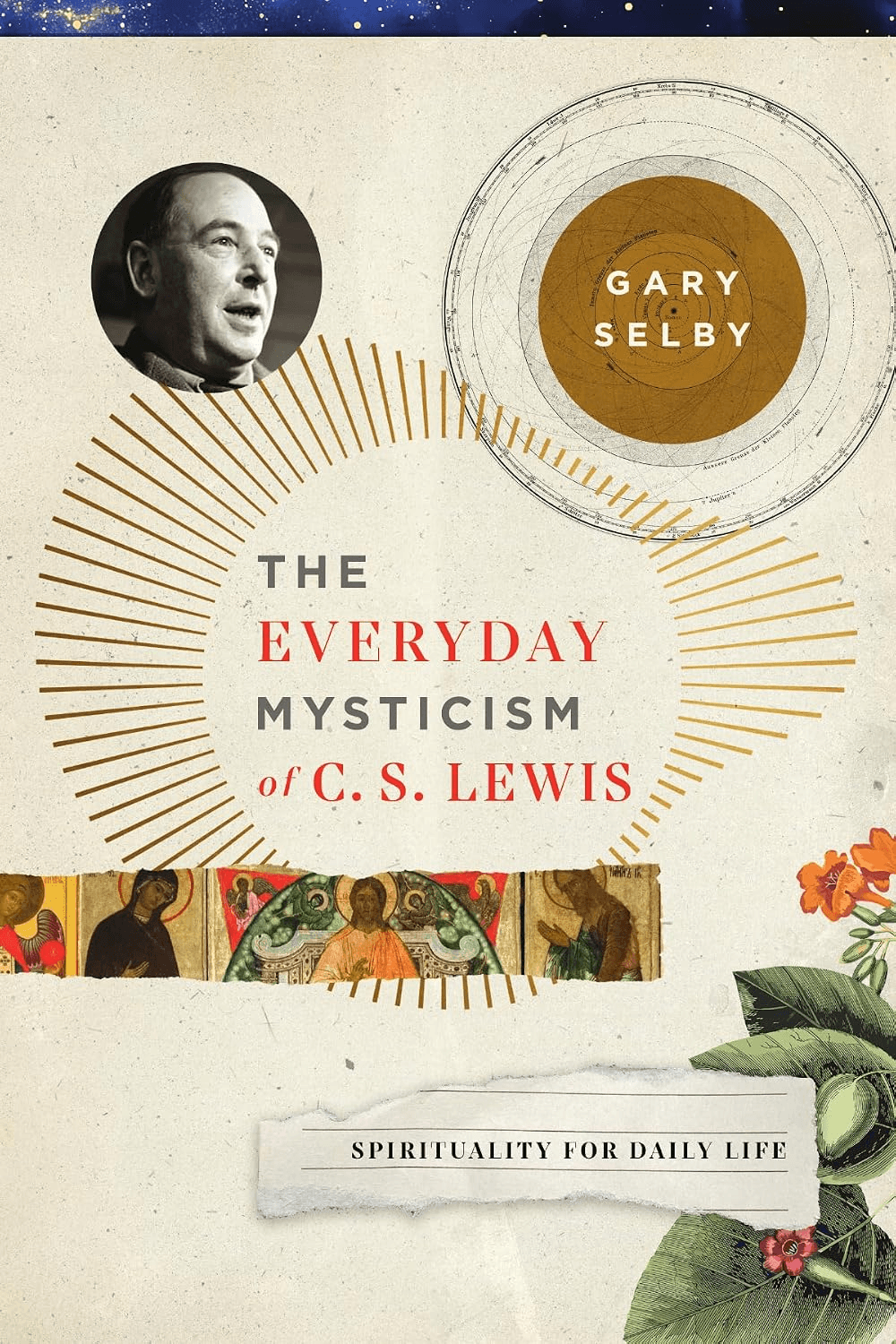
The person who helped me bring these threads of beauty, mysticism and theophany together was C.S. Lewis. Lewis loved the mystics. He read them and knew them well, especially Julian of Norwich, and his understanding of the Christian life was deeply influenced by them. His fantasy and science-fiction writings are saturated with mystical themes and episodes, from direct, unmediated encounters with Aslan the lion, to ecstatic visions of how God sustains the cosmos, to depictions of personal union with God that make one almost impervious to the wiles of Satan. Lewis had an uncanny ability, as he put it, to “rip open the inconsolable secret” in each of us, to name that “secret . . . which pierces with such sweetness.” Yet for all that, Lewis would never have called himself a mystic. The mystics, he said, lived at alpine heights, whereas he was a person of the valleys or, at best, of the hills. In most of his fictional writings that show evidence of mystical influence, Lewis never uses the word mysticism. As David Downing quips, “Lewis must certainly have been one of the most mystical-minded of those who never formally embarked on the mystical way.” In this sense, Lewis was like most of us.

Gary Selby is professor of ministerial formation at Emmanuel Christian Seminary at Milligan, where he teaches spiritual formation, preaching, leadership and ministry. He previously served as the Carl P. Miller Chair of Communication and director of the Center for Faith and Learning at Pepperdine University. Gary spent 22 years in local ministry, including 19 years as minister of the Church of Christ in Columbia, Maryland, which he helped plant. He holds a PhD from the University of Maryland and a Master of Theology from Harding University. His scholarship focuses on Christian spirituality and includes several books on C.S. Lewis. Gary’s passion is helping people experience the joyful presence of God.
Adapted from “The Everyday Mysticism of C.S. Lewis” by Gary Selby. Copyright © 2026. Used by permission of InterVarsity Press.