Gratitude and the River of Life: Refusing Fear’s Story
JENNIFER J. CAMP
6 min read ⭑
He told me to jump in the water. And from where I stood, my bare toes pushing into deep, moist grass, I wasn’t afraid to consider it. His face, his expression, held me, making me believe I could do it; I could jump. Would it feel like flying? Could I slow down the leaping so I am feeling the air, sweet and fragrant with lavender, pine and thyme, encompassing my body before it crashes, with a delicious splash, into the river’s wild blue?
He is standing there, in the water, like his feet are not going to give way, like the rocks aren’t slippery with moss, like their roundness is the perfect dais for his bare soles. Like he is immune to coldness, a mountain river’s icy splash, even as he stands, waist high, looking at me with a deep gladness that I am here with him, before him on the bank, looking back at him. It is just him, just us — us and the river, the thick oak trunks at the bank’s edge, and across, the pine branches leaning overhead.
He has just been rafting through the white rapids, and now he has quieted them. Even where they were dangerous and strong — an unpredictable collision of power crashing and swirling into unmarked depths — he handled the oars nimbly, his eyes sparkling with focus, his arms determined in their strength. I know this because I saw him from where I stood on the bank, just before he secured the raft, stepping out of it with sure feet, and tying the bow line to my favorite oak with the seat carved into it, just for me.

I came here prepared to jump, to let myself fall in, the coldness engulfing my senses. He is still in the water, and I am still on the bank, his gaze holding mine. Can I jump? Jennifer, stop thinking about it and just do it. I don’t want to be away from him, I realize: I trust him. I do. He is strong, and he is beautiful in the ways that nothing else is beautiful, and in the ways that everything is beautiful. I am craving this, him, more than anything — this beauty, this outlandish, leaping, risk-everything beauty, and I am tired of forgetting that beauty is what defines everything good, everything true, everything solid and real and worth living for.
Nothing is lost that beauty cannot redeem. Everything is held by it, this beauty that has made me. Hold me. Hold me under it. Let it cover me completely.
The memory lingers as I return to the present moment, to the here and now. Even as the river fades from view, beauty remains — closer than I think, woven into the ordinary fabric of my days.
In the ache of sadness that comes when beauty is forgotten, I find beauty looking for me. There is a longing within me, within us, that is hard-pressed to find it, fall into it, a desire to live with the eyes of our heart wide-open, achingly young and timelessly wild.
I can feel the ache within me, and I am happy for it. I am happy for the uncomfortableness of the stirring, the curiosity in me, as it builds and I chase it eagerly, like a young girl who loves to run in the orchards of almonds, adventure in the creek for stories held in rocks and time, and tiptoe barefooted towards the morning doves nesting in the crook of the broken windmill.
Even here, as I sit at the table, the coffee ring on the white porcelain cup is beauty, its tangibility of shape, its curve of handle, as the December sunlight shines through the window. All is remarkable, a reality of beauty’s existence that I can only see through the miracle of gratitude — the posture of receiving what is being offered. Gratitude opens my eyes. It makes the ordinary luminous, the everyday sacred. Without it, I see only a coffee cup, only December light. With it, I see him everywhere: in the curve of the handle, in the warmth still held in porcelain, in the quiet morning gift of sunlight that costs me nothing and gives me everything. This is what gratitude does — it trains my vision to recognize beauty, even in the memory of Monday, of these holidays, of the longing for everything to either be better or always stay the same.
The ache continues — and the restlessness — as the results of this morning’s blood tests come in through email, and everything is fine, fine. But I battle fear, the truth that there is change in me, change in this aging body. And it feels like perfect defiance — necessary, crucial — to let my heart chase beauty back all the way, all the way to memory, to nakedness, to not hiding. This is the work of gratitude: to see beauty even here, even now, even in the doctor’s report and the body that ages. Gratitude refuses fear’s narrative.
I can feel beauty holding me, filling me as I am empty and lacking nothing. I want to empty. I want to let everything go and receive — to practice the gratitude that says yes to whatever he gives: embrace every unknown and every change. Gratitude is how I stay awake. I want to be unafraid of pain. Of loss. Of suffering. For, as I age, I fight fear’s trembling, curling lie: you are nearing the end of things, never the beginning. All is loss, all is memory, a wisp, a puff of stale wind that layers fatigue upon fear, death upon desire. Why name what is beautiful? Why claim it’s hope, it’s joy?
“He is there. He has always been there.”
But gratitude names it. Gratitude claims beauty everywhere, even when fear says there is nothing left to see.
And then there is the promise, the promise of the humble who do more than contemplate beauty: “Anyone who becomes as humble as this little child is the greatest in the Kingdom of Heaven” (Matthew 18:4). I want to be humble. I want to see and trust Beauty’s goodness, to let the child in me, ageless and bold, keep her eyes locked on beauty standing fast in the water — he, who makes the current, even in its wild, unpredictable perfection, quieted. I want everything and nothing else.
My eyes are on beauty, on his open hands, his face shining and sure, and I am myself; perfectly brave and sure and wild. I have leaped, and, mid-air, before I am caught, I hear his whispers from the sky, in the air, in the breath, so sweet, in my ears:
I awaken what is asleep and breathe life into what death tries to make you believe has already died. I end the quiet deaths, the small, hidden choices to forget, to fall asleep, to give up.
The water crashes around me as I submerge, an ageless wonder.
This is the River of Life.
Remember, remember, remember.
“Look for yourself, and you will find in the long run only hatred, loneliness, despair, rage, ruin, and decay. But look for Christ and you will find Him, and with Him everything else thrown in.”
—C. S. Lewis
The river, the leap — it’s not just my story.
Perhaps you, too, are standing on some bank, feeling the grass beneath your feet, watching water move. Perhaps you have forgotten how to leap, or have convinced yourself it’s too late, too cold, too uncertain. But what if beauty is calling you in even now? What if he stands in the current, steady and sure, hands open, face shining with gladness that you are here?
The leap is always before us — not once, but again and again. In the doctor’s office and at the kitchen table, in December sunlight and in the ache of longing we carry. Gratitude teaches us to see him there, to recognize beauty even in the ordinary and the uncertain. It opens our eyes to the One who quiets the rapids and makes the river a place of life.
And so we stand at the edge, toes curling into the grass, breath caught in our chests. The water is cold and real. The invitation is warm and clear. Somewhere between memory and hope, between fear and trust, gratitude whispers:
He is there. He has always been there. And the river is waiting.
Will you jump?

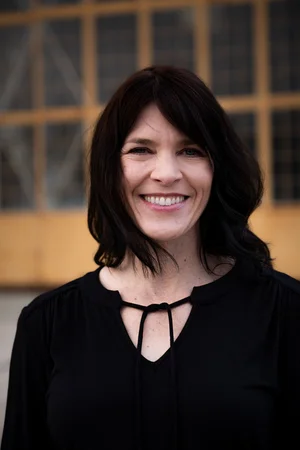
Jennifer Camp is a poet and listener who delights in investigating the deeper places of the heart. She founded Gather Ministries with her husband, Justin, is Editor-at-Large of Rapt Interviews and manages Loop Collective, a community for women who reject complacency and pursue connection with God.