Half of Us Are Lonely and Church Isn’t Helping
Jeff Galley and Phillip Smith
4 min read ⭑
We’re lonely. Or at least half of us are.
According to multiple research studies, roughly half of Americans report that we are sometimes or always lonely, feeling left out, lacking companionship, or that no one knows us well. When asked how close we felt to others emotionally, only 39% of us said we felt very connected. But this is by no means an American problem alone. Based on a survey including 142 countries, over 2 billion people say they feel very or fairly lonely.
We have fewer friends than we used to. In 1990, almost three-quarters of Americans had more than three close friends. By 2021, that number had dropped to 49%. Meanwhile, the percentage of Americans who claim to have no close friends increased fourfold. Fewer than half of us can affirm, “My relationships are as satisfying as I would want them to be.” Both the United Kingdom and Japan have established dedicated cabinet positions to address loneliness, indicating a growing recognition that loneliness is a public health issue warranting governmental intervention.

Unsplash+
Though the younger generation has been termed “the connected generation,” it’s a misnomer in all but the most superficial sense of the word. The rate of loneliness among younger generations is roughly 50% higher than that of those over age sixty. Only one-third of those between the ages of eighteen and thirty-five indicate they “often feel deeply cared for by those around me.” Only 17% report feeling a deep social connection with others.
We are lonely and getting lonelier.
What About the Church?
We’d like to imagine that churchgoers fare better, with some (super) natural immunity against isolation and loneliness. After all, church affords myriad opportunities for consistent connection — yet the research doesn’t bear that out:
54% of both practicing Christians and non-Christians say they experience loneliness at least weekly, with 18 percent of practicing Christians (compared with 15 percent of non-Christians) indicating they are lonely all the time.
When practicing Christians between the ages of eighteen and thirty-five were asked what was missing from their church experience, the leading unmet need they expressed was friendships.
Another study (2022) found that our church leaders are not immune, with 65% of pastors indicating they often or sometimes feel lonely or isolated from others, an increase from 42 percent in 2015.
While we recognize our churches can be lonely places, with relationships that are warm but too often remain surface-level, we also believe Christ’s followers — his body, the church — are best positioned to respond to the crisis of aloneness. In fact, the church has a long history of stepping into moments of crisis with compassion and courage.
“Jesus’ invitation to another way beckons. We want more for our neighborhoods, workplaces, churches, families, and ourselves.”
In AD 260, at the height of a deadly plague, the people of Carthage, a major city in the Roman Empire, fled for their own protection, leaving their sick and dying behind. While most rushed from the infected city, early Christians, in contrast, rushed in, caring for those who had been left behind. They became first responders to the epidemic, taking the biblical call to love one another so seriously that many sacrificed their lives to fulfill it. Historian Rodney Stark writes in his book “The Triumph of Christianity” that their countercultural response catalyzed the spread of Christianity.
We live in a very different context today. Many in our society are familiar with Christianity, but far fewer see its relevance to their lives. They don’t see God’s body, the church — us living in community — offering hope amid the challenges of our day. But we believe they would if we, like our ancestors in the faith, became first responders to the epidemic of our era.
The Surgeon General’s report on the loneliness epidemic makes scant mention of the church as a solution, in a subset of a section targeting community-based organizations: a seeming afterthought. We beg to differ! Addressing the loneliness epidemic and our broader crisis of aloneness should not be outsourced to government social service agencies or community organizations. It is not to be relinquished to “the experts” like professional counselors, therapists, or even our church staff. While each of these individuals and groups has an important role to play, we believe they are secondary. It is our primary calling — yours and mine as followers of Jesus — to create and be part of something that is immeasurably better than our current personal and cultural experience.
Jesus’ invitation to another way beckons. We want more for our neighborhoods, workplaces, churches, families, and ourselves — and if you do too, we hope you’ll join us on this journey to discover how to live as people created for community, finding in the serious challenge of the loneliness epidemic a compelling opportunity to create and experience the kind of connection God has always intended for us.


Jeff Galley is the Central Group Leader for Community at Life.Church, an innovative multi-site church that is passionate about leading people to follow Jesus and love their neighbors through the power of community. He is the author of Conversations: Turn Your Everyday Discussions into Life-Giving Moments.
Phillip Smith is the Senior Development Ambassador at HOPE International. He previously served as HOPE’s senior director of savings group programs, leading the organization’s global team. Prior to joining HOPE, Phil served as an executive pastor, corporate executive, and in senior leadership with World Relief.
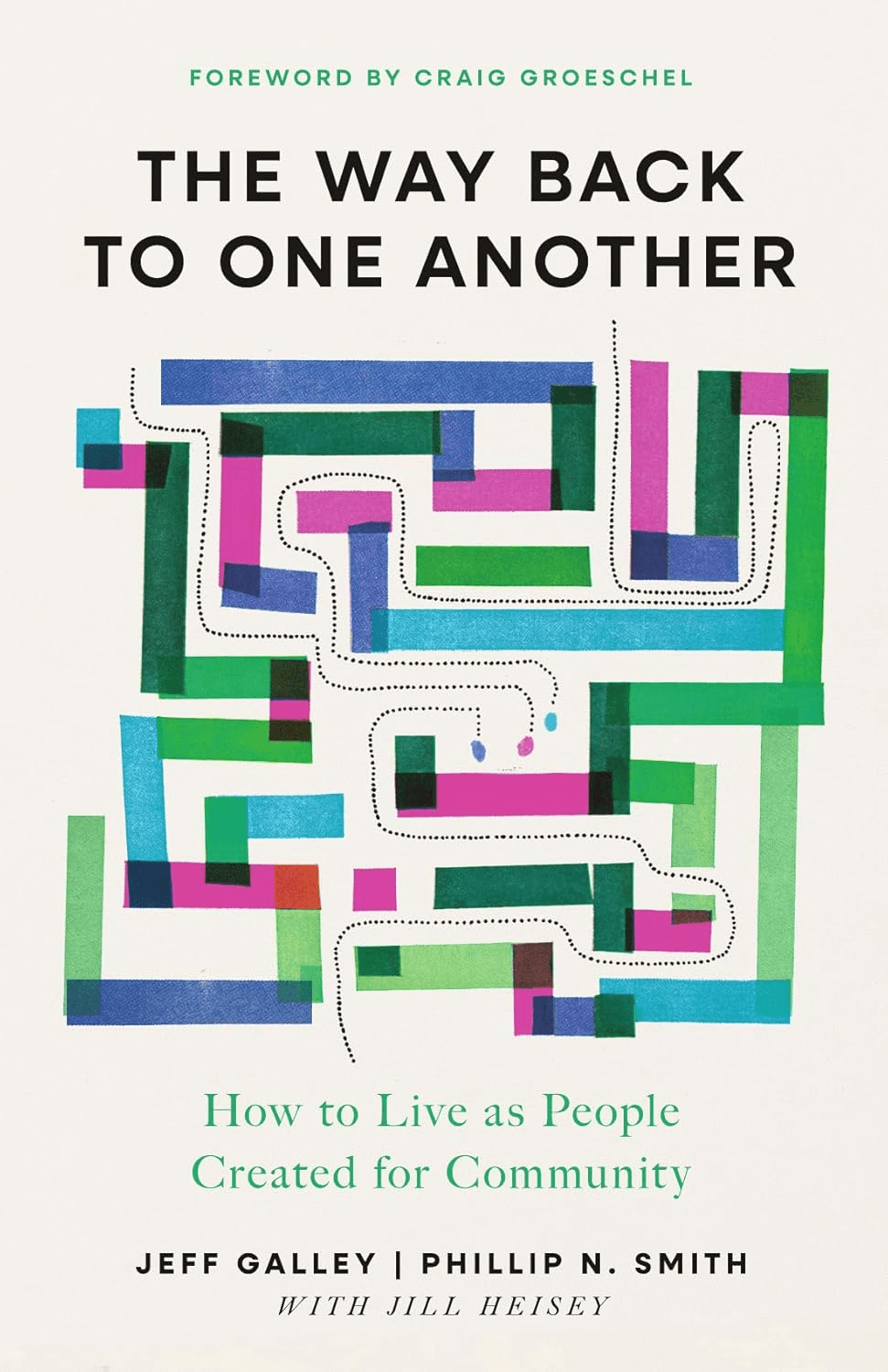
Taken from The Way Back to One Another by Jeff Galley and Phillip N. Smith. Copyright ©2026. Used by permission of InterVarsity Press.