
William Law
6 min read ⭑
TROUBLEMAKERS & SAINTS
Dangerous wisdom from the departed
William Law · 1686–1761 · English priest
Law wrote this for a country that assumed it was Christian and lived otherwise. The West assumes nothing now — which only sharpens him. His readers had every reason to pretend. You have none. Read slowly, and let the challenges he set before them become the ones God is setting before you.
Every person, when he first applies himself to the exercise of this virtue of humility, must … consider himself as a learner, that is to learn something that is contrary to former tempers and habits of mind, and which can only be got by daily and constant practice.
He has not only as much to do as he that has some new art or science to learn, but he has also a great deal to unlearn: he is to forget and lay aside his own spirit, which has been a long while fixing and forming itself; he must forget and depart from abundance of passions and opinions, which the fashion, and vogue, and spirit of the world, has made natural to him.
He must lay aside his own spirit; because as we are born in sin, so in pride, which is as natural to us as self-love, and continually springs from it.

andrik-langfield; Unsplash
Now, according to the spirit and vogue of this world, whose corrupt air we have all breathed, there are many things that pass for great and honourable, and most desirable, which yet are so far from being so, that the true greatness and honour of our nature consists in the not desiring them.
To abound in wealth, to have fine houses, and rich clothes, to be attended with splendour and equipage, to be beautiful in our persons, to have titles of dignity, to be above our fellow-creatures, to command the bows and obeisance of other people, to be looked on with admiration, to overcome our enemies with power, to subdue all that oppose us, to set out ourselves in as much splendour as we can, to live highly and magnificently, to eat, and drink, and delight ourselves in the most costly manner, these are the great, the honourable, the desirable things, to which the spirit of the world turns the eyes of all people.
The history of the Gospel is chiefly the history of Christ's conquest over the spirit of the world. And the number of true Christians is only the number of those who, following the Spirit of Christ, have lived contrary to this spirit of the world.
But notwithstanding the clearness and plainness of these doctrines which thus renounce the world, yet great part of Christians live and die slaves to the customs and temper of the world.
Thus do the impressions which we have received from living in the world enslave our minds, that we dare not attempt to be eminent in the sight of God and holy angels, for fear of being little in the eyes of the world.
From this quarter arises the greatest difficulty of humility, because it cannot subsist in any mind, but so far as it is dead to the world, and has parted with all desires of enjoying its greatness and honours.
And when you are once advanced thus far, as to be able to stand still in the torrent of worldly fashions and opinions, and examine the worth and value of things which are most admired and valued in the world, you have gone a great way in the gaining of your freedom.
Again: to lessen your fear and regard to the opinion of the world, think how soon the world will disregard you, and have no more thought or concern about you, than about the poorest animal that died in a ditch.
Think upon the rich, the great, and the learned persons, that have made great figures, and been high in the esteem of the world; many of them died in your time, and yet they are sunk, and lost, and gone, and as much disregarded by the world, as if they had been only so many bubbles of water.
Is it therefore worth your while to lose the smallest degree of virtue, for the sake of pleasing so bad a master, and so false a friend, as the world is?
Lastly, You must consider what behaviour the profession of Christianity requireth of you with regard to the world.
Christianity therefore implieth a deliverance from this world, and he that professeth it, professeth to live contrary to everything, and every temper, that is peculiar to this evil world.
Our Blessed Lord Himself has fully determined this point in these words: “They are not of this world, as I am not of this world.” This is the state of Christianity with regard to this world. If you are not thus out of, and contrary to the world, you want the distinguishing mark of Christianity.
We may deceive ourselves, if we please, with vain and softening comments upon these words; but they are, and will be, understood in their first simplicity and plainness by every one that reads them in the same spirit that our Blessed Lord spoke them. And to understand them in any lower, less significant meaning, is to let carnal wisdom explain away that doctrine by which itself was to be destroyed
The Christian’s great conquest over the world is all contained in the mystery of Christ upon the Cross.
And the state of Christianity implieth nothing else, but an entire, absolute conformity to that spirit which Christ showed in the mysterious Sacrifice of Himself upon the Cross.
“There is nothing ... that a good Christian ought to be more suspicious of, or more constantly guard against, than the authority of the Christian world.”
Thus was the Cross of Christ, in St. Paul's days, the glory of Christians; not as it signified their not being ashamed to own a Master that was crucified, but as it signified their glorying in a religion which was nothing else but a doctrine of the Cross, that called them to the same suffering spirit, the same sacrifice of themselves, the same renunciation of the world, the same humility and meekness.
Thus you see how plainly the Scripture sets forth our Blessed Lord as our Representative, acting and suffering in our name, binding and obliging us to conform to all that he did and suffered for us.
This is the state of separation from the world, to which all orders of Christians are called. They must so far renounce all worldly tempers, be so far governed by the things of another life, as to show that they are truly and really crucified, dead, and risen, with Christ.
Thus is it that Christianity has placed us out of and above the world; and we fall from our calling, as soon as we fall into the tempers of the world.
For as true Christianity is nothing else but the Spirit of Christ, so whoever hath His Spirit will be hated, despised, and condemned by the world, as He was.
You will perhaps say, that the world has now become Christian, at least that part of it where we live; and therefore the world is not now to be considered in that state of opposition to Christianity, as when it was heathen.
It is granted, the world now professeth Christianity. But will any one say that this Christian world is of the Spirit of Christ?
Consider, secondly, what you are to mean by the world. Now this is fully described to our hands by St. John. “All that is in the world, the lust of the flesh, the lust of the eyes, and the pride of life.” This is an exact and full description of the world.
And indeed the world, by professing Christianity, is so far from being a less dangerous enemy than it was before, that it has by its favours destroyed more Christians than ever it did by the most violent persecution.
There is nothing, therefore, that a good Christian ought to be more suspicious of, or more constantly guard against, than the authority of the Christian world.
And all the passages of Scripture which represent the world as contrary to Christianity, which require our separation from it, as from a Mammon of unrighteousness, a monster of iniquity, are all to be taken in the same strict sense, in relation to the present world.
For the change that the world has undergone has only altered its methods, but not lessened its power, of destroying religion.
Christians had nothing to fear from the heathen world but the loss of their lives; but the world become a friend, makes it difficult for them to save their religion.
There is, therefore, hardly any possibility of saving yourself from the present world, but by considering it as the same wicked enemy to all true holiness, as it is represented in the Scriptures.
These reflections will, I hope, help you to break through those difficulties, and resist those temptations, which the authority and fashion of the world hath raised against the practice of Christian humility.
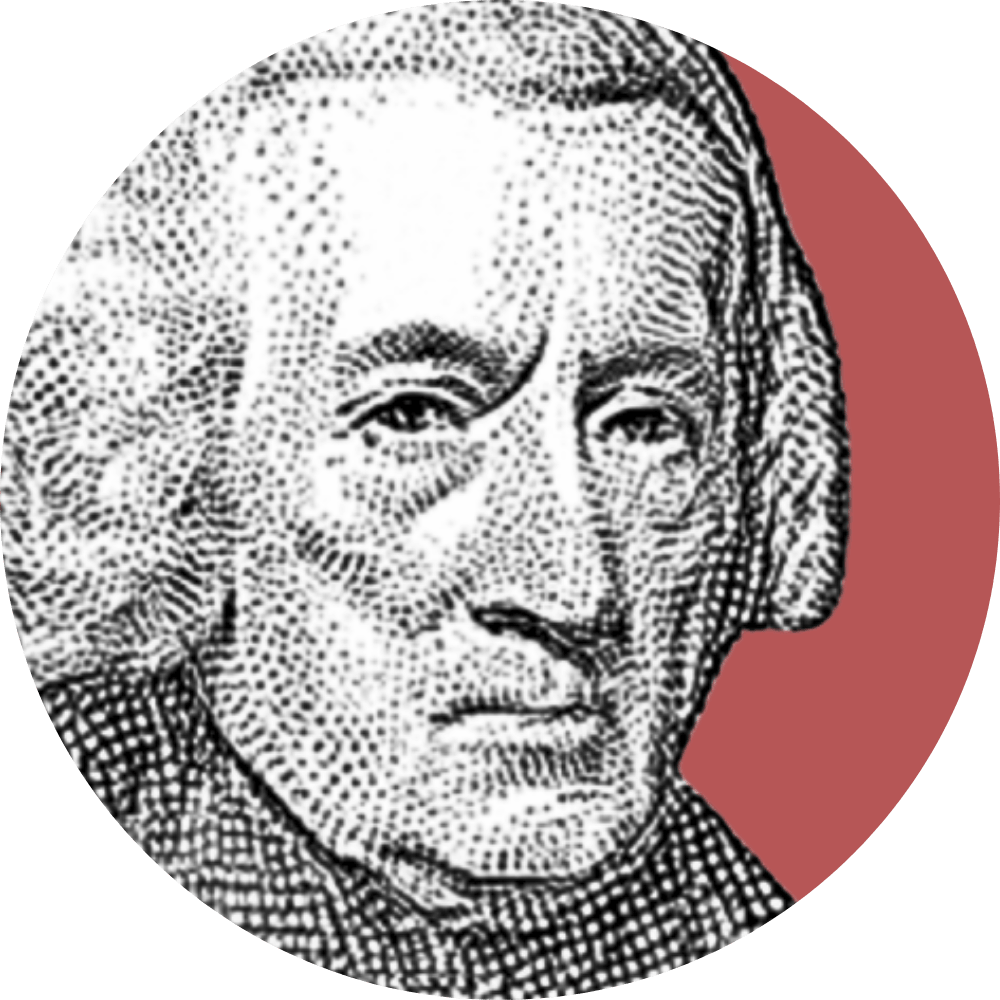
William Law was an influential 18th-century Anglican priest, theologian, and spiritual writer known for his devotional classic “A Serious Call to a Devout and Holy Life” (1728), which emphasized practical Christian living and had a profound impact on the evangelical revival movement, inspiring figures like John Wesley and Samuel Johnson.
Abridged from the chapter of the same name in “A Serious Call to a Devout and Holy Life” by William Law.
This work is in the public domain. Passages have been omitted for length; Law’s wording is unchanged.