Questions in the Cemetery
Tiffany Stein
4 min read ⭑
It’s hard to find something worth living for when what — or who — you would die for is already gone.
But I was being watched. That was one of the main reasons I even bothered to get out of bed each morning after David died.
Our grief was public. Jason and I were pastors at a megachurch in Dallas, and thousands had followed our journey through my pregnancy, David’s fragile life, his death, and the aftermath. I knew people were looking to see how I would respond. Not polished. Not composed. But honest. Because I wasn’t the only one grieving. The women I pastored — hundreds of them — were grieving too.
They had prayed for David’s healing. They had fasted, held prayer vigils, canceled Bible study for intercession, and gathered others around the world to plead with God. They had done all the “right” things.
The death of a beloved baby was not what they expected from a good God.

Unsplash+
A dear friend captured what many felt: “God, you got this one wrong.”
As their shepherd, I hurt with them. I didn’t want to walk through this suffering. And I didn’t want them to have to walk through it either.
But it was time. Time to see whether what I had preached about the goodness of God was also true in the cemetery. They were watching me. And honestly, I was watching myself too.
When God acts in ways you don’t expect — when circumstances seem to contradict his character — the most natural response is accusation: God, who are you!
There’s a world of difference between that and God, who are you? The difference isn’t grammar. It’s posture.
The exclamation point demands proof. The question mark seeks relationship.
The exclamation point says, “Defend yourself.” The question mark says, “Help me understand.” One assumes a courtroom. The other invites a conversation.
After David’s death, I framed God’s love as either/or. Either God is loving — and therefore wouldn’t have allowed this — or he is not loving, and this loss is cruel and senseless.
Either/or thinking flattens mystery.
I found myself oscillating between attack and surrender. But as I leaned into lament — recognizing that my anger masked a deeper fear of abandonment — I slowly softened. God was not threatened by my questions.
My anger wasn’t the absence of faith. It was the ache of disappointed trust.
The posture of curiosity requires suspended judgment. It requires admitting that there will always be a gap between who God fully is and what I can understand. I am invited to know God as he is — not as I wish him to be.
So who is he?
When Moses asked to see God’s glory, God responded by proclaiming his name: compassionate, gracious, slow to anger, abounding in love and faithfulness. Not wrath first. Not condemnation first. Compassion first.
The bent of God’s heart is mercy.
He is slow to anger. I am not. Irritation rises quickly in me — over traffic, inconvenience, unmet expectations. But God must be provoked to anger because love is his default posture.
Even his discipline is framed within covenant faithfulness.
His correction is real. His love is greater.
“Even in the cemetery, the goodness of God still stands.”
Still, in the rawness of grief, theology alone did not soothe me. It is one thing to affirm that God is compassionate. It is another to sit in a nursery that will never be used and believe he is still good.
It isn’t enough to know that God cares. You want to know that he will act.
And he has.
Centuries before Christ, Isaiah spoke of a suffering servant who would bear our griefs and carry our sorrows. Pierced. Crushed. Wounded. Punished — not for his own sin, but for ours.
God’s answer to human pain was not distance. It was incarnation.
God did not shout comfort from heaven. He stepped into the ache.
Jesus entered rejection, betrayal, abandonment, and physical agony. In Gethsemane, he prayed in anguish. On the cross, he cried, “My God, my God, why have you forsaken me?”
That is not detached theology. That is lament.
He did not bypass darkness. He entered it.
From noon until three on Good Friday, darkness covered the land. The Light of the World stepped into our disorientation and despair. He bore the weight of sin and separation so that we would never be ultimately separated from the love of God.
When I asked, “God, who are you?” the cross answered.
He is the God who absorbs suffering rather than avoids it.
He is the God whose love is not disproven by pain — but revealed through it.
In the mystery of the cross, death was not ignored. It was defeated.
And because of that, I could begin — slowly — to believe that David’s death was not the end of the story. That my grief, though real and searing, was not evidence of God’s absence.
Even in the cemetery, the goodness of God still stands.
I was being watched. But more importantly, I was being held.
The same God who revealed himself as compassionate and gracious had already done something about my pain.

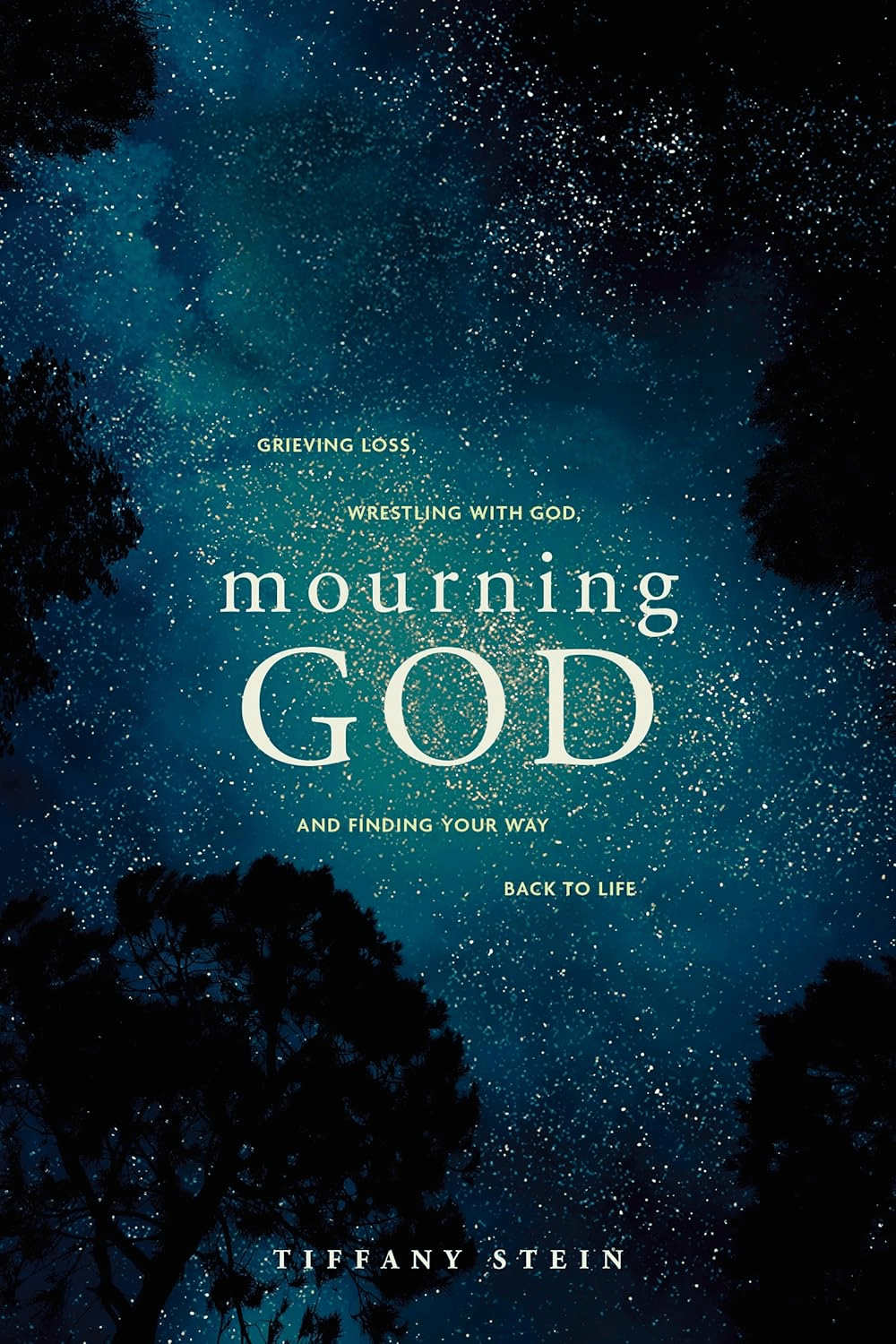
Tiffany Stein is an ordained minister and a fourth-grade teacher. She previously served as a women’s pastor and marriage and care director at Irving Bible Church in Dallas. Her first book, Mourning God: Grieving Loss, Wrestling With God, and Finding Your Way Back to Life, comes out in March 2026. Tiffany delights in one-on-one conversations with a cup of hot tea in hand, and takes every opportunity to hike the Texas Hill Country. Tiffany and her family live in Austin.
Taken from Mourning God: Grieving Loss, Wrestling with God, and Finding Your Way Back to Life by Tiffany Stein. Copyright © 2026. Used by permission of NavPress.