John Marriott and Shawn Wicks
5 min read ⭑
One of my son’s favorite phrases is “easy-peasy lemon squeezy,” which means “very simple and easy to do.” It is his go-to phrase when I assign him a task or chore, such as cleaning up the backyard or taking out the trash. But this snappy response causes me great consternation. Why? Because I know whatever job I’ve assigned him, he is going to do it in an “easy-peasy lemon squeezy” manner, which is not really doing the job at all and might even cause me more work in the long run. Truth be told, sometimes I’d rather hear moans and groans, because at least I would know he genuinely understands what is being expected of him.
When some people take on the task of reading and interpreting the Bible, they expect it to be “easy-peasy lemon squeezy.” In approaching it this way, they are (like my son) almost guaranteed not to do the job correctly and to walk away with an erroneous understanding of what it actually says. So we suggest that, rather than thinking of the Bible as a lemon to be squeezed, it is better to think of it more like an onion. Yes, an onion.

Jazmin Quaynor; Unsplash
If you are culturally astute (said tongue in cheek), you might know the movie “Shrek.” The lead character and hero of that movie — an antisocial, snot-green ogre named Shrek — tells his talking donkey friend, “Ogres are like onions. . . . Onions have layers; ogres have layers.” In saying this, Shrek wants Donkey to know there is more to him than meets the eye and that to truly understand him, Donkey needs to look past his appearance and see who he is on the inside.
The same is true with the Bible. To accurately grasp what it’s saying, we need to invest time and energy into peeling back its layers and examining it properly.
You might be thinking, But wait — I thought the Bible was for everyone. It is! Along with the doctrines of inspiration, inerrancy and sufficiency, the clarity (“perspicuity,” in technical terms) of Scripture is one of the foundational tenets of Protestant Christianity. It means the message of the Bible is unambiguous, is understandable, and does not require clergy or biblical scholars to make sense of it. Reformers like Martin Luther, John Calvin, and their precursors, such as John Wycliffe and William Tyndale, held strongly to this doctrine in defiance of their Roman Catholic counterparts. These reformers were convinced that kings and peasants alike could understand and apply the message of the Scriptures to their lives. Fueled by this belief, they worked tirelessly and suffered persecution to the point of prison and martyrdom to fulfill their vision of a biblically literate church, where both clergy and laity directly benefit from the words of God.
The doctrine of Scripture’s clarity means that the Bible is open for all to read, study, ponder and apply. It means that what can be known about God’s nature, character and will, especially as it pertains to salvation history, is accessible to the common person and does not require any special gifting or prophetic insight. This should encourage us that no matter how difficult we might find it to relate to the Bible, if we keep approaching it in good faith and with due diligence, our efforts will not be wasted.
But now, you might be asking, If the Bible is so clear, why did you say that the Bible is like an onion and not a lemon? And why is it so many people — even smart people — have misunderstood it? First, while the words of Scripture were clear to their original audiences, they are now so distant from us that they have become obscure. The more time that passes and the less we have in common with the ancient world, the more difficult it becomes to fully understand what the Bible is saying. This is because God has chosen to reveal himself in history. You could rightfully say that every time we open our Bibles, it is like we are traveling back in time to a foreign land. This means that today we need translators and guides to help us navigate our journey into the biblical text.
“The goal of interpreting the Bible accurately is a noble undertaking, as well as a never-ending labor of love.”
Second, the Bible is often hard to understand and obscure because of our own sinfulness. While the immense differences in time and culture play an important role, we should not underestimate the negative impact our own biases and prejudices have on understanding the Bible. Generally speaking, human beings can be quite unreceptive to things we find disagreeable. It is worth considering that Jesus, when confronting the audience of his day about their misinterpretations of the Bible, never once faulted the Scriptures for being confusing or hard to understand. Instead, he consistently held his audience accountable, using phrases such as “You have heard it said . . . but I say to you . . . ,” “Haven’t you read in the Scriptures?” and “You are wrong, because you know neither the Scriptures, nor the power of God.” On multiple occasions, Jesus also rebuked those holding skewed interpretations and applications of Scripture, especially when they were being used to justify sinful attitudes. Likewise, we must be careful when we approach the Bible that we are not letting our own sinful attitudes and desires obscure what it says.
Third, and most significantly, we believe the Bible is not plain and simple in its entirety because it has God as its ultimate author. Because of his divine nature, God and his ways sometimes are elusive and inscrutable. So it’s natural that some parts of his revelation would be more challenging to understand than others. In other words, the reason why the Bible is puzzling in some places is because God is mysterious and intends it to be that way. To have it any other way would diminish his glory and majesty, which are essential qualities of his divine nature.
This makes some people feel like God is distant or absent. However, it also forever lures those who genuinely want to explore God and deepen their knowledge and love for him. There is always more to learn about God. It is for this reason that the Bible, as much as it is simple and clear, is also vast and immeasurable.
Taking into consideration both the clarity of Scripture and the elusiveness of God, we believe that the goal of interpreting the Bible accurately is a noble undertaking, as well as a never-ending labor of love. It is an adventure in its own right, and one that promises great reward. For Christians, reading and studying the Bible should be a way of life, for truly it is a “lamp to guide [our] feet and a light for [our] path” (Psalm 119:105, nlt), able to make us wise and “equip [us] to do every good work” (2 Timothy 3:17, nlt).


John Mariott is the former coordinator of the Biola Center for Christian Thought and faculty affiliate of the Harvard University Human Flourishing Program. He is the author of several books on deconversion. He currently teaches at Talbot School of Theology.
Shawn Wicks has served as a pastor for over 35 years and is the vice president of Verdugo Pines Bible Camp. He preaches and ministers to people of all ages and backgrounds throughout the year. He especially enjoys ministering to families, couples and those who serve in leadership.
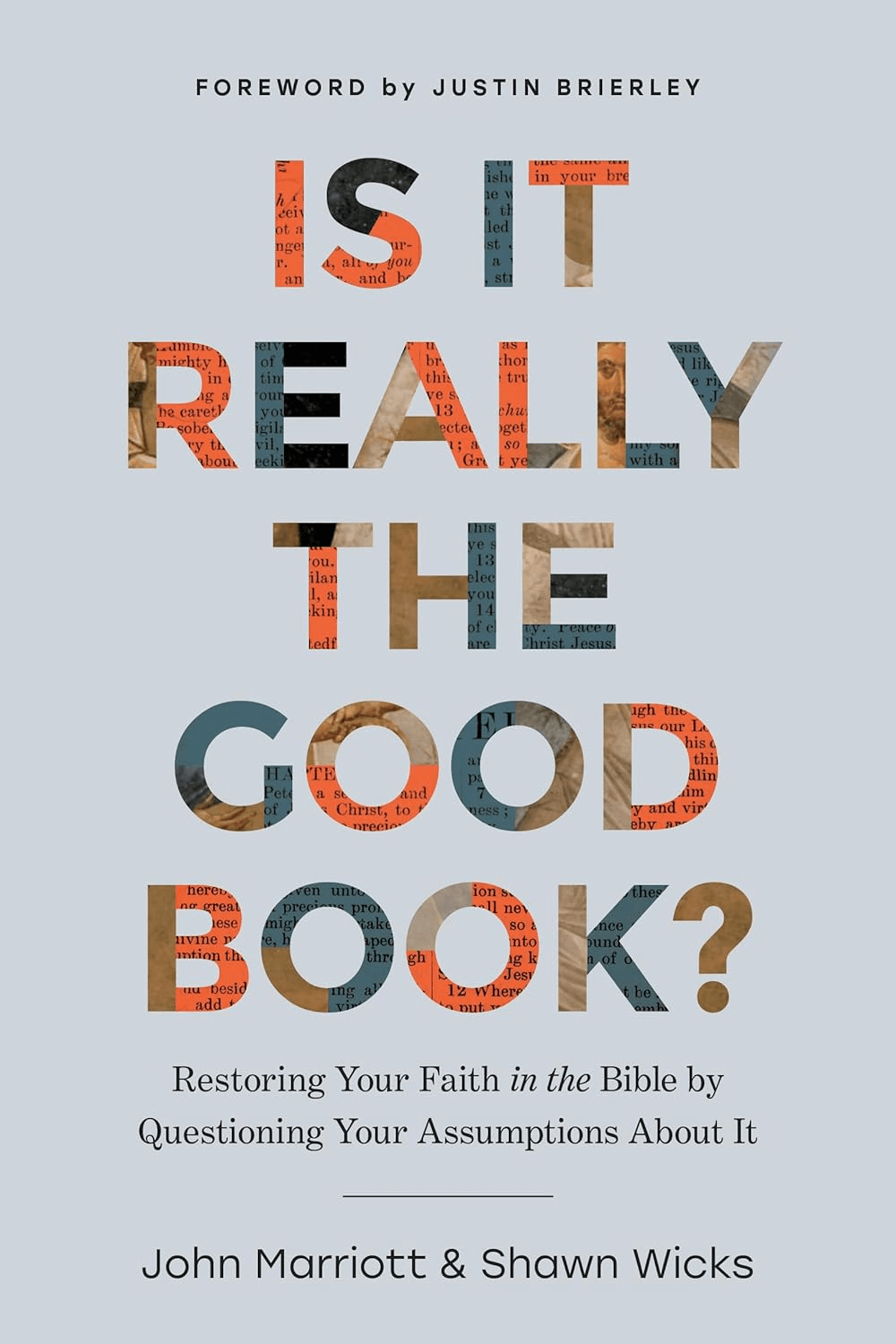
Taken from Is It Really the Good Book?: Restoring Your Faith in the Bible by Questioning Your Assumptions About It by John Marriott and Shawn Wicks. Copyright © 2026. Used by permission.