Old Books: Water from Deep Wells
Gerald Sittser
5 min read ⭑
Of all the books I have read, one stands above them all. It is “The Confessions of Saint Augustine,” who served as bishop of Hippo in North Africa in the early fifth century. What about this book makes it tower over the rest, even over other spiritual classics? Why do I return to it year after year and always seem to find new insights? What makes it so timeless and compelling? Its genius comes, I think, from Augustine’s ability to reflect so brilliantly on his own conversion experience, which he wrote in the form of a prayer, as if he were having an intimate conversation with God about his soul’s journey to God.
Casting off the faith of his mother when he was only a teenager, Augustine (a.d. 354-430) sampled various philosophies and lifestyles before realizing that only God could answer the deepest questions of his mind and satisfy the deepest desires of his heart. He indulged himself in physical pleasure, but it failed to deliver what it promised. No matter how much he enjoyed the lusts of the flesh, he always ended up wanting more. He strove for success, fame and recognition, but these, too, led to bitter disappointment. He discovered over time that he had become a prisoner to his base desires and ambitions, which threatened to destroy his life. What he truly desired, of course, was to know God. “I was hankering after honors, wealth and marriage,” he prayed to God, “but you were laughing at me. Very bitter were the frustrations I endured in chasing my desires, but all the greater was your kindness in being less and less prepared to let anything other than yourself grow sweet to me.” Not that pleasure and beauty and ambition are evil in themselves. They become evil only when pursued apart from God. God must always be first in our lives because God is the center, source and end of all existence. “Sin gains entrance through these and similar good things when we turn to them with immoderate desire, since they are the lowest kind of goods and we thereby turn away from the better and higher: from you yourself, O Lord our God, and your truth and your law.” Augustine eventually surrendered his life to God, but only after a long and tumultuous struggle.

Patrick Tomasso; Unsplash
“The Confessions” is about one man’s journey to God. It still speaks, even though it was written 1,600 years ago. Augustine is one saint among hundreds whose stories need to be told, remembered and cherished, for they remind us that we are not alone, that we do not know it all, that we have not exhausted the depths of the Christian faith. Their voices echo to us across the centuries, saying, “There is more, so much more!” They invite us to drink more deeply from the well of living water available in the Christian faith, which promises to satisfy the deepest thirst in all of us, a thirst that is part of our very nature as human beings who have been created by God and for God but who have rebelled against God and tried to find satisfaction in something less worthy. This insatiable thirst can only be quenched in one way — in a more intimate relationship with God as we know him in the face of his Son, Jesus Christ, and through the life-giving power of the Holy Spirit. Only the triune God can satisfy our deepest longings.
Much of what we see and experience in contemporary Christianity is not leading us into the depths of God. If anything, it is making us feel restless and dissatisfied. There must be more than this! we say to ourselves. We grow weary of trivial controversies and petty jealousies that divide the church, massive buildings and glittery programs that dazzle but do not make disciples, self-help sermons that gloss over the great truths of the biblical faith, styles of worship that pander to popular tastes, Christian leaders who strive for political influence at the cost of faithfulness to the gospel. Not that all things contemporary are uniformly and unequivocally bad. American Christianity in particular is thriving; it boasts of high rates of church attendance and exercises broad influence in our culture. Still, success itself can deceive us into thinking we know it all and have it all, as if the world has been breathlessly waiting for us to arrive on the scene.
“The Holy Spirit will use the knowledge of history to send us on a journey that could lead us into the depths of God.”
Every generation of believers faces the risk of becoming a prisoner to its own myopic vision of the Christian faith, assuming that how it understands and practices faith is always the best. C. S. Lewis cited this problem as a reason for reading old books. “None of us,” he wrote, “can fully escape this blindness, but we shall certainly increase it, and weaken our guard against it, if we read only modern books,” for modern books (as well as the ideas and practices they convey) only tell us what we already know and thus reinforce our blind spots and prejudices. “The only palliative is to keep the clean sea breeze of the centuries blowing through our minds, and this can be done only by reading old books.” Of course, people from the past did not get everything right. “People were no cleverer then than they are now; they made as many mistakes as we. But not the same mistakes.” Their successes will teach us; their failures will warn us. “Two heads are better than one, not because either is infallible, but because they are unlikely to go wrong in the same direction.”
History can be a valuable resource for us, especially in the spiritual life, for it provides examples of how believers who lived in other times and places understood what it means to seek, know and experience God, which captures the essential meaning of “spirituality.” As different as they are from us, these believers can teach us truths about the Christian faith that we have not yet learned or do not consider important. It could be that returning to the old ways will enable us to live a new way for God, a way characterized by deeper knowledge, richer experience and greater faithfulness to the gospel. It could be that discovering old truths will enable us to live as new people, a people devoted to serving God’s kingdom. It could be that by looking back, we will be able to look ahead and set a new course for our lives. History will show us that there is more to the Christian faith than what we think and have experienced. It will teach us truths that our contemporary religious blind spots prevent us from seeing, challenge us to read Scripture with new eyes, beckon us to practice spiritual disciplines we never tried before, and enable us to view our own time and place from a fresh perspective. The Holy Spirit will use the knowledge of history to send us on a journey that could lead us into the depths of God.

Gerald L. Sittser is professor emeritus of theology at Whitworth University and a senior fellow in the Office of Church Engagement. He is a frequent university lecturer and writer and has authored nine books, including A Grace Disguised, A Grace Revealed, The Will of God as a Way of Life, Resilient Faith and A Cautious Patriotism. He is married and has five married children and twelve grandchildren.
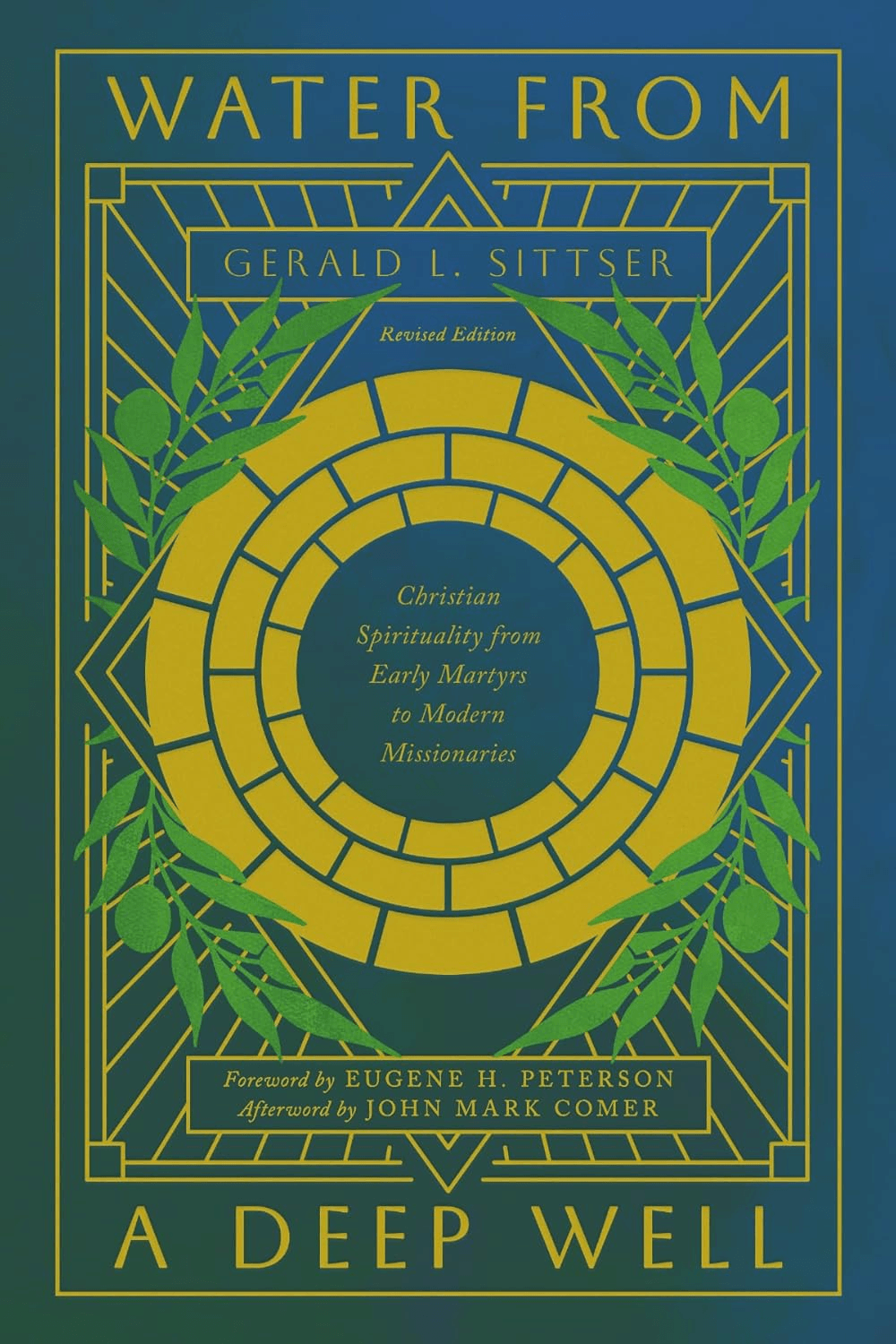
Taken from “Water from a Deep Well” by Gerald L. Sittser. Copyright © 2026. Used by permission of InterVarsity Press.