Tish Harrison Warren
5 min read ⭑
“The Life of Antony,” a fourth- century book about perhaps the most famous Desert Father, contains a strange and disturbing story. Antony was one of the first monks to move into the Egyptian desert to devote his life to prayer. When he was thirty-five years old, living among the tombs outside of his village on the Nile, he encountered demons who beat him brutally. He was broken and in pain, nearly to the point of death. Yet he fought on. Eventually, as Antony fought back, the Lord came to his aid — in the story, Antony sees a beam of light and the demons flee. Panting and out of breath, Antony asks God, quite understandably, “Where were you? Why didn’t you appear in the beginning, so that you could stop my distresses?”
A voice comes to him: “I was here, Antony, but I waited to watch your struggle.”
Suffice it to say, I have never been in a fistfight with demons, nor has anyone I’ve ever met. (There’s a lot of incredibly strange stuff in “The Life of Antony.”) But all of us can likely relate to feeling beaten down by the darkness and evil in the world, the anxieties and compulsions within us, the complexities and difficulties around us. All of us have had times when we long for God to show up, to show himself, to make things easier, but feel that God hangs back, silent and distant. All of us have had times when we feel bruised and bloodied by life and we ask God, “Where are you? Why are you nowhere to be found?”

Kristaps Ungurs; Unsplash
God’s answer to Antony in this story is hard for me to take. “I waited to watch your struggle.” What kind of answer is that?! It makes God seem like an aloof jerk, or a middle school bully, sitting idly by while a kid gets pounded.
Yet plainly, if we look at our lives, there are times that feel burdensome, brutal, or wearying, and relief does not come quickly. When God seems to disappear or hang back, is it negligence? Is it cruelty? And if not, then what’s the purpose? Why would anyone who loves us watch us struggle?
One answer comes from John of the Cross, a monk from sixteenth-century Spain, in his famous “dark night of the soul,” an idea I misunderstood until recently. I thought of “the dark night” as an acute season of suffering — those times when we face life’s deepest tragedies. But that’s not primarily how John describes it.
As a monk, John of the Cross became known for his mystical encounters with Jesus and his spiritual insight. He and his friend Teresa of Ávila together sought to reform monastic life in Spain, but (perhaps unsurprisingly) some powerful people didn’t like his agitation, and his efforts eventually landed him in prison. From that quite literally dark place of isolation and suffering, he set out to write a guide to how we progress in the spiritual life. He wanted to map out the terrain of spiritual growth, both for beginners and for what he called “proficients.” He wanted to warn of its pitfalls and guide others on the way.
When we first come to faith, John explains, God often gets us going through a sense of sweetness and exhilaration — what John calls “illumination.” It’s the same energy we associate with so many beginnings — young love, a new adventure, the start of an exciting creative project. When a soul is first “converted to the service of God,” he writes, it is “as a rule, spiritually nurtured and caressed by God, even as is the tender child by its loving mother.” Prayer and worship feel ardent. The spiritual life is abundant and intriguing. God seems plain to see. We feel passionate and alive. Work, relationships and faith feel exciting.
Christians throughout church history, particularly mystics, tell this story often: God gives consolation after consolation — visions, miracles, certainty, a palpable sense of his closeness — to get people going in their life of faith. And then, the resistance increases. The training wheels come off. Things suddenly feel arduous and disorienting. This is the dark night. John of the Cross describes it as a time when we sense spiritual abandonment and a loss of meaning. He specifically calls this a time of aridity.
“John sees the dark night as an essential stage of growth that brings new progress in knowing God.”
Just as seeking “flow” does not sustain a craft, John says that seeking “consolation” in the spiritual life is not what forms disciples. As great as times of “sweetness” may be, they carry a temptation: to seek God merely for “spiritual pleasures,” which John says can morph into “spiritual avarice.” We want a relationship with God to feel easy and fulfilling and to meet our felt needs. We want God to come like a hero in a cape to rescue us from difficulties, from a life that feels arduous, disappointing or monotonous. We subtly begin to treat faith as a hit or a high, and ultimately, a consumer product. We lurch from spiritual fad to spiritual fad, looking for something that works for us and that makes our life work.
John understood that devotion itself could be co-opted into consumerism long before Instagram influencers, conference headliners, and faith-based “content creators” promised to revolutionize our spiritual lives with devotional apps, podcasts, and self-help books. He describes people who “expend all their effort in seeking spiritual pleasure and consolation.” They never tire “of reading books and they begin, now one meditation, now another, in their pursuit of this pleasure which they desire to experience in the things of God.”
Certainly, in our culture, there are still many — both in the church and outside it — who chase the next spiritual trend. People have built whole careers by offering half-baked spiritual novelties, self-empowerment, and self-transformation. But John is skeptical of this. It’s not that books or devotionals or conferences are bad, but that, as my friend’s mentor once pointed out to him, we have cultivated “an insatiable appetite for the interesting.”
To continue being formed in apprenticeship to Christ, we must learn to set aside what John of the Cross calls our “swaddling clothes” and come to God, not for certain spiritual feelings, highs, or insight, but merely for God himself. In order for us to grow in this way, God allows the sense of his presence to lessen. From our vantage point, it seems as if he withdraws. It seems he’s sitting back and watching us struggle.
For those, like me, who were subtly (or not so subtly) taught that our subjective experience of God determines the sincerity of our faith, this resistance and difficulty in the spiritual life is disorienting. It’s difficult to believe that this isn’t a punishment of some sort, a divine response to our sin. And indeed, John warned us that there will be Christians who insist that it is. When God leads us down a “path of dark contemplation and aridity,” he writes, we will inevitably meet others who blame the problem on temperament. They will tell us to cheer up, to look on the bright side, to stay positive. Some will assume that spiritual emptiness can only arise from personal failure or hidden sin.
Yet John sees the dark night as an essential stage of growth that brings new progress in knowing God. It is not a failure of apprenticeship. It is the apprenticeship.

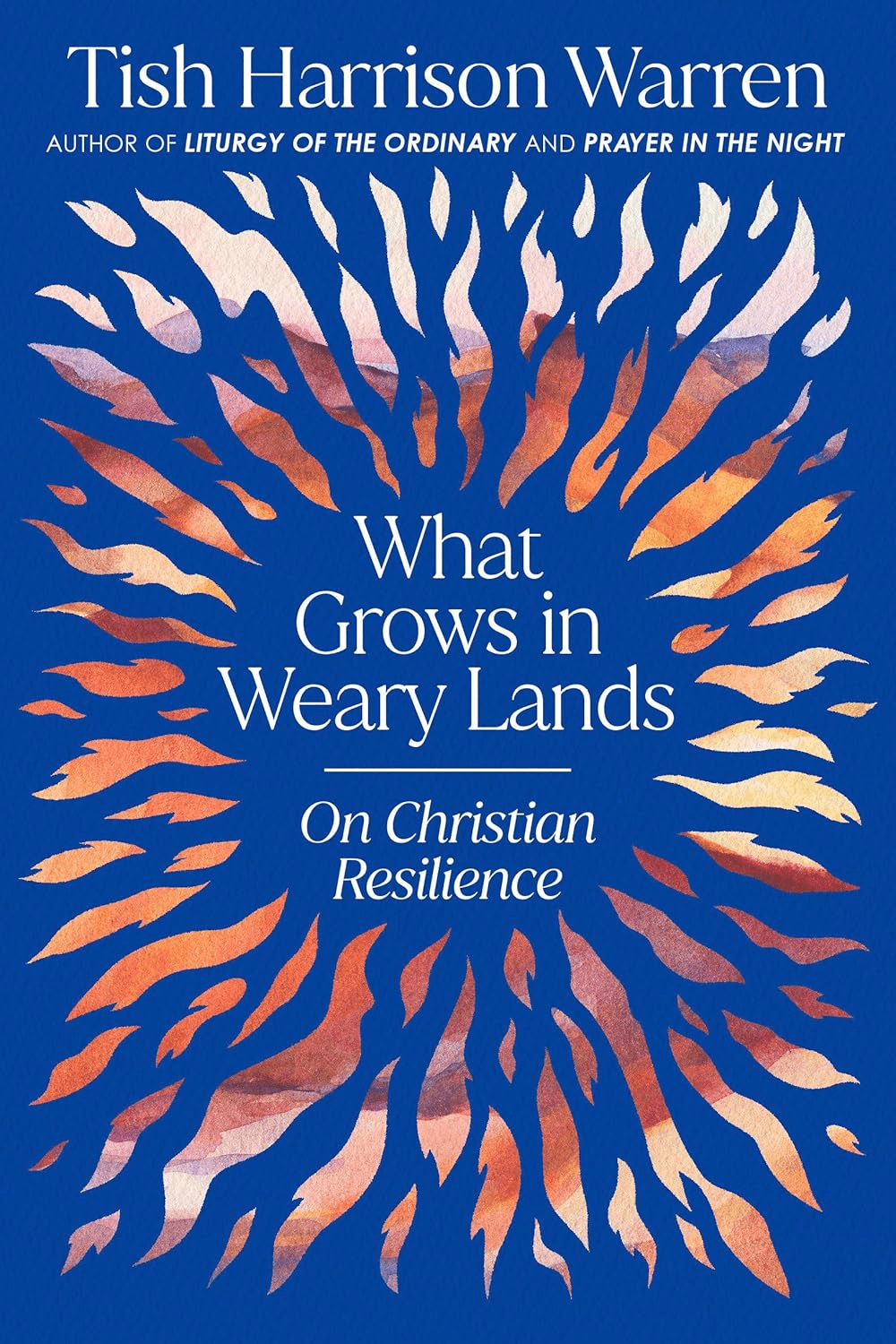
Tish Harrison Warren is the author of Liturgy of the Ordinary, which won Christianity Today's 2018 Book of the Year, Prayer in the Night, which won Christianity Today's 2022 Book of the Year and the 2022 ECPA Christian Book of the Year, and the forthcoming What Grows in Weary Lands: On Christian Resilience. She formerly wrote a weekly newsletter about faith for The New York Times. She is the C. S. Lewis Theological Writer-in-Residence for the Anglican Episcopal House at Truett Seminary and an assisting priest at Immanuel Anglican Church.
Taken from “What Grows in Weary Lands” by Tish Harrison Warren. Copyright © 2026. Used by permission of Convergent Books.