Jim Burns
6 min read ⭑
Rising above our circumstances often starts with doing internal work in our own lives. If we carry unresolved pain and don’t deal with it, we tend to repeat the very patterns we want to escape. I tell people all the time, “If you don’t heal, you will repeat.” It’s like the definition of insanity — doing the same thing over and over, hoping for a different response. Unresolved grief leaks out. Unresolved past relationships leak out, and patterns resurface in our relationships. The question is: What will it take for you to become emotionally, spiritually, and relationally healthy enough to build a solid foundation for your own life? The hard truth is we often know what needs to change but don’t act on it. We won’t have a perfect, problem-free life this side of heaven, but most of us can move in a better direction.
Cathy and I came from somewhat dysfunctional families. We met in college and got married right after her graduation. We quickly realized that we were going to need to work on “our stuff” or the marriage was not going to last. We also knew that if we had kids, we would likely repeat the negative family patterns of our past unless we made a conscious choice to change. One year into our marriage, we were faced with a decision: recover or repeat our family history in the way we did life. The choice to change turned out to be one of the most important of our lives.

Luise and Nic; Unsplash
During that time, we put two words together: transitional generation. Yes, it’s possible to break the cycle and change your family’s trajectory, but only if you are willing to do the hard work. The principle of “We face either the pain of discipline or the pain of regret,” became a key for me to become the person to break the chain of dysfunction in our family. Part of my journey to recover and not repeat my negative family patterns was to quit blaming Cathy for all our issues and look at my own issues. After all, when I was pointing a finger at her, three fingers were pointing back at me. The only person I could truly change was me. That meant getting ruthlessly honest about my own brokenness in order to heal. The pain of discipline works with our mindset just as well as with other aspects of our lives.
Now, as a counselor of sorts to other parents, I often see that when just one person gets healthy, it moves the needle for the family in a good direction. Breaking the chain of dysfunction in your family starts with you. You will need to focus on healing from your own emotionally unhealthy relationships.
When your children become adults and live with their own set of values and experiences, a new season begins for you as well. While writing “Finding Joy in the Empty Nest,” I noticed a pattern among the people I spoke with: Those who invested in their own personal growth began to thrive. They found renewed purpose and meaning through such things as participating in a women’s Bible study at their church, joining a gym, volunteering at a hospital, or investing in building deeper friendships. Some went back to school or found a new job.
The ones who didn’t work on their own emotional, spiritual, and relational health were the ones who struggled the most to find meaning and joy in their new life without kids in the home. Many parents who had devoted their lives and energy to raising their children struggled as empty nesters because they weren’t willing to make healthy adjustments in their own lives. Without those changes, they often experienced deep sadness, depression, and anxiety when their children moved on. For many of these parents, their lives began to feel empty and even bitter. A coffee shop in San Diego has this sign out front. “Life is too short to be bitter.” I know they are talking about coffee, but isn’t that true of life as well? There is no benefit to a parent harboring bitterness in their heart for whatever circumstances come their way.
Isolation Is Not Your Friend
Healing doesn’t happen in isolation. To rise above your circumstances, you must invest in relationships that replenish and encourage you. Who inspires you? Who motivates you to be the best person you can be? Who is the person you enjoy spending time with? Invest in those kinds of relationships. When you surround yourself with replenishing relationships, you are moving toward a foundation for emotional and relationship health. It’s your own circle of support. Your own healing will often come through connection, support, and even your vulnerability with people who love and support you.
You don’t need to be part of a big group to keep from isolation. For example, my wife, Cathy, is an introvert. She is great with people, but she doesn’t need a crowd. She enjoys one-on-one coffee times or taking a walk with a friend. Do whatever keeps you from being isolated. Who sees you? Who knows you? How is your circle of support? Initiate and be intentional about developing friendships.
“You cannot keep birds from flying over your head, but you can keep them from building a nest in your hair.”
Cathy and I love watching movies. Cathy is usually the last one out of the theater because she likes to stay until the last credits roll. It used to bug me, but now I’m used to it. Who are the “rolling credits” in your life? Who cheers you on, holds you up, and helps you move forward? One woman recently told me that life with her adult children is hard. But once or twice a week, she gets together with friends who encourage her, and that small investment is what gives her strength to go back into the battle of life with her adult children. Smart woman. She is nurturing her own emotional growth with the community she is building around her. It’s making a difference.
Adaptability Is Key
When an adult child has strayed, a healthy relationship is difficult — if not impossible — without adaptability. I like what Martin Luther is credited with saying: “You cannot keep birds from flying over your head, but you can keep them from building a nest in your hair.” Adaptability doesn’t mean that you let your adult children walk all over you. It does mean being willing to adjust your expectations, dreams and relationships.
This all goes back to being careful that you work on your negativity pattern. Adaptability and negativity do not work well together. We all have problems and patterns. Problems can be solved. Patterns, however, are a bit tougher. They have already become ingrained behaviors that are harder to break, especially if they are rooted in negativity. Identifying your negative patterns will help you break them.
Understanding your triggers is crucial to maintaining good mental health and navigating the complex terrain of dealing with our emotional lives with our adult children. At its core, a trigger is anything that elicits a specific response.
As a parent, I had to learn about my negativity triggers to become more adaptable. The recovery community uses the acronym HALT to describe four common triggers: hungry, angry, lonely and tired. If I am experiencing any of these, I know I need to take care of the triggers before I try to solve the bigger issue.
What are your triggers? Name them, and it will become easier to be adaptable and flexible in a relationship with your kids, or anyone else, for that matter. I have a friend who always says, “Hurt people hurt people.” That makes sense, and the good news is that we can move toward a healthier way of living. Don’t expect this to happen overnight. We take steps in the right direction, and sometimes those steps are baby steps. As Henry Ford once said, “Nothing is particularly difficult if you divide it into small steps.”
We’ve been talking about negativity, but the same practice works for developing a positive mindset. We need to limit exposure to our triggers. I do this through a daily discipline of journaling my prayers and feelings. I also do it by practicing what I call “thank therapy.” Most mornings, I make coffee and sit in my chair near our backyard. I spend about twenty minutes reading the Bible and a devotional book, and I journal. I always include a list of reasons why I am thankful. This thank therapy always seems to straighten out my attitude.
Thankfulness helps to vanquish depression and anxiety and reminds me how fortunate I am. Therapy is especially helpful if, during a relational issue, I find reasons to be thankful for the person who is annoying or frustrating me. It doesn’t always fix the problem, but it almost always gives me a better perspective.
Try this little exercise: Put down this article and write twenty reasons why you are thankful. See if this practice can’t become a habit that makes a difference in your life.

Jim Burns is the president of HomeWord and an international speaker. With almost 2 million resources in print in 20 languages, he primarily writes and speaks on the values of HomeWord: strong marriages, confident parents, empowered kids and healthy leaders. Some of his most popular books are: Confident Parenting, The Purity Code, Creating an Intimate Marriage, Closer and Doing Life with Your Adult Children.
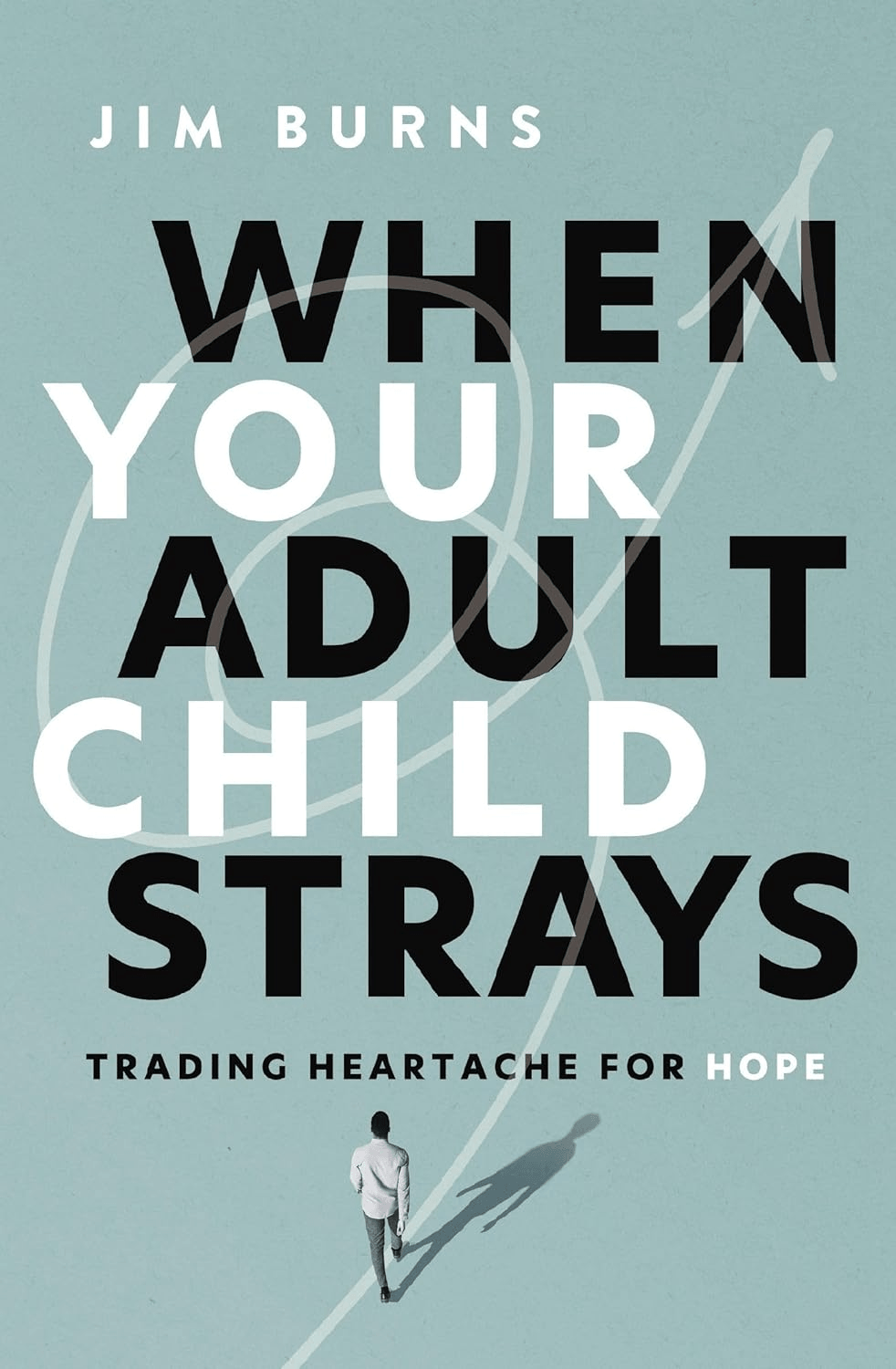
Taken from “When Your Adult Child Strays” by Jim Burns. Copyright © 2026. Used by permission of Zondervan.