Hosanna Wong
6 min read ⭑
What does the so-called perfect follower of Jesus look like?
What personality traits come to mind? Kind, humble and hopeful? Somber and subdued? Positive and perky with a pearly-white smile stretching from ear to ear? Is there a specific style of clothing that comes to mind? Formal, casual, brand- new clothes, or thrifted, sustainable, perhaps hand-sewn? Do they carry out a certain set of routines, attend particular events, listen to specific music, or reshare certain posts on social media?
Do you have someone in mind?
You may despise the kind of person you are thinking of, or you may admire them so much you hope to be just like them. Growing up, I was the latter. I so badly wanted to follow God the best that I could and to do all the things a perfect follower of his would do.

Daria; Unsplash
I would look at the experts, authors and influencers teaching on all the holy habits and assume that any way they engaged with God was the gold standard. I believed I needed to match them perfectly. If I just worship like her, read my Bible like him, and pray without ceasing like them, then I will have the ultimate connection with God! I thought there was a box I had to fit in, a level I needed to unlock, a person I had to look like. But a question I couldn’t ignore nagged at me: What if I don’t fit in their box?
What if my personality is different from that of the person I look up to? What if the ways I rest are different from those of the leaders I listened to? What if I have a different learning style? What if I have different tastes in music, fashion and things I find fun? What if the pace of my life is far different from hers? What if my schedule looks nothing like his? Is giving my life to God about giving up everything I like and everything I enjoy and everything that makes me ... me?
Absolutely not.
Yes, God wants to help you get rid of anything that stands in the way of a relationship with him. And we’ll talk more about that later. (Spoiler: Those things don’t make us more of who we really are.) But sometimes we think God wants us to change everything about ourselves in order to have a relationship with him. And that could not be further from the truth.
The truth might surprise you. Let this sink in:
God created you.
God hand-made your details.
God loves your details.
God thought all your details were important in order to know him, love him, love others, and live a full, purposeful life.
God did not invite you to be in a relationship with him and then ask you to abandon all the details of the personality he created you with.
What if your details are, in fact, a key part of how God knew you would connect best with him and best with others?
Do you want a real relationship with God? Do you want healthy connections with others? Do you want to fully enjoy your life?
Great news. You already have what it takes. You’ve been set up for success.
Your personality is a part of how God wants to connect with you. Your personal tastes are a part of how God wants you to connect with others. The ways you feel rested and find peace? The ways you have fun? The ways you feel moved, inspired and motivated? God created those ways in you. God created your interests with your best interests in mind.
How would it change our lives to see our personalities, schedules and passions not as roadblocks but as pathways to enjoying God? How would it change your posture to know that you are already set up for success to connect with God?
Say this out loud to yourself right now: I am set up for success.
Now quieter and slower for your soul to process it:
I am set up for success.
“We want real relationships with God. How will you find that? By being who you really are and interacting with God in your real life — with your actual schedule, with your quirky personality, and with the unique things you are wired to enjoy.”
It’s almost as if the Creator of the universe wanted to know you and created you with that very goal in mind. And 100% — that’s what he did.
Steer Into the Skid
I was a California girl who had never once driven in snow. All my experiences in snow up to the point of meeting Guy — my then-boyfriend and now-husband — had been in the back seat of a car driving up paved mountains to ski lifts and other safe, controlled environments. All to say, my nerves were shaky the first time he drove me around Grand Rapids, Michigan, after fresh snow had fallen late at night.
As we drove from dinner to his parents’ house, I noticed how some cars slid a bit at the stop signs. I grew worried. I all but screamed when one car coming down a hill couldn’t stop at the intersection — and even though every other car had the right of way, they anticipated what was happening, stayed put, and accommodated the rogue car. It skidded in a circle in the middle of the intersection but quickly recovered and continued down the road, while traffic around it proceeded to move slowly and smoothly. No accidents, shouts or hand gestures came from the other drivers.
Guy saw my stunned face and said, “We’re used to snow here. We all know how to make space for each other, go with the flow of traffic, and keep each other safe.” I was amazed at the room that was made and the grace that was given to that driver. (We Californians might not be known as the most chill drivers ever. Just saying.)
Then I asked, “How did that car that slid not crash? How did they know what to do and recover so quickly?”
“They steered into the skid,” he said, then began explaining something that was very normal to him but brand- new to me. He said that in a panic mode, sometimes people will try to veer the opposite way of where the car is sliding because it might feel like the best thing to do — but the truth is, you want to veer into the skid. This means turning your steering wheel toward the side where your rear wheels are sliding. “Go in the natural direction the car is going. That’s what’s best for you, your car, and the flow of traffic. That’s best for safety and power.”
This analogy has stayed with me. So often when I go through hard or confusing times or need direction from God, I assume I need to engage with him in a way that is opposite to my natural tendencies. The truth? I can steer into the skid. I should steer into the skid. I can veer into the natural movement of how I was created. That is not only better for me and for the people around me, but I am not exerting energy trying to go against how I was created. Instead, I am going to unlock the best way for me to be close to God.
We might be surprised that we can steer into the skid of how we are wired, to truly encounter God. This is best for us and everyone around us.
Are you an introvert or an extrovert? Good.
Are you a late night person or an early morning person? Great.
Do you find peace in the outdoors or at home reading a book? Or both? Wonderful.
Do you process best in community and conversation or being alone with your thoughts? Perfect.
I will ask you more of these sorts of questions throughout the book, but I want to tell you up front: However you are made, that is on purpose. I want you to see your natural tendencies as good things. I want to help you unlock the parts of your personality that are actually pathways to encountering God. I want you to steer into the skid.
Looking to other people to see how they encounter God can be a beautiful thing. It can encourage you, inspire you, and show you new ways you may want to try yourself. But when our being inspired turns into rigidly trying to copy and paste their lives and become just like them, it goes from being helpful to hurtful. Teaching people a one-size-fits-all approach to connecting with God is the perfect way to create a culture of faking it.
But from the beginning of this book, we’ve declared that’s not what we want. We want real relationships with God. How will you find that? By being who you really are and interacting with God in your real life — with your actual schedule, with your quirky personality, and with the unique things you are wired to enjoy.

Hosanna Wong is an international speaker, bestselling author and spoken word artist helping everyday people know Jesus for real. Widely known for her spoken word piece, “I Have A New Name,” Hosanna shares in churches, conferences, prisons and other events around the world. Hosanna currently travels and speaks year-round and serves on teaching teams at churches throughout the United States. She and her husband, Guy, serve together in various ministries equipping people with tools to share the gospel of Jesus in today’s world.
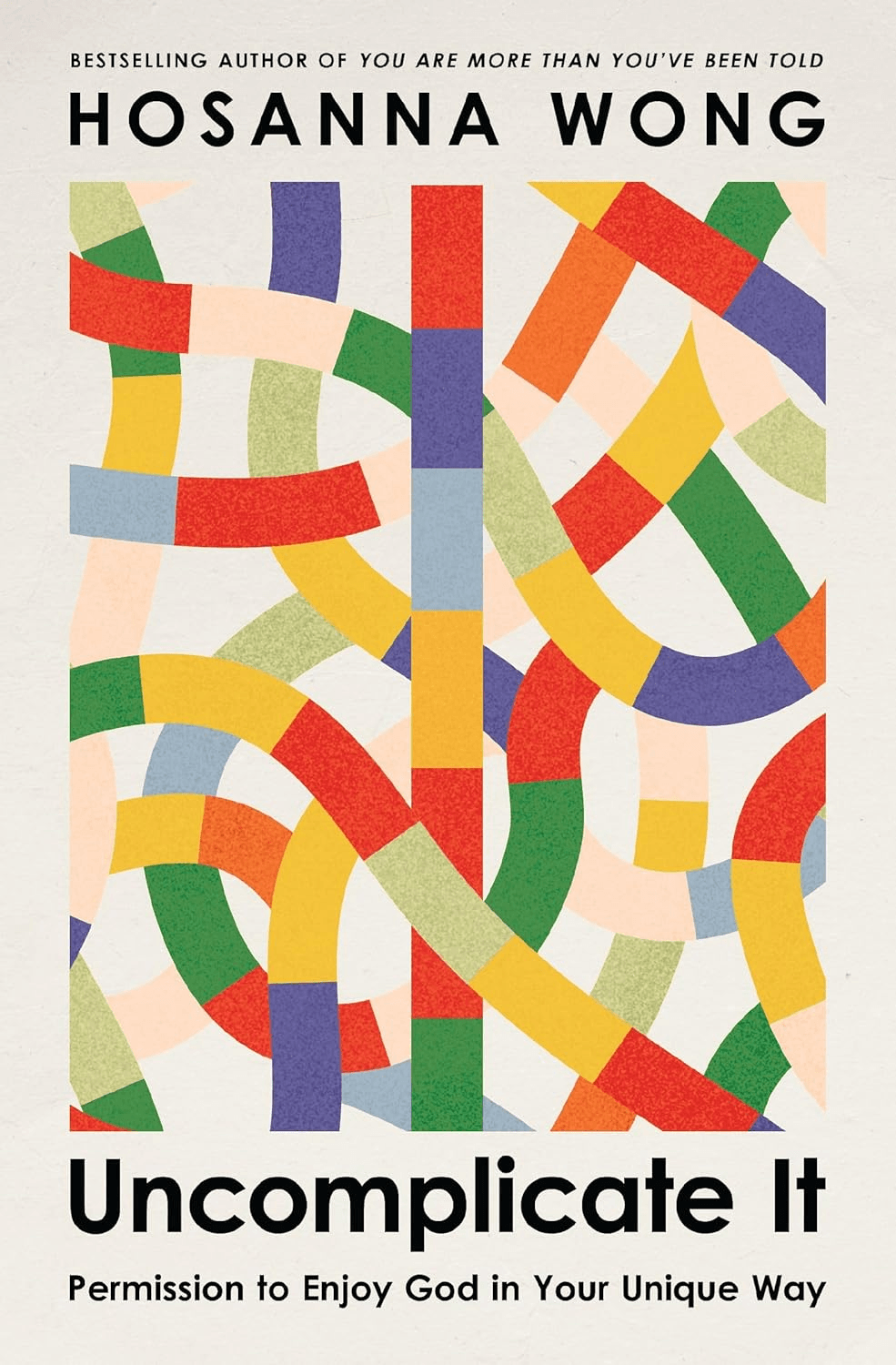
Taken from Uncomplicate It by Hosanna Wong. Copyright © 2026. Used by permission of Thomas Nelson.