
Chuck DeGroat
9 min read ⭑
“I’m really weary of the overabundant quick-fix, microwavable hot takes on change, as if a bit of breathwork, knowing your Enneagram type, a few coaching sessions and plunging into an ice bath will provide overnight transformation. There is too much personality-tinkering today absent deep character change.”
As a licensed spiritual therapist, Chuck DeGroat has helped people work through spiritual abuse, pastoral burnout, religious trauma and other emotional obstacles in their faith walk. His desire to see believers enjoy healthy relationships with God and others drove him to create the Soul Care Institute as well as the Clinical Mental Health Counseling Program at Western Theological Seminary, where he teaches counseling. He’s also the author of seven books, including “When Narcissism Comes to Church,” “Healing What’s Within” and his latest, “Who You’re Becoming.”
Below, Chuck shares about his journey from ministry hurt to ancient contemplative spiritual practices and what he’s doing now to further his union with God. He’s also getting honest about his lifelong struggle with anxiety and deep longing for Eden. Read or listen in on the conversation. Only at Rapt.
QUESTION #1: ACQUAINT
Food is always about more than food; it’s also about home and people and love. So how does a go-to meal at your favorite hometown restaurant reveal the true you behind your web bio?
While New York is my home (do I ever miss the pizza!) and while we’ve lived in Iowa, Chicago, Orlando and San Francisco, our favorite place in Grand Rapids, Michigan, (where we live today), is Olive’s.
Imagine a small, local, slightly upscale but not snooty kind of place in a quaint commercial district of East Grand Rapids called Gaslight Village. It’s on the corner of Wealthy and Croswell. You know it’s solid because when you ask for your favorite gin “up-with-a-twist,” it’s served just right, cold and to the brim. The menu changes seasonally, but you’ll always find a simple favorite — an Olive Smash Burger and perhaps truffle fries, if you’re feeling indulgent.
Just the other evening, my dear friend Kyle and I sneaked out for a Thursday evening meal to connect, and the waitress sold me on the Spring Roll Salad — mixed greens, red cabbage, carrots, crushed peanuts and an incredible peanut dressing. It was gluten-free, too — for all of us who are special. I’m getting hungry just typing this.
Giulia Squillace; Unsplash+
QUESTION #2: REVEAL
What “nonspiritual” activity have you found to be quite spiritual, after all? What quirky proclivity, out-of-the-way interest or unexpected pursuit refreshes your soul?
We’ve lived in some special places. Just walking the hilly streets of San Francisco felt like a spiritual experience to me. Although when we’d pass through the fog hovering over the Golden Gate Bridge and emerge minutes later in the foothills of Mt. Tam, a few hours in Muir Woods would “take you to church” like few churches can.
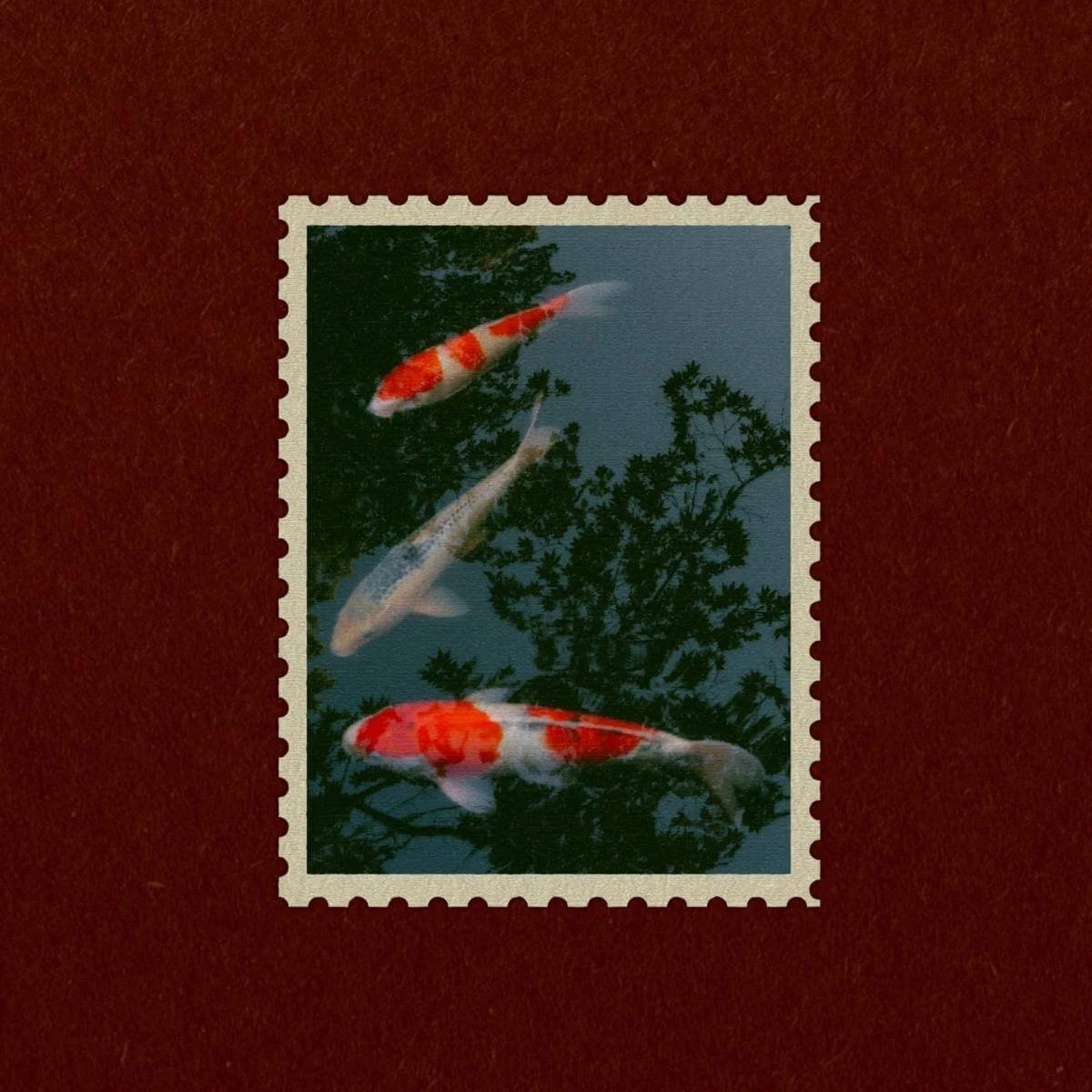
Yet while I miss the beauty of the Bay, a summer day in my own backyard by our koi pond allows me to exhale and experience something expansive. Our yard is wooded and relatively private, especially with summer growth at its peak. Our now-married girls named many of the koi — Taylor, Harry, Bono, Bieber and more. And what’s magical is that they reappear every spring. Even after our harsh winters pile on snow, with our pond deicer barely able to maintain a hole the size of a burger, these resilient koi emerge after a long hibernation-like state called torpor, when their metabolism and digestion slow dramatically.
Even now, I’m sitting nearby, listening to the water spilling over our small moss-shelved waterfall, watching the koi foraging on the pond’s edge.
QUESTION #3: CONFESS
Every superhero has a weakness; every human, too. We’re just good at faking it. But who are we kidding? We’re all broken and in this thing together. So what’s your kryptonite, and how do you confront its power?
What people don’t often see or know about me is a lifelong struggle with anxiety and depression. But for each of us, as I’ve seen in my pastoral and therapeutic work for the past 30 years, these words feature a particular tone and texture.
Anxiety sounds like a symptom you manage, but it’s often the wave at the top of a tumultuous undercurrent.
My body learned dysregulation in a home where Mom’s anger and Dad’s passivity clashed, and my role as the oldest was to be the emotional weather barometer, the little helper. Depression met me on the nights I felt utterly alone, a stranger in my own home, lost and adrift.
There, a primal ache for Eden arose, a palpable longing for a true home. I’d jump on the bike and ride for miles when I was young. Later, I’d do the same on my Honda Elite scooter. Picture mid-’80s awkward-teen Chuck with his leather bomber jacket navigating Long Island on his own — no iPhone, no maps. When I learned to drive, I’d navigate further still, up through the concrete jungle of Manhattan into the rolling green hills of the Hudson Valley, climbing through the ancient forests of the Catskills before arriving at the thundering falls of Niagara.
I’m still looking, too. The journey has taken me to Iowa, Chicago, Orlando, San Francisco and Michigan. But I haven’t outrun anxiety and depression. They are still companions, befriended through hard inner work. But I suppose I’m still longing for home.
QUESTION #4: FIRE UP
Tell us about your toil. How are you investing your professional time right now? What’s your current obsession? And why should it be ours?
I have a book arriving in the world called “Who You’re Becoming: The Slow and Courageous Work of Character Change in a Narcissistic Age.”
Six years back, I wrote a book on narcissism and spiritual abuse in the church called “When Narcissism Comes to Church.” It did quite well, but I wrote it as if I were casually conversing with a curious friend. For years, I’ve wanted to invest more, to provide the depth and architecture behind the deep work of character change — and that’s this book.
I’m really weary of the overabundant quick-fix, microwavable hot takes on change, as if a bit of breathwork, knowing your Enneagram type, a few coaching sessions and plunging into an ice bath will provide overnight transformation. There is too much personality-tinkering today absent deep character change.
Fast sells — I get it. My Instagram feed is filled with it. But this book provides a different road map. It reads in some ways like a midlife companion. I’m really hopeful it lands well and offers people both depth and vision for their growth.
QUESTION #5: BOOST
Whether we’re cashiers or CEOs, contractors or customer service reps, we all need God’s love flowing into us and back out into the world. How does the Holy Spirit invigorate your work? And how do you know it’s God when it happens?
A bit ago, I mentioned a lifelong longing for home, an ache for Eden. A friend recently said, “That’s a theme that runs through all your writing.” What I sensed early on as spiritual desire I’ve seen enacted in lives of disconnection, in myself, in my clients, in my students, in those I’ve pastored. That we wander “east of Eden” isn’t merely a literary phrase; it’s lived reality.
In my book “Healing What’s Within,” I teased out this aching disconnection in depth. Even as I wrote, I sensed the gentle voice of the Spirit whispering, “Just invite people home — home to God, to themselves, to each other.”
I’m weary of how I’m prone to live comfortably in disconnection, soothed by my devices, my accomplishments, food and drink, even what I call my church-clothed addictions that look really good to others but quietly erode connection.
Now in my mid-50s, I’m also sobered by how midlife reshapes it all. If your readers have followed this interview, they’ll chuckle to know I now have a small RV, another vehicle to drive in search of home. I’ll let you know if I find it.
QUESTION #6: inspire
Scripture and tradition beckon us into the rich and varied habits that open our hearts to the presence of God. So let us in. Which spiritual practice is working best for you in this season?
My spiritual practices have varied significantly over time. In the early 2000s, I found my way to more ancient ways, to dark, candlelit cathedrals, worn labyrinths and contemplative silence. For nearly three decades, I’ve been the one inviting folks into the sacred — in word, at the table.
In recent years, I’ve intentionally stepped away. My identity was so intertwined with my pastoral roles and established rituals that I’ve been grateful for a shift in practice. I’ve been practicing noticing how my body responds and allowing God to be present to this — even allowing it to be OK. I’ve sensed a growing longing to be met by a God whom Augustine described as “more near to us than we are ourselves.”
What if I cut out everything that gets in the way and simply relax into union? That’s where I am these days. Some days, it feels lonely, disobedient, flat, painful and wrong. Some days, it feels like I’m in the chrysalis, as St. Teresa of Avila mused, invisibly changing with no real measure of where I am. I am trying to trust this invisible transformation even as I sometimes wonder if I’ve diverted off the road altogether.
QUESTION #7: FOCUS
Looking backward, considering the full sweep of your unique faith journey and all you encountered along the way, what top three resources stand out to you? What changed reality and changed your heart?
At my age, I can now see some discernible movements across the decades. My heart came alive in seminary when I added a clinical counseling degree, awakened to my own heart and stirred by a book called “The Sacred Romance.” I’d never read something that spoke to my heart so clearly.
But heartache followed, as I was fired from ministry in 2003 and entered into a liminal season, where ancient, contemplative practices and voices offered me access to alternative approaches to faith.
As I transitioned to San Francisco, I found myself buttressed by the words of folks like Franciscan priest Richard Rohr, poetic voices like John O’Donohue, David Whyte and Mary Oliver, and the new perspectives of relational neuroscience and Internal Family Systems. In my 50s, I’ve been living at the intersections of theology, trauma-informed psychology and the rich Christian soul care tradition.
Certain things can be godsends, helping us survive, even thrive, in our fast-paced world. Does technology ever help you this way? Has an app ever boosted your spiritual growth? If so, how?
I’ve always been an early adopter of new tech. It’s one of the reasons I was thrilled to move to San Francisco, where I got to know and pastor tech founders (many of whom participated in a fellows program I founded) and where I was often invited to be “among the first” to try an app or service. I recall when a friend and I had lunch, which ended with him saying, “Stay put, I’ve got a car coming for you to get you back to the church office.” It was one of the very first Ubers.
I’ve been active on social media for years, and I’m often the one who tends to say, “I’ve met some of the most exceptional human beings I know through these connections.” And although I’m terrified of the environmental consequences of our growing data centers, I’m not an AI detractor. It’s sometimes funny to me to see folks in academic institutions (I’m in one) who self-righteously tell students not to use it while secretly using it themselves. I’ve had many quietly whisper to me, “Did you know it can do (fill in the blank)!”
In some seasons, I’ve engaged prayer apps, and I find that helpful at times. Absent technology, the Christian faith wouldn’t have spread like it did. It always surprises me how quickly we begin with skepticism.
QUESTION #8: dream
God’s continually stirring new things in each of us. So give us the scoop! What’s beginning to stir in you but not yet fully awakened? What can we expect from you in the future?
I wonder these days, at 56, What does this particular season hold? I’m no longer climbing some career ladder. But I’m also not at the finish line. I now have some hard-earned wisdom. And yet, as I see 20- and 30-something influencers grow a platform 10, 20 or 50 times the size of my small digital realm in months rather than the decades it took me, I wonder what these currents mean for me. Do folks want to hear from someone like me these days? Do I have something to offer young divinity students and clinical counseling students when I’m quite a bit older?
Now that my own daughter and son-in-law are finishing their counseling degrees and about to emerge into the professional world, what is my role there? I find myself getting behind other, younger writers, therapists and pastors these days — particularly women and people of color — as much as I can. I long to offer whatever small bit of wisdom, influence and care I have to others so that young pastors, therapists and writers of depth begin engaging the work with substance, imagination and compassion. I long to expand more and more, to breathe more deeply, to love more freely, to give more lavishly.
Earlier, Chuck described his lifelong yearning for his heavenly home. A desire to be somewhere where everything is put right, where good is esteemed, evil is banished and God’s love reigns forever.
This is a longing that beats in every human heart, whether Christian or not. In his book “Mere Christianity,” C.S. Lewis wrote, “If we find ourselves with a desire that nothing in this world can satisfy, the most probable explanation is that we were made for another world.”
And we were. Each and every one of us.
The question is, how can we live today in light of our ultimate home?
Chuck DeGroat is a follower of Jesus, husband to Sara for 32 years, and father of two daughters and two sons-in-law. He is professor of counseling and Christian spirituality and founding director of the Clinical Mental Health Counseling Program at Western Theological Seminary. A licensed therapist, ordained minister, author and founder of the Soul Care Collaborative, Chuck specializes in pastoral and leadership health, spiritual abuse, religious trauma and obstacles along the faith journey. He has extensive experience training clergy, assessing pastors and church planters and guiding church consultations. He has written seven books.