
Graham Joseph Hill
9 min read ⭑

“Why do so many of us admire Jesus, quote Jesus and build whole institutions in his name while organizing our actual daily lives around something else entirely?”
Graham Joseph Hill, a prolific Christian writer in Australia, is all about following Jesus and his way. That’s why he hosts “The Graham Joseph Hill Podcast” and writes books that explore how Jesus’ calling is meant to impact individuals and this world as a whole. His most recent book, “Ten Movements of the Jesus Way,” asks a penetrating question: Is the Christian life simply a set of beliefs or a heart-altering journey shaped by Christ’s sacrifice?
The answer to that question may seem easy, but as Graham points out in today’s interview, living it out requires daily intention. Here on Rapt alone, he shares the physical exercises that pave the way for prayer and the four things that help him fend off the grip of depression. You’ll also hear about the spiritual practices that bookend his day and the books, music and apps that build him up.
QUESTION #1: ACQUAINT
Food is always about more than food; it’s also about home and people and love. So how does a go-to meal at your favorite hometown restaurant reveal the true you behind your web bio?
Home is Sydney, Australia, and Western Sydney is the part of it that shaped me most. Our go-to is Mama Lor in Rooty Hill, a Filipino place where the lechon arrives on a wooden board and the pancit comes out in a tray big enough to feed a small congregation. We always order more than we can finish.
Crispy pata, chicken adobo, garlic rice and halo-halo at the end. We go with friends from church and from the neighborhood, and the meal runs long because nobody wants to be the first one to reach for their keys. That table tells you what I actually believe. For years, I’ve argued that the Australian church has a great deal to learn from Christians in the Philippines, Tonga, South Sudan and Korea. It’s an easy argument to make from behind a lectern. Making it with your mouth full is harder work: laughing at a story you only half follow, being fed by people whose faith was formed on the other side of the world. Home, for me, is a table in Rooty Hill with too much food on it and too many accents around it.
Wikimedia Commons
QUESTION #2: REVEAL
What “nonspiritual” activity have you found to be quite spiritual, after all? What quirky proclivity, out-of-the-way interest or unexpected pursuit refreshes your soul?
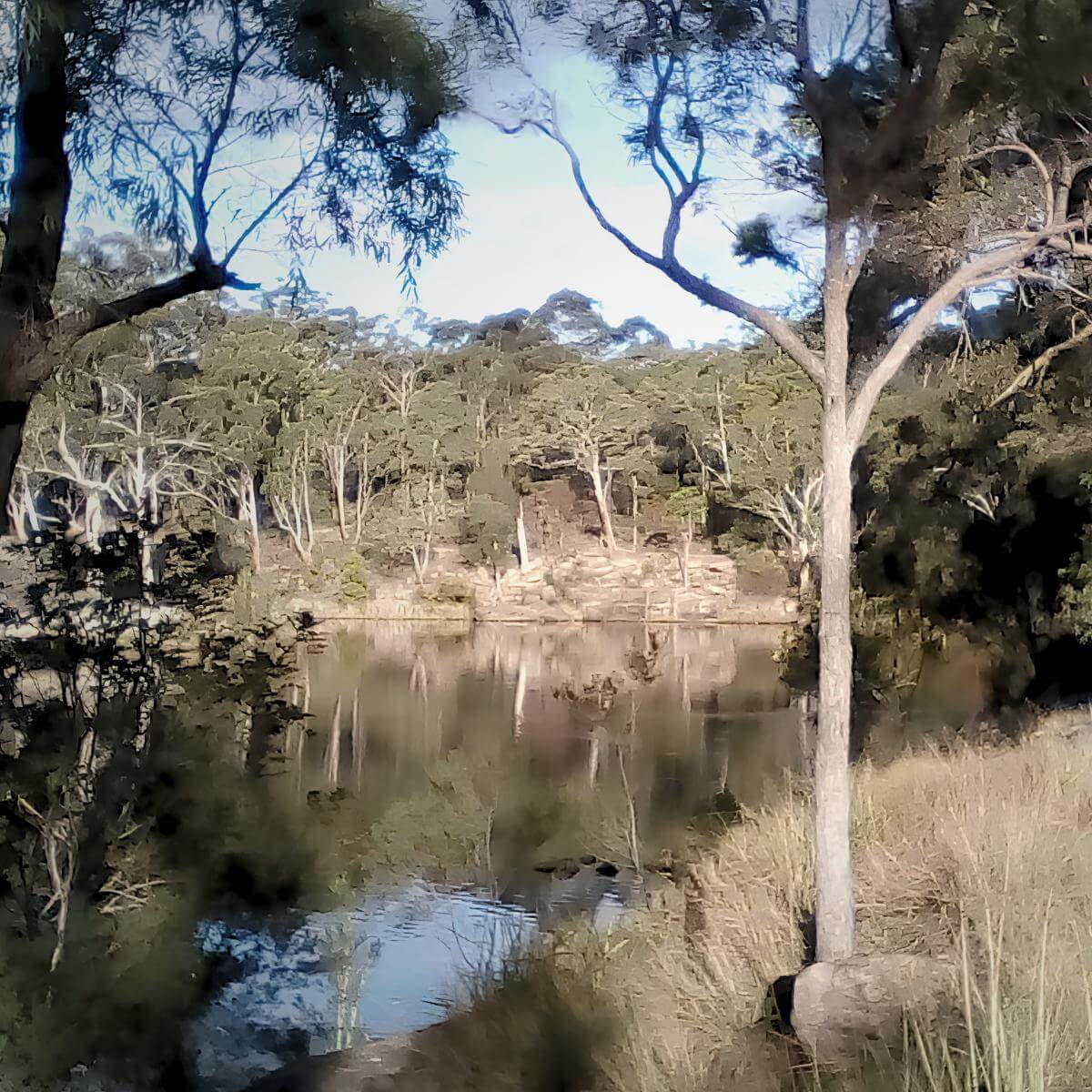
Most mornings, I walk the loop around Lake Parramatta in Sydney with Bailey, our golden retriever. It’s bush track for most of it, sandstone and eucalyptus trees, water dragons sunning themselves on the rocks, and in summer, the cicadas get loud enough that you give up on thinking clearly. Bailey has one setting: delighted. He stops to greet every dog and most humans, so a 2.5-mile walk takes us 90 minutes.
I never set out for this to be prayer. It turns out that a dog who refuses to hurry makes a very good spiritual director. Somewhere on the far side of the lake, where the water goes flat and the traffic noise drops away, my breathing slows down, and I stop rehearsing arguments in my head. That’s usually when God gets a word in. What makes it holy is the pace. Bailey sets it. I’ve stopped fighting him for it, and God seems to work in whatever space opens up once I stop managing the clock.
QUESTION #3: CONFESS
Every superhero has a weakness; every human, too. We’re just good at faking it. But who are we kidding? We’re all broken and in this thing together. So what’s your kryptonite and how do you confront its power?
My kryptonite is depression. I’ve lived with it for most of my adult life, and it arrives without any drama. It comes as a flattening, a gray film over things I normally love, and waking at 3 a.m. with a voice telling me my work is worthless and my friends are only being polite. There have been seasons when getting to the end of an ordinary day felt like a full day’s work in itself.
Four things keep me upright, and I need all four. I exercise because my body votes on my mood whether I consult it or not. I take medication, and I say that out loud in public because too many Christians still carry shame about it. I stay close to a few people who ask me real questions and can hear when I’m performing. And I see a counselor regularly, in both the good stretches and the hard ones. That last part is the one most of us skip. Faith and medicine work together in me, and I’ve stopped apologizing for needing both.
QUESTION #4: FIRE UP
Tell us about your toil. How are you investing your professional time right now? What’s your current obsession? And why should it be ours?
Two things have my attention right now. The first is my book “Ten Movements of the Jesus Way”, out this year with IVP. It traces 10 shifts that carry us from worldly self-interest into radical discipleship. The book grew out of a question that wouldn’t leave me alone: Why do so many of us admire Jesus, quote Jesus and build whole institutions in his name while organizing our actual daily lives around something else entirely? The 10 movements are my attempt to name the turns that close that gap.
The second is a set of 156 short videos on YouTube on the life and teaching of Jesus, titled “The Jesus Way,” to accompany the “Ten Movements of the Jesus Way” book. I’m releasing them on YouTube, and they run about 90 seconds each. Writing them has been the hardest discipline of my working life. Thirty years of academic theology trains you to qualify every sentence, and a reel gives you one idea, one image, one invitation. Stripping something back that far quickly shows you whether you ever understood it.
QUESTION #5: BOOST
Whether we’re cashiers or CEOs, contractors or customer service reps, we all need God’s love flowing into us and back out into the world. How does the Holy Spirit invigorate your work? And how do you know it’s God when it happens?
I oversee a group of church plants across New South Wales and the Australian Capital Territory (ACT), and the work I’m proudest of usually happens in a coffee shop with one person. A while back, I sat down with a young leader who had decided to quit. I had my advice loaded and ready, three points, probably alliterated. Something stopped me before I opened my mouth, so I asked questions instead for the best part of two hours, and by the end, she had talked her way to a decision I would never have handed her. She stayed, and the community she leads is now doing things I couldn’t have done at her age.
Here’s how I know that hour was the Spirit and not me. My natural setting is to want the good idea to have been mine, and that day, I felt nothing but gladness. When someone else’s flourishing lands in me as pure joy with no strings on it and no credit attached, I’ve learned to treat that as evidence that God was moving in the room.
QUESTION #6: inspire
Scripture and tradition beckon us into the rich and varied habits that open our hearts to the presence of God. So let us in. Which spiritual practice is working best for you in this season?
Two practices hold my day at both ends. In the morning, before I open my email, I sit at the kitchen table with coffee and do lectio divina, Latin for “sacred reading.” I take a short passage, four or five verses, and read it slowly four times: once to hear it, once to notice the word or phrase that catches, once to talk with God about why it caught and once to sit still and let God have the last word. It takes about 15 minutes, and it sets the temperature of everything after it.
At night, I pray the Examen, the practice Ignatius of Loyola handed on to us. I walk back through the day and ask two questions: Where did I feel most alive to God, and where did I turn away? Then I give thanks, name whatever needs to be forgiven, and hand tomorrow over. Together, the two practices do something my willpower never managed on its own. The morning gives God the first word, the evening gives God the last, and the hours in between stop feeling like they belong entirely to me.
QUESTION #7: FOCUS
Looking backward, considering the full sweep of your unique faith journey and all you encountered along the way, what top three resources stand out to you? What changed reality and changed your heart?
My top three resources make an odd trio. First, the devotional books of Andrew Murray, the 19th-century South African pastor. “Abide in Christ” and “Humility” are short, cheap and still in print. Murray writes as if union with Christ is a plain daily fact available to ordinary people, and he taught me that prayer is fellowship before it’s ever a petition. I’ve been reading him for 30 years, and I’m still not finished with him.
Second, Tim Keller’s sermons. You can get them for free on the “Gospel in Life” podcast, and I listen to them while I walk. He does the thing I’ve spent years trying to learn: He takes the person who doubts the whole business seriously, and he preaches to the skeptic and the saint in the same breath without condescending to either.
Third, Debussy’s “Cello Sonata in D Minor,” written in 1915 while Europe was tearing itself apart. It runs 12 minutes. When words have done everything they can do, that piece keeps going, and it has opened the door to prayer for me more times than I can count.
Certain things can be godsends, helping us survive, even thrive, in our fast-paced world. Does technology ever help you this way? Has an app ever boosted your spiritual growth? If so, how?
The technology that has done the most for me lately is the plainest kind. I listen to “The Daily” from The New York Times on the walk with Bailey and the BBC World Service news over breakfast. Twenty minutes of Sudan, Gaza, China, the U.S., the Pacific and an election somewhere I’ll never visit.
Then I pray about it. I keep a note on my phone with names and places from that morning’s headlines, and I take them into the 15 minutes before I open my email. I name the country, the people caught in it and whoever has to make a decision about it that day. Some days, it’s one line for a city I can barely pronounce. The habit has changed what I ask for because news I’ve prayed over stops being content and starts being people. It has also stopped me from doomscrolling since intercession is slower work than outrage, and you can’t do both at once.
QUESTION #8: dream
God’s continually stirring new things in each of us. So give us the scoop! What’s beginning to stir in you but not yet fully awakened? What can we expect from you in the future?
I’m writing a book for men called “What Your Strength Is For.” I’m shaping it around the idea of becoming “a man for others.” The phrase comes from Dietrich Bonhoeffer, who described Jesus as the man for others, and it has become the question I keep putting to the men I sit with: What is your strength for? Almost every man I know has real strength of some kind — physical or financial or professional or emotional — and hardly any of them have ever been asked what it’s meant to be spent on.
So that’s the spine of the book. I write about strength given for protection, for provision, for gentleness and for making the people around you larger than they were. There’s a lot of noise about masculinity at the moment, and a good deal of it teaches young men that their strength exists solely to win. That leaves them strong and alone.
I’m nervous about it. Writing on this subject is a reliable way to get shouted at from two directions at once. There’s a more private fear as well. The people who live in my house will know whether I’ve earned a single word of it, and theirs is the review that counts.
Graham poses an interesting question at the end of his interview: What is your strength for?
While he offers this question primarily to men in his upcoming book, it seems a fitting question for women, too. Whether male or female, masculine or feminine, do we use our strength to improve life for those around us? Or do we channel it to serve only ourselves? Jesus said he came “not to be served but to serve, and to give his life as a ransom for many” (Matt. 20:28, ESV). Oh, Lord, teach us to do the same.
Graham Joseph Hill is one of Australia’s most prolific and award-winning Christian authors. His 45 books explore the Jesus way, Christian spirituality, world Christianity and the work of justice and reconciliation. He’s an adjunct research fellow and associate professor in the School of Theology at Charles Sturt University. In 2026, he published Ten Movements of the Jesus Way (IVP). He hosts The Graham Joseph Hill Podcast. In 2024, he received the Medal of the Order of Australia (OAM) for service to theological education.