K.J. Ramsey
15 min read ⭑
“Joy isn’t a prize for the privileged. It’s a presence that finds us and holds us through everything.”
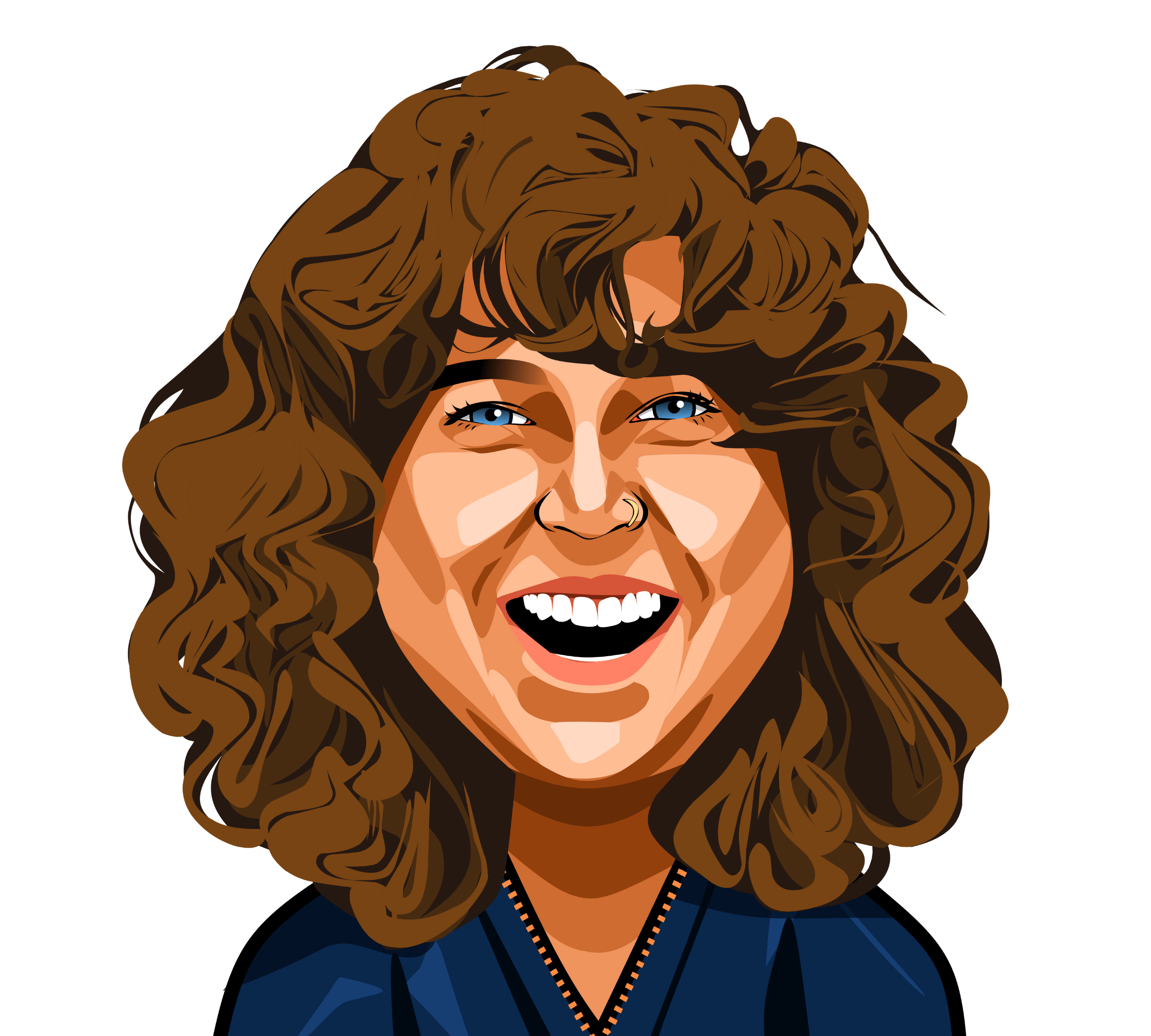
K.J. Ramsey is no stranger to pain and suffering, yet she remains “utterly devoted to the joy of being alive.” A body-centered licensed professional counselor who specializes in trauma recovery, K.J. serves as an advocate for fellow autoimmune patients. She’s an acclaimed author and poet and has written The Book of Common Courage, The Lord Is My Courage and This Too Shall Last, as well as the bestselling Substack Embodied. Her new book, The Place Between Our Pains, is a memoir, set to release in May 2026, focusing on fear, trauma, and faith. K.J. and her husband, Ryan, along with their two dogs, make their home in Colorado.
In this interview, K.J. shares part of her story, both the pain and the joy, of walking through life with chronic illness and grappling with her faith. With vulnerability and honesty, she sheds light on her experience of living with trauma and sickness and how she’s found her way to joy, solidarity, and a tender heart. Continue reading to hear more about her journey as well as why reading fiction is her most important spiritual practice, how writing her new memoir saved her life, and why she believes survival is sacred.
QUESTION #1: ACQUAINT
Food is always about more than food; it's also about home and people and love. So, how does a go-to meal at your favorite hometown restaurant reveal the true you behind your web bio?
My husband and I moved from Chattanooga to Colorado in 2013 sight-unseen into an apartment in Denver that was so tiny it had no business calling itself a one-bedroom. We were seminary students; Ryan was finishing his Master of Divinity degree (it still cracks me up that that degree is basically called mastering God, but I digress), and I was studying to become a therapist. Poor and in desperate need to escape the claustrophobia of our smoke-scented glorified shoebox, we found a Mexican restaurant on Groupon that had just opened two blocks away.
Adelita’s became our safe haven. Let me tell you, two-dollar Taco Tuesday isn't far from the body and the blood to poor seminary students. To this day, the thought of juicy carnitas and the brightness of pineapple — and cilantro — flecked al pastor tacos feels like home. Tacos and house margs became our most meaningful and lasting ritual of connection. When our hearts were broken or life looked bleak, Ryan and I would talk out our sorrows over perfectly thin chips and the freshest salsa. When I got my first essay published in a news outlet, we toasted with salt- and Tajin-rimmed margs. When new neighbors moved in or we made new friends, our Tuesday ritual was ready, giving us simple space to gather. We kept our Tuesday evenings open for tacos and togetherness. And in the twelve years we called Denver home, we probably shared tacos with over a hundred people.
We now live in Colorado Springs and go as many Tuesdays as we can to Las Palmitas #2, a little family-owned Mexican restaurant near us. The tacos are quality (and, yes, on Tuesdays are two dollars), and the soft corn tortillas are simply magical — the best pillowy, soft texture I’ve ever bitten into. But the best part? It’s seeing the same servers week after week. It’s the grounding quality of recognition, a gift that is so rare today — of being remembered and remembering each other — that is making this city feel like our home.

Tim Wildsmith; Unsplash
QUESTION #2: REVEAL
What “nonspiritual” activity have you found to be quite spiritual, after all? What quirky proclivity, out-of-the-way interest, or unexpected pursuit refreshes your soul?
My most important spiritual practice is reading fiction. Did your eyebrows just climb an inch? Because if I had read this as an uber-serious Christian college student in the 2000s, I would have hardcore judged myself! For so long, I elevated thinking over feeling, believing serious theological study was the best path into a spiritually deep life. But when my story stopped making sense, it was stories that held me into imaginative hope.
Books have always been my safest place. I grew up in a loving but chaotic family, and as a little three-year-old, I taught myself how to read. Reading became my refuge. I never went anywhere without a book and was the strange little kid who walked and read at the same time, living in two worlds at once. But as I got older, I found belonging in acquiring knowledge and traded novels for non-fiction. (My enneagram 5 wing is showing.)
When chronic illness moved into the house of my body at twenty years old and then rudely ignored my eviction notices, I turned to stories again, both to pass the time and to experience a larger world than I could reach from bed. Stories became sustenance. I remember reading Harry Potter for the first time in my twenties because I grew up evangelical and conservative, so, of course, HP was evil witchcraft to be banned [insert eye roll here]. I wept at the hope that love could defeat evil through the shared communion of friendship. Those stories shaped my imagination to bless my “neediness” as a chronically ill young adult as an expression of interdependence, the heart of being human, the power of love that — despite all odds — outlasts evil.
What I didn’t realize until many years later, through my own trauma therapy and work as a trauma therapist myself, was that in returning to fiction, I was reclaiming parts of myself that had long been exiled. When I read stories, I make space for the little girl who felt so overwhelmed and terrified in her family that she had to create her own safe place to hide. And now, as an adult with more resources to move through stress, I can relish the comfort of reading without dissociating from reality. I can make room for the little girl in me who still needs to be told stories to feel safe on her own.
My favorite fiction authors are Fredrik Backman (“Anxious People” and the “Beartown” series are great places to start, Richard Powers (“The Overstory” will forever be one of my favorite books), Peter Heller (“The Dog Stars,” set in Colorado, is gutting), and Charlotte McConaghy (“Wild Dark Shore” is astounding). I love eco-dystopian themes in novels and authors who give storied expression to climate catastrophe because it is rare to find room to grieve the harm we humans have caused this earth. In stories like McConaghy’s “Wild Dark Shore,” I find my soul shaped by both sorrow and kindness to love the land I am on and honor all that lives — from soil to my dogs to trees — as sacred and sentient, utterly beloved by God and brimming with divine presence.
QUESTION #3: CONFESS
Every superhero has a weakness; every human, too. We’re just good at faking it. But who are we kidding? We’re all broken and in this thing together. So, what’s your kryptonite and how do you confront its power?
Here’s a fun, painful fact: I am a licensed professional counselor, and in addition to my own training, I’ve spent years in therapy myself. Still, I didn’t know that I am neurodivergent until I was almost thirty-six years old.
Just as I was beginning to feel well enough to begin working again after a major medical crisis toppled my health, I started to spiral on a weekly basis with what I thought were panic attacks. I’ll be frank with you: I worried I was losing my mind. Small professional tasks that used to be annoying but were simple enough brought me to the brink of despair. I’m talking emails, zoom calls — basic adulting. It turns out, recovering from nearly dying drained me of any remaining capacity I had left to attempt to appear more “normal” than I really am. Any hint of frustration from people on the other end of my emails or texts would send me spiraling. If someone accidentally didn’t reply to a text, I’d question our entire relationship. I spent hours trying to word my needs just right so as not to sound too rude or too pushy or too intense, and the effort left me exhausted and confused.
After one too many crash outs, I was desperate. A dear friend whose husband is autistic gently asked me about whether I had considered if I am on the spectrum. “I have to be willing to say this, knowing it might make you upset with me,” my friend texted. Instead of feeling judged, I felt instant relief and recognition. Her risk was the door to receiving compassionate acceptance for a part of myself I’d never fully welcomed as good. The part of me that gets overstimulated to the point of sometimes melting down like a toddler is also the part of me that bears some of my most stunning gifts. My unique capacities around words, hyperlexia (the reason why I could teach myself to read at age 3), and my ability to hyperfocus, for instance, are why I am able to write the books I write.
Rejection Sensitive Dysphoria (RSD) is my kryptonite. Even hints of perceived or actual rejection can trigger intense, overwhelming emotional pain for me and people like me. RSD is a common experience among those of us with ADHD and those who are on the autism spectrum, as well as those with complex trauma histories. Dysphoria has its roots in the Greek word dusphoros, meaning unbearable. That is precisely what RSD can feel like.
The phrase widely attributed to the Holocaust survivor Viktor Frankl expresses, “Between stimulus and response, there is a space. In that space is our power to choose a response. In our response lies our growth and our freedom.” Learning to recognize and name my heightened vulnerability around rejection has created space to respond to myself with compassion.
QUESTION #4: FIRE UP
Tell us about your toil. How are you investing your professional time right now? What’s your current obsession? And why should it be ours?
Right now, I’m toiling to trust that I will have enough energy, strength of spirit, and support to share the story of the hardest things that have ever happened to me and the joy that has held me up through the most harrowing heartbreak. I’ve published three books before, but I’m about to publish my first memoir in May, “The Place Between Our Pains: A Memoir of What Joy Can Survive.”
The truth is twofold: writing this book saved my life. And I’m not fully on the other side of all the pain it describes. I’m still very much being sustained by joy in the middle of weakness and grief.
Nearly three years ago, I was at the height of my career as an author and therapist. I had been contending with chronic illness for over a decade, and a hard-fought combination of specialized medical treatments, personal processing through trauma, and intentional care toward my nervous system had brought me out to a place of health and freedom I had longed for. I had started writing a book about joy and had just returned from the first of many research trips across America’s national parks for it — the places where I had first encountered joy as a kid — when all the health I had worked so hard to cultivate disappeared overnight. Instead of studying and writing about the nature of joy, wonder, and interdependence, I found myself in a hospital, fighting to stay alive through recurrent attacks of severe anaphylaxis.
I decided to keep looking for joy in the middle of hell.
I kept writing when the story became one I never would have chosen for myself. I chose to look at my life like I had been looking at the national parks and my past — with expectancy that goodness was already here. And joy did indeed hold me up through the most harrowing journey of my life. Choosing to continue to write even while sick with life-threatening illness, while losing my mobility, and while holding unanswerable questions about faith, God, and hope gave me courage to say yes to living my life. I hope that you who are reading this interview don’t know pain and loss so searing that you’ve questioned whether you can keep living, but if you have, inside “The Place Between Our Pains” you will find ruthless honesty about how hard healing actually is and the surprise of laughter and love meeting us right in the middle of the dark. Whether despair and disease have been your unwanted companions or not, I hope the story and poeticism of my memoir help you honor our shared humanity and welcome interdependence as the heart of being human.
Joy isn’t a prize for the privileged. It’s a presence that finds us and holds us through everything.
That same joy is sustaining me now, when I wish I could be marketing this book from a place of even greater strength rather than still witnessing the slow miracle of recovery while rebuilding my life. Instead, I have solidarity and a tender heart. The very things I needed to find my way through the dark are what I have to give to others. And I’m choosing to believe that is more than enough.
QUESTION #5: BOOST
Whether we’re Cashiers or CEOs, contractors or customer service reps, we all need God's love flowing into us and back out into the world. How does the Holy Spirit invigorate your work? And how do you know it's God when it happens?
After experiencing the utter absurdity of almost dying after I thought God had brought me out of already extremely hard circumstances with chronic illness, I no longer feel the need to define the exact presence or ways of God. I feel humbled by the hard things in my life, humbled by all that I do not know and may never understand. The wording of this question is hard for me now, to be entirely honest. I could code-switch and fall back on old language I would have used before all of the brutality of the last three years happened to me. I could say what you probably want to hear. But that wouldn’t be honest, authentic or true.
Instead, here is what I want people to really know: when your heart breaks, you do not have to hate yourself for no longer being able to hold the mystery of God's love like you used to.
Survival is sacred.
Rather than trying to understand what happened to me or return to the version of myself that could sing God’s praises without wincing, I have decided to let the story of Jesus hold me even when I cannot hold it. I’ve let it live underneath and alongside my story, trusting that the truest stories do not require our certainty nor our strength to stay true.
How does the Holy Spirit invigorate my work? When I almost died over and over in the hospital, a presence of love and joy far beyond my own conjuring welled up within me to choose to stay alive, to choose to keep breathing. That presence thrums through all pain, uncertainty, and the work it takes to keep waking up each hard day with trust that we will be cherished and sustained enough to keep going. God is in the pain. God is in the racing pulse, the bottom dropping out beneath our feet, the bruises lining our arms and hearts, and the terrifying unknown, beckoning us to look at our real and hard lives as the raw materials of the beauty that saves the world. Whether we can define that theologically or describe it in the language of faith we once had does not change the fact that reality is where God still lives, even in the realities we most hate and fear.
Choosing to live in reality — to embrace it, including the pain, and to make a beautiful life and beauty from my life day after day — that is partnership with God, a renewable source of joy — one that is both available to all and imperative for us all.
QUESTION #6: inspire
Scripture and tradition beckon us into the rich and varied habits that open our hearts to the presence of God. So, let us in. Which spiritual practice is working best for you in this season?
Throughout the entire season of writing my memoir and now into the hard work season of sharing it, journaling has been the place where I open my heart to what is holy, even when life remains much harder than I wish it was. Somehow, when I went under contract on this book, I felt a deep sense that I needed to write it by hand. I had no clue what was coming. I had no clue that I was about to get so sick that I wouldn’t have been able to write on a computer anyway.
My journals became the place I practiced paying attention to my life as somewhere goodness still grew. I jotted down details — of nurses comforting me through panic attacks in the middle of the night, of my husband seeing the goodness in me even when high-dose steroids were all but erasing it, of the sun shining through the windows of the room I was too sick to leave for months. Noticing and naming those details changed how I experienced the horror of what was happening. There was not only trauma; there was love. There was laughter. There was joy.
Journaling still is a sacred invitation to me. These days, I keep daring myself to be as honest as I can in the open pages of my journals. I find that they can be a container for all that is too heavy for me to keep holding. By naming my fears and hate and despair, I no longer have to be steered by them. I find that the more honest I am in the pages of my journals, the more I feel freed to ask God to help give me strength to keep going.
QUESTION #7: FOCUS
Looking backward, considering the full sweep of your unique faith journey and all you encountered along the way, what top three resources stand out to you? What changed reality and changed your heart?
My husband and I met at Covenant College, a small Christian liberal arts school, where we got to learn theology from Dr. Kelly Kapic. Being in Kelly’s classes was like entering a portal of wonder where we were taught by example that the heart of theology isn’t about being right, but about being amazed. Kelly was the first person who ever taught me to welcome mystery, that which we cannot understand or control, as beautiful. His embrace of mystery shaped me to be at peace in a life that often does not make sense. I’m so grateful for his presence in my early days in forming the creative imagination that I’ve carried with me through my entire career as an author and therapist. His books are a great dose of that same pastoral, kind theological imagination. A wonderful one to start with is “You’re Only Human.”
The Kapics are also who introduced me to the second author whose work changed the trajectory of my life: Kathleen Norris. I remember reading “Dakota: A Spiritual Geography” as I drove with my family across the frozen tundra of the Dakotas on Christmas break in 2008, just a month before chronic illness first entered my life. In Norris’s memoirs, I encountered a contemplative spirituality that welcomed me into a way of living that blessed my body’s needs for slowness rather than striving right in the moment my life demanded a different way of experiencing God. Her weaving together of the ordinary with spiritual reflection is the reason why I ever even imagined I could become an author. (So the fact that Kathleen Norris endorsed my upcoming memoir is pretty mind-blowing! Twenty-year-old me wouldn’t believe it!)
Finally, living with chronic illness forced me early on to find ways to embrace my body as good. Having grown up evangelical in the 90s and aughts, I was steeped in the body-hating theological distortions of purity culture. Learning to listen to my body as a source of wisdom has both empowered me to live well in the midst of hard circumstances and to experience my life as brimming with sacredness. So many resources have shaped how I listen to and care for my body, but one I think is a great place for people to begin is “The Wisdom of Your Body” by my friend and fellow therapist Hillary McBride.
Certain things can be godsends, helping us survive, even thrive, in our fast-paced world. Does technology ever help you this way? Has an app ever boosted your spiritual growth? If so, how?
I’m gonna be totally annoying with this answer, but the apps that have most boosted my spiritual growth are actually the calendar and camera apps. I’m laughing so hard while writing this. Sorry, not sorry. If I don’t put something into my calendar (I use Google Calendar), it doesn’t exist. Hello, neurodivergence! I’m a more loving person when I remember appointments. Plain and simple. As far as the camera, just like my journals, I love documenting my life as a practice of paying attention. I have an obscene number of photos on my phone, and that’s because I love the habit of noticing and pausing to record what I’ve seen and experienced. And, to be totally honest, that practice really came in clutch when I took my journals and made them into an actual memoir manuscript for “The Place Between Our Pains.” What my mind couldn’t recall because of both the extremity of the medical trauma and the hefty drugs I was on to stay alive, my camera helped me remember and relate with great detail to write the most realistic and true book I could for my readers.
QUESTION #8: dream
God’s continually stirring new things in each of us. So, give us the scoop! What’s beginning to stir in you but not yet fully awakened? What can we expect from you in the future?
I’m writing this in early February, one day after completing hyperbaric oxygen therapy (HBOT) to try to save two bones that died from medicine doctors used to save my life — and, yes, that story will make so much more sense when you read my memoir!
I’ve gone through multiple surgeries with massive recovery processes on both of my knees and, most recently, forty sessions of HBOT, which took over 80 hours (plus all the prep and driving there and back) for 8 weeks. That’s on top of very time-intensive treatments I do every other week as maintenance to stay well with lupus and a primary immune deficiency. So I’m honestly only one day into having space from intense medical treatments to get to just live my life. I’m excited to have more time and energy to work again, to see my therapy clients, and to work on poetry and some weird art projects I’ve been doing privately. I’m in the hard and slow process of rebuilding my life, including financially.
Barely anyone except those who have lived through it know how hard it is to rebuild your life after a long major medical crisis. We must not only regain our health and endure setbacks, but also cope with the challenge of losing our capacity to work for long seasons. It’s daunting, and that’s an understatement.
Hoping for life to get better is one of the hardest things we humans have to do. Hope is terrifying. Yet there aren’t any other good options. So what’s stirring inside me is hope. Despite what happened to me, I am trying to trust there is still goodness ahead for me. And I’m excited to see what goodness might come of putting my memoir into the world. I long for other chronically ill and disabled people to feel solidarity and respect, and my story is one small offering of love to that end.
K.J. vulnerably shares her wisdom not only as a therapist, but also as one who has suffered through trauma and ongoing chronic illness. Her experiences led her to the place where she “decided to keep looking for joy in the middle of hell.” In this interview, she reminds us that choosing to live in reality and embrace both the beauty and the pain of life is true partnership with God, who is our renewable source of joy. Whatever difficulty we face, K.J.’s life serves as a testimony that we can access unrelenting joy and purpose in the middle of grief, pain, and trauma because he is with us through it all.
K.J. Ramsey is an increasingly feral mystic who is utterly devoted to the joy of being alive. She is a body-centered licensed professional counselor specialized in trauma recovery and an acclaimed author of prose and poetry, including The Book of Common Courage, The Lord Is My Courage and This Too Shall Last, as well as the bestselling essay Substack Embodied. KJ advocates for fellow autoimmune patients and lives in Colorado with her husband Ryan, a hospice chaplain, and their two velcro dogs.