
Tish Harrison Warren
11 min read ⭑

“…I feel like part of the faithful task of Christians right now, both individually and as a church, is to resist the ubiquitous technological transformation of the world and return to really human things: bodies in a room, prayer that is unmediated by devices, time spent in nature.”
Tish Harrison Warren is a writer and an Anglican priest. She is author of Liturgy of the Ordinary, which won Christianity Today's 2018 Book of the Year, and Prayer in the Night, which won Christianity Today's 2022 Book of the Year and the 2022 ECPA Christian Book of the Year. Her newest book, What Grows in Weary Lands: On Christian Resilience, set to release in May 2026, focuses on faith during desert seasons. In addition to book writing, she formerly wrote a weekly newsletter about faith for The New York Times. Currently, she is the C. S. Lewis Theological Writer-in-Residence for the Anglican Episcopal House at Truett Seminary and an assisting priest at Immanuel Anglican Church.
In this interview, Tish takes some time to share with readers about a challenging season of burnout and exhaustion that led her to write her latest book as a resource for those walking through a desert. She also shares some of the practices and resources that helped her through that dry season as well as some books that have shaped her faith over the years. Continue reading to learn about her unusual love of trains, how reading helps rewire her brain to handle longer, slower attention, and how the practice of silence has begun to feel like a “radically rehumanizing act” in the middle of the noise of the world.
QUESTION #1: ACQUAINT
Food is always about more than food; it’s also about home and people and love. So, how does a go-to meal at your favorite hometown restaurant reveal the true you behind your web bio?
My favorite hometown restaurant sadly closed in 2020, after 40 years. It was Mother’s Cafe, a vegetarian restaurant in Hyde Park in Austin (where I grew up and currently live). I loved the salsa, the pastas, the decades of memories it held for me, and the funky vibe, where you could spot hippies, sorority girls, and the anchorwoman from our local news. It was a “here comes everybody” vibe, which is Austin at its best. It also, somewhat randomly, often had a harpist playing there. Sadly, Covid did it in. This shows something about me and my deeply beloved hometown, which is almost pathologically prone to nostalgia. It’s like the joke: “How many Austinites does it take to screw in a lightbulb?” The answer is three. One to screw in the lightbulb, one to protest the lightbulb change, and one to talk about how much cooler the lightbulb was ten years ago.
I’m still figuring out my new favorite, but a chief contender would be Cruzteca, an unassuming TexMex place within walking distance from me. It started as a food truck and has grown into a brick-and-mortar restaurant. A dad of one of the owners is often at the restaurant, greeting people and shaking hands. He told me that his family has been around Austin for four generations. I love deep, local roots and want this place to thrive! It also has great food and good margaritas. I’ve shared a lot of laughter with friends there. It isn’t where we eat out most often (I have young kids still, so most often we eat at home or order in from somewhere fast and boring), and it isn’t fancy or fine dining. It’s just fun and good — a place you want to linger and keep talking over queso.
Levi Meir Clancy; Unsplash
QUESTION #2: REVEAL
What “nonspiritual” activity have you found to be quite spiritual, after all? What quirky proclivity, out-of-the-way interest, or unexpected pursuit refreshes your soul?
This one is hard because I literally wrote a book (“Liturgy of the Ordinary”) about how brushing teeth and eating leftovers is spiritual, so it’s hard for me to see any activity as non-spiritual. The first thing that came to mind is not all that quirky or unique, but in my over-busy life, I’m trying to build in intentional time for reading — usually first thing in my day, for at least an hour. I don’t necessarily mean so-called “Christian” books. I love memoirs, poetry and anything non-fiction. I recently read a history of the development of germ theory, for instance. But, for me, the practice is almost not about the content but about the neurological shift I feel when I read deeply, without a phone near me and no interruptions. I am so addled by screens and seduced by their small dopamine hits that reading actual books — codices — is an attempt to rehabilitate my capacity for longer, slower attention. I’m trying to reshape my brain. The benefit I experience feels something like “brain yoga” (although I've also read some excellent books).
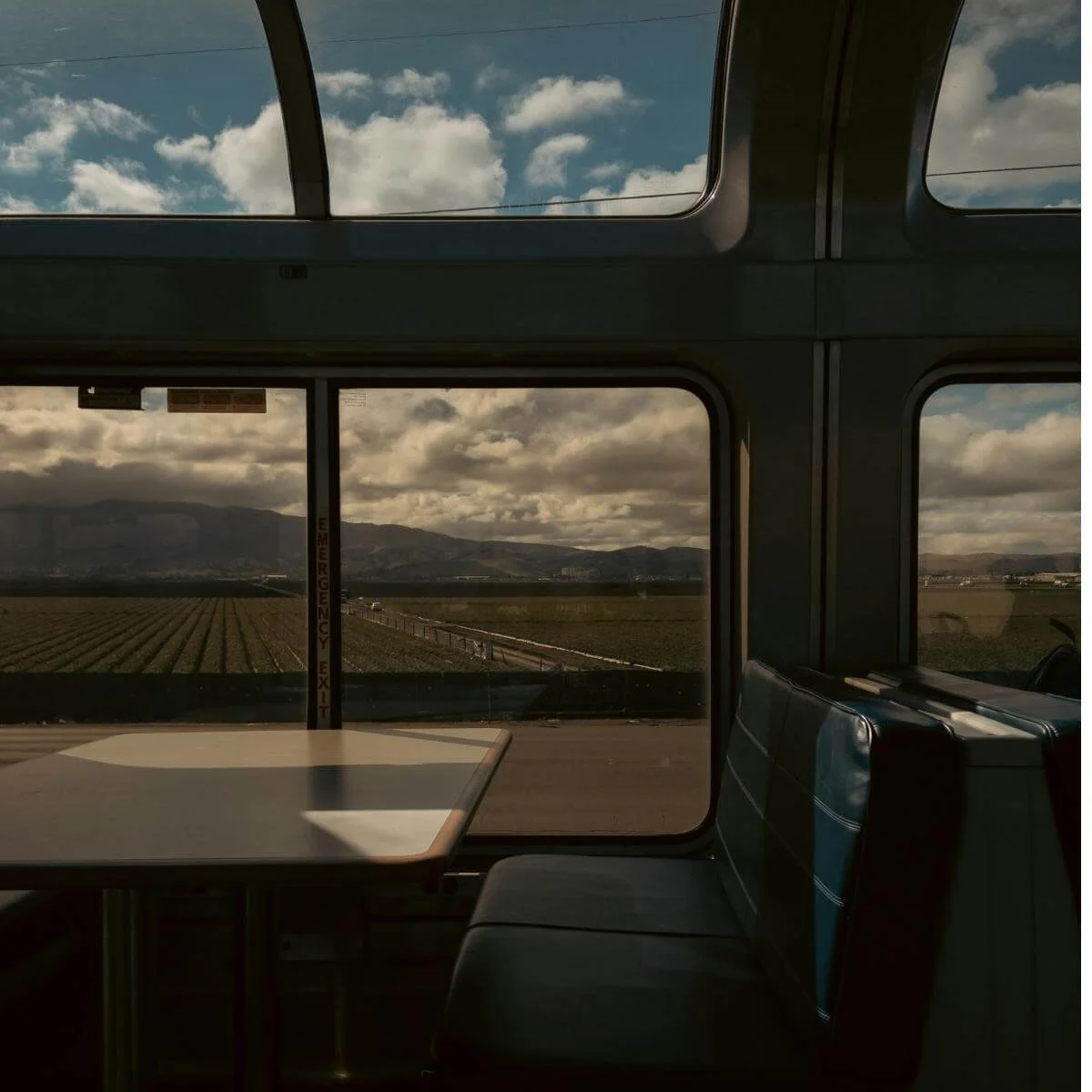
In terms of quirky proclivity, one thing I’m unusually in love with is trains. I don’t love flying (though I do it often), but whenever I can (and it isn’t that often — maybe once every two or three years), I try to take a train trip. The last one I took was from Chicago to Austin with my 12-year-old, who also loves trains. It took 28 hours. (My husband finds these long trips akin to torture and does not join me.) To me, riding on a train is an incredibly meditative experience. It is a (literally) moving spiritual retreat. I sleep better on a train than anywhere else. I journal and stare out the window all day long, silently. It is the coolest way to see America, and I’m a huge advocate for expanding rail capacity in the United States. My next book actually includes a story about my train trip through the desert.
QUESTION #3: CONFESS
Every superhero has a weakness; every human, too. We're just good at faking it. But who are we kidding? We’re all broken and in this thing together. So, what’s your kryptonite and how do you confront its power?
Gosh, I have so many different kinds of kryptonite; it’s hard to pick. I feel like this one is really common, but it’s real: I struggle with anxiety. This looks like many things.
It looks like losing my temper with my kids or husband, but underneath the anger, I’m usually scared of something I can’t control.
It looks like catastrophizing. I have a good imagination, and it runs wild and dark. When my son (who has asthma) coughs in the middle of the night, my brain will immediately give me a haunting image that I can’t shake of holding his hand when he’s in a hospital bed.
It often looks like lack of sleep. Especially if something in my life is relationally amiss or there is a conflict, my go-to response is fear. I’ll wake up at 3 a.m., and my mind will be caught in a loop (therefore, I can’t sleep).
Sadly, I think I have taught some of these patterns to my kids (as my mom taught them to me). Even as a child, I remember my older sister saying to me, “You sure do hold the weight of the world on your shoulders.” What I’m seeking to unlearn is the lie that anxiety keeps me safe. My friend Andy says that anxiety is imagining the future without Jesus in it. I do that a lot.
QUESTION #4: FIRE UP
Tell us about your toil. How are you investing your professional time right now? What’s your current obsession? And why should it be ours?
I have a book coming out on May 12 called “What Grows in Weary Lands: On Christian Resilience.” Two years ago, I was at the top of my career, writing weekly for The New York Times on “faith in public discourse and private life.” I decided to leave that gig, which felt radical and scary at the time. I did so, in part, because I missed writing books and also, in part, because I was longing to know God in deeper, more local, perhaps more “incarnational” ways — connected to my place, my local church, the people around me, my family, and the most vulnerable and quiet longings within me. When I left The Times, I was burnt out — spiritually and emotionally exhausted, disoriented about who I was and what was happening in the world. Marriage, parenting, work, and friendships all felt harder than I thought they should. And God felt distant. I wasn’t sure what was happening and could not plot where I was on a map.
In the midst of this wrestling, I came upon these Christians throughout the history of the church who described seasons of weariness, emptiness, spiritual desolation, and burnout. These voices became my guides and conversation partners. This book deals with those seasons that are not necessarily the deepest valleys of loss or the mountains of joy and contentment, but the windswept plateau — the middle, the slog, the seasons of doubt and disillusionment. Each chapter is framed around a saying of the Desert Fathers and Mothers, the earliest Christian monks.
I wrote this book out of my own experience, but also because I saw a wider culture of weariness and languishing all around me and felt that there were too few resources out there for Christians to address these realities. But the church has addressed this human experience since its earliest days. I hope the book offers hope to people. Writing it certainly wrought a hard-won healing inside of me. I wrote the book I needed to read three years ago. I wrote it to discover how to keep going when I wasn’t sure quite where I was.
QUESTION #5: BOOST
Whether we’re Cashiers or CEOs, contractors or customer service reps, we all need God's love flowing into us and back out into the world. How does the Holy Spirit invigorate your work? And how do you know it’s God when it happens?
Certainly there are moments when I'm writing and sense that I'm saying more than I know, that God is somehow teaching me through my typing fingers. This used to happen a lot, and these are my favorite moments of writing. Part of why I wrote this forthcoming book though is that that sense of "flow" (or whatever you call it) happens less now. The original subtitle (in my brain—it never actually made it to paper) was something like this: "How to keep going in life, creativity, and faith when inspiration is scarce." That isn't precisely the thrust of the book now, but those ideas are still there.
I'm finding inspiration now in the words of others. Over the last decade or so, I poured out so many words with four books and countless articles at The New York Times and Christianity Today and elsewhere. It feels like I'm in a time of refilling, and that has really been helped by sitting with other people's work, stories, and ideas. It is nourishing me so deeply.
QUESTION #6: inspire
Scripture and tradition beckon us into the rich and varied habits that open our hearts to the presence of God. So, let us in. Which spiritual practice is working best for you in this season?
There’s a mercy in taking up the same practices again and again: going to church, praying, meditating on the Scriptures. These continue to nourish me over time. One practice I’ve been very grateful for is silence. There’s an emptiness to it. There are no fireworks or anything. But it feels like I’m sort of throwing myself on the life raft of grace and trusting God to bring me to shore. It’s hard to explain why silence feels so significant to me now; it hasn’t always been that way. It may be because the world is so loud and overwhelming now in what Matthew Crawford has called the “attention economy.” Being silent and doing nothing starts to feel like a radically rehumanizing act under those conditions. In this ancient practice, I do nothing other than shut up and trust that God is there with me, and that’s been really freeing.
One of my best friends, Woody, encouraged me to spend a certain length of time in silence each day for this season, not performing for God or checking anything off a list or rushing through a Bible passage, but just being still. It’s been really good. Really simple, but really good.
QUESTION #7: FOCUS
Looking backward, considering the full sweep of your unique faith journey and all you encountered along the way, what top three resources stand out to you? What changed reality and changed your heart?
Gosh, this is the hardest question because I’ve had so many books impact me. I hate to leave any of them out! I’m going to focus on ones that caught me at just the right moment and sent me in a new direction. And I’m going to blatantly cheat and name a few more than three, but I will have three general topics.
Grace. I grew up knowing about Jesus but understanding very little about the idea of grace. In college, I saw my own sin in a more profound way, and this opened me up to grace in ways that I still haven’t gotten over. It changed my life. Some resources around this topic are: “The Gospel-Centered Life” (from Serge, formerly World Harvest), Tim Keller sermons, and “The Ragamuffin Gospel” by Brennan Manning. (I should note that I haven’t read this for 20 years, so I don’t know if it holds up, but it changed my life at the time).
Political Theology and Justice. Dorothy Day’s “The Long Loneliness.” Dorothy Day’s life and writings have been a source of challenge and hope for me. This book helped me see how a prophetic life can only be sustained through contemplation and community. And Stanley Hauerwas’s “A Community of Character.” This was the first Hauerwas work I read in college. His impact on me is profound because I found his work just as I was discovering the world (and idea) of theology. This book introduced me to a political theology that sees the church as an embassy of the kingdom of God, pushing back against essentially all of the political options in any culture.
Formation and Liturgy. “The Book of Common Prayer.” But really, it was becoming an Anglican when I was 29 years old and being immersed in this liturgy with a local church that shaped and changed me. Also, James K. A. Smith’s “Desiring the Kingdom” and “Letters to Malcolm: Chiefly on Prayer” by CS Lewis.
Certain things can be godsends, helping us survive, even thrive, in our fast-paced world. Does technology ever help you this way? Has an app ever boosted your spiritual growth? If so, how?
I don’t think I use any app or digital technology in my devotional life. I spend most of my time trying to get away from screens, whenever possible. I am pretty skeptical of apps and websites replacing local churches, communities, or embodied practices. I suppose I’m not totally against them (I’m here typing on a computer right now). But I feel like part of the faithful task of Christians right now, both individually and as a church, is to resist the ubiquitous technological transformation of the world and return to really human things: bodies in a room, prayer that is unmediated by devices, time spent in nature. I think I’m a little extreme here (on purpose). I think the church should be a little extreme here. I used to bring my phone into my prayer space to use my timer to keep (and time) silence. I’d set the alarm for 15 or 30 minutes or whatever and try to practice silent prayer until it went off. I grew so uncomfortable with having the distraction of my phone there that I bought a 15-minute hourglass. My prayer space has no electrical or digital technology in it now — not even a clock. In that space, which is a renovated shed in my backyard, I only use candles or the sun for light. It’s just a space for God, humans and beauty. It’s a tiny pushback against the way technology creeps into every part of our lives. My tiny protest. My tiny rehumanization zone.
QUESTION #8: dream
God’s continually stirring new things in each of us. So, give us the scoop! What’s beginning to stir in you but not yet fully awakened? What can we expect from you in the future?
I feel like my last answer hinted at this, but I am at the very, very beginning of researching for my next book, which is about the spiritual importance of the material world and of human bodies. I’m reading and learning a ton. I’m growing more convinced that the material world and digital world aren’t easily compatible with one another, but they exist in a zero-sum relationship. Each minute we spend with a screen is a minute that we are not immersed in the material world. We miss something when we hit “eject” from our materiality. A less material world is a less spiritual one because nature, trees, animals, and, especially, human bodies are sacramental and holy things.
I’m also just starting a new part-time job with the Anglican Episcopal House of Studies at Truett Seminary. I’m getting to know students, faculty, and staff there, and dreaming with the Director of the House, Matthew Aughtry, about what that community will be has been really fun. I'm teaching my first seminary class in May, and I’m scared but excited about it. I’m mostly dreaming about what embodied, relationship-based, thoughtful seminary education can be — how students can be formed not just through learning information, but through formation in a community.
In her interview, Tish reminds us of the beauty of returning to simple spiritual practices again and again. One practice she highlights as especially lifegiving is sitting in silence. She says, “It feels like I'm sort of throwing myself on the life raft of grace and trusting God to bring me to shore.” Sometimes silence makes us uncomfortable, especially in a world that’s filled with constant noise. But Psalm 46:10 reminds us that stillness is a pathway to knowing God: “Be still and know that I am God.” Isaiah 30:15 says, “In quietness and trust is your strength.” This is an invitation to carve time out of your schedule today for stillness and silence — to let God remind you of his presence and love. See how long you can sit without words, music, or noise of any kind, and enjoy the practice of letting him reveal himself to you with no distractions. His still small voice (1 Kings 19:12) is available to us all.
Tish Harrison Warren is the author of Liturgy of the Ordinary, which won Christianity Today's 2018 Book of the Year, Prayer in the Night, which won Christianity Today's 2022 Book of the Year and the 2022 ECPA Christian Book of the Year, and the forthcoming What Grows in Weary Lands: On Christian Resilience. She formerly wrote a weekly newsletter about faith for The New York Times. She is the C. S. Lewis Theological Writer-in-Residence for the Anglican Episcopal House at Truett Seminary and an assisting priest at Immanuel Anglican Church. She lives in Austin with her husband and three children.