
Miroslav Volf
5 min read ⭑
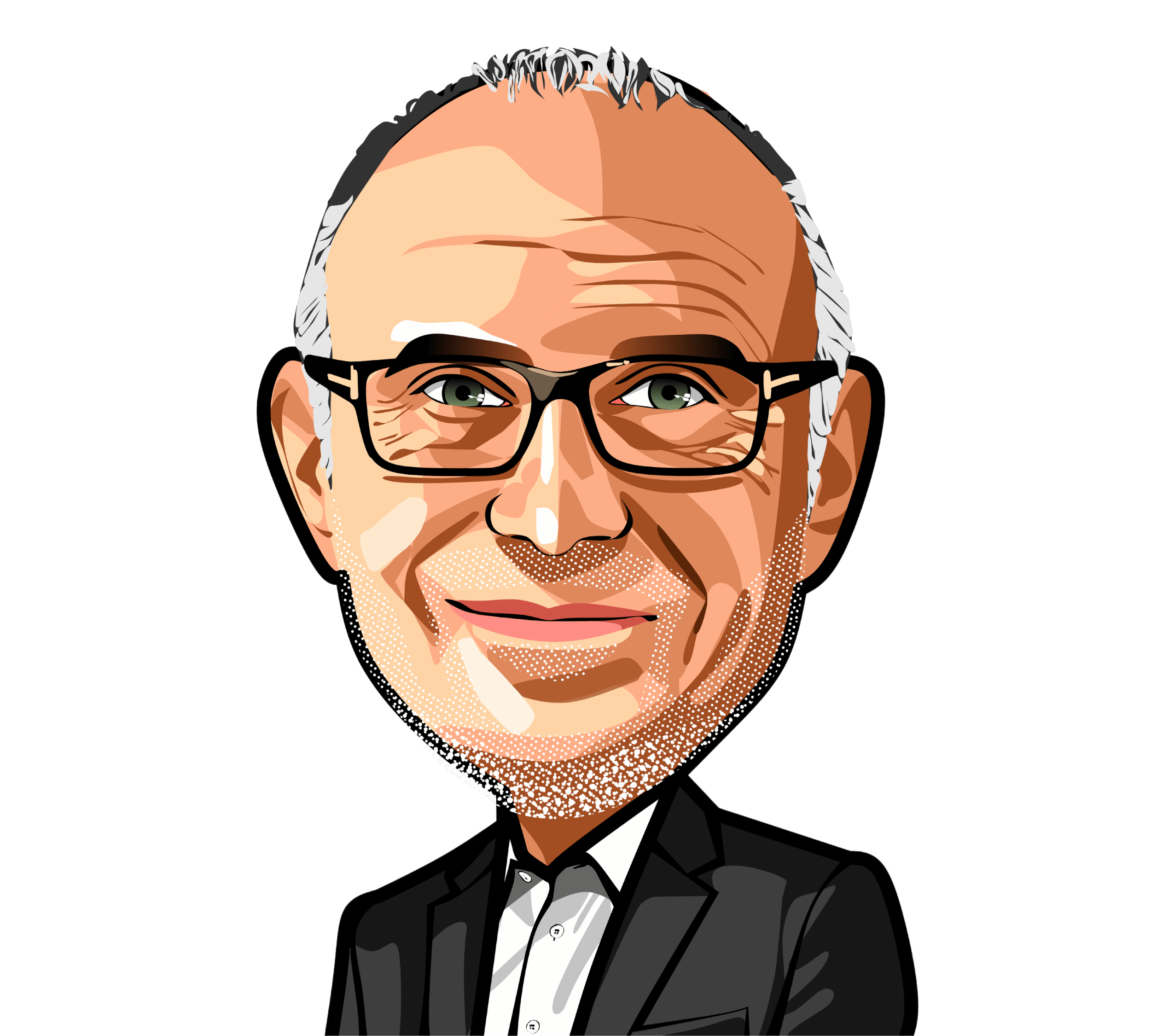
“I am deeply frustrated and, in a sense, disappointed that over the last 50 years or so we have gradually forgotten how to ask, let alone how to answer, one of the most basic questions a human being can and ought to ask: What is my life for?”
Miroslav Volf, a Croatian theologian, teaches theology at Yale Divinity School and serves as director of the Yale Center for Faith & Culture. He’s written or edited more than 20 books — including Exclusion and Embrace and Life Worth Living — and over 100 academic articles. But whether on stage or on the page, he’s best known for his work on identity and reconciliation and discussing faith’s place in public life.
Join us now for a fascinating conversation about his greatest weaknesses and how he knows when God’s love is flowing through him. Get a glimpse, too, at his prayer and meditation habits and the biggest problem he sees facing the modern church.
QUESTION #1: ACQUAINT
Food is always about more than food; it’s also about home and people and love. So how does a go-to meal at your favorite hometown restaurant reveal the true you behind your web bio?
When I don’t travel, I don’t eat out often. Sometimes for lunch, I go to the carts — in New Haven, there are a variety of food carts just down the street from the Divinity School — and get Mexican or Ethiopian. But I mostly bring my lunch to work: very simple, mostly all-natural stuff (like whole grain bread, avocado, sardines and lots of fruits and vegetables). I inherited a love for natural food from my mother, who insisted years ago that “food is (or ought to be) medicine.” But I am not “religious” about healthy eating. My favorite takeout is Thai food.

Unsplash+
QUESTION #2: REVEAL
What “nonspiritual” activity have you found to be quite spiritual, after all? What quirky proclivity, out-of-the-way interest or unexpected pursuit refreshes your soul?
Hiking — and listening to birds — and biking. I do both with my 8-year-old daughter and am pretty much in a state of bliss when we are out.
QUESTION #3: CONFESS
Every superhero has a weakness; every human, too. We’re just good at faking it. But who are we kidding? We’re all broken and in this thing together. So what’s your kryptonite, and how do you confront its power?
I had to look up “kryptonite”; it was not in my vocabulary until now. But I am familiar with the word “weakness” and with the experience of having weaknesses — in plural, let it be noted. I think the one that has cost me the most and has done the most damage to others is impatience. Early on, I considered it a mere weakness, but I have come to think of it as a vice. In some ways, I think that, with regard to impatience, aging has done what my willpower was often unable to do.
QUESTION #4: FIRE UP
Tell us about your toil. How are you investing your professional time right now? What’s your current obsession? And why should it be ours?
I am deeply frustrated and, in a sense, disappointed that over the last 50 years or so we have gradually forgotten how to ask, let alone how to answer, one of the most basic questions a human being can and ought to ask: What is my life for? Maybe that’s because we have forgotten that God created us and, therefore, that we have a purpose that was given with our creation.
Over the past 10 or so years, I have been trying to awaken us to this question. A public side of that endeavor was the book “Life Worth Living: A Guide to What Matters Most” (Penguin). It is loosely based on an undergraduate course that, together with my co-authors, I started teaching at Yale.
QUESTION #5: BOOST
Whether we’re cashiers or CEOs, contractors or customer service reps, we all need God’s love flowing into us and back out into the world. How does the Holy Spirit invigorate your work? And how do you know it’s God when it happens?
God’s love flowing through us — this is a pretty good summary of what I think our lives are for. How do I know it’s God when it happens? I don’t have HUD — Heads-Up Display — popping up in my head and enlightening me about the fact. Christian philosophers are fond of saying that all truth is God’s truth. Christian saints don’t often say — but almost always imply — that all true love is God’s love.
QUESTION #6: inspire
Scripture and tradition beckon us into the rich and varied habits that open our hearts to the presence of God. So let us in. Which spiritual practice is working best for you in this season?
For me, it is either meditating with a smooth but also sharp-ridged, metal pocket cross in my hand or using prayer beads, repeating the phrase: “From God and through God and for God are all things.” I also find God speaking to me through the Bible, not so much through reading it but through studying it. For three months now, I have been reading the Gospel of Luke, slowly and in Greek.
QUESTION #7: FOCUS
Looking backward, considering the full sweep of your unique faith journey and all you encountered along the way, what top three resources stand out to you? What changed reality and changed your heart?
Three top resources aren’t strictly resources; they are people. The light of their devotion still illuminates my path today. As a theologian, too, I think that I am “thinking out” their lives. My mother, my father, my nanny: all three ordinary, flawed people and, to me, extraordinary saints.
Certain things can be godsends, helping us survive, even thrive, in our fast-paced world. Does technology ever help you this way? Has an app ever boosted your spiritual growth? If so, how?
I mentioned that I read the New Testament in Greek. I am not completely fluent, and for reading some books in the New Testament, I need help. Holy Bible App gives me access to the reverse interlinear Greek New Testament, which also lets me check the meaning of individual words in a good dictionary.
QUESTION #8: dream
God is continually stirring new things in each of us. So give us the scoop! What’s beginning to stir in you but not yet fully awakened? What can we expect from you in the future?
I have come to believe that Jesus Christ has become a moral stranger to us. What mattered greatly to him matters marginally to us, and vice versa. We Christians are losing Christ, which means that we are losing ourselves as Christians. And this right at a time of great uncertainty and epochal cultural transformations.
The most pressing question for me is: “Who is Jesus Christ really for us today?” This is the question Dietrich Bonhoeffer pondered in prison shortly before he was murdered, a victim of nationalistic authoritarianism, a political malformation raising its ugly head all over the world.
Do you agree with Miroslav that most Christians today — perhaps primarily in the West — have begun to lose sight of what truly matters to Jesus?
Let’s take this thought with us into the week, asking ourselves what issues are closest to God’s heart. What grieves him? What delights him? What stirs him to action? And how can we participate, emotionally and physically, in that holy work?
Miroslav Volf is the Henry B. Wright Professor of Theology at Yale Divinity School and director of the Yale Center for Faith & Culture. He has written or edited more than 20 books and over 100 scholarly articles, including his book Exclusion and Embrace, which won the 2002 Grawemeyer Award in Religion.