Sydney Anne Bennett
16 min read ⭑

“As the Lord has brought me through this season — this season of pain and motherhood and the brokenness of this life — I’ve seen some of the threads of redemption he has brought to my suffering.”
When Sydney Anne Bennett became disabled just two weeks after her honeymoon, her entire world flipped upside down. But she turned that terrifying season into an opportunity for ministry by sharing her story online. Before long, hundreds of thousands of people were following her on Instagram, offering her encouragement or sharing their own stories of suffering and hope. Her debut book, Fearfully and Wonderfully Broken, explores how to live intentionally and authentically in the midst of suffering, holding tightly to Jesus while acknowledging our own utter brokenness.
In our conversation with Sydney, she’s opening up about what it was like to go from finding joy in physical activity to having trouble walking due to her Functional Neurological Disorder. You’ll also get a feel for her delight in her family’s Hawaiian dishes, what fiction has taught her about God and life, and how she cultivates friendships despite her busy schedule.
QUESTION #1: ACQUAINT
Food is always about more than food; it’s also about home and people and love. So how does a go-to meal at your favorite hometown restaurant reveal the true you behind your web bio?
My earliest memories of food were born on the islands of Hawaii, at my grandparents’ house. I remember scampering barefoot along the plushy grass between sun-warmed stones, my hair still wet and stringy with ocean salt and sand. I usually saw a gecko or two, trying to soak up the last warm spots of light on the brick as dusk came on and the air sank with the sunlight, heavy and warm, into a purple crest above the sea. I couldn’t see the ocean above the white panel fence, but I could hear the waves’ familiar crash, rolling into the shore again and again. When the wind shifted just right, I could smell the salt in the air.
My papa fed me poke — raw fish — for the first time on my first birthday. Mom said it made me sick, but I’m thankful I can’t remember that, because to this day, it’s still one of my favorite foods. And Papa still makes it best.
Now I live in northern Idaho, far from the ocean, but my family still tries to bring those flavors with us. Every New Year’s Eve, my family gathers for what we call a Pupu dinner. We heap paper plates with smoked kalua pig, shredded, with lau lau, Taro leaf ground and fermented into poi, coconut haupia and pink squares of sticky mochi. Long spirals of purple octopus tentacles, or tako, as we call it, marinate in a bowl of shoyu and green onions. When you pick up a piece with your chopstick, you can still see the white tentacles dotting the surface. We pass plates, talk story and laugh about the memories of the past year.
That meal tastes like home to me.
Hawaiian food has always tasted like a strange mixture of adventure and nostalgia. If I could sum up my personality in a nutshell, that paradox would lie deep inside my soul. Maybe that’s why I love writing so much. It’s a craft as old as time — older even: “in the beginning was the Word” — but every story, every person, every moment is being told new for the first time. Like the long spirals of the octopus, our stories weave in and out of old and new, adventure and nostalgia, the sweet and the salty. Even as things change, God, in his kindness, gives us small, familiar tastes of belonging.
Unsplash+
QUESTION #2: REVEAL
What “nonspiritual” activity have you found to be quite spiritual, after all? What quirky proclivity, out-of-the-way interest or unexpected pursuit refreshes your soul?
This is a question I’ve needed to sit with again since becoming disabled and since becoming a mom. So many of the things that once made me feel alive were rooted in movement: long walks, horse training, hiking through the woods. My body has changed, and so have those rhythms. Becoming a mom also seems to narrow your scope of interests for a season. Meaningfully, but undeniably. Your world narrows out of pure necessity to feeding schedules, sleep deprivation and the quiet exhaustion of being needed all day.
The one I have come back to again and again, in every season, is writing.
Please stay with me here.
Don’t picture the quiet coffee shop scene, my fingers lightly tapping the keys, orchestral soundtracks playing in the background. Also, don’t picture hours of meditative journaling or long, flowing sentences that come out beautiful and precisely as I mean them.
I don’t mean writing well. I mean writing badly.
Don’t get me wrong, I like the coffee shop scene, and I like when the words flow. But that does feel spiritual. It’s the times that don’t — editing my book while stirring chicken in a hot pan at the kitchen counter, while my toddler whines for more yogurt — those are the times I’ve needed to lean into. Those times don’t feel spiritual, but they fill my cup. I often don’t realize it till after.
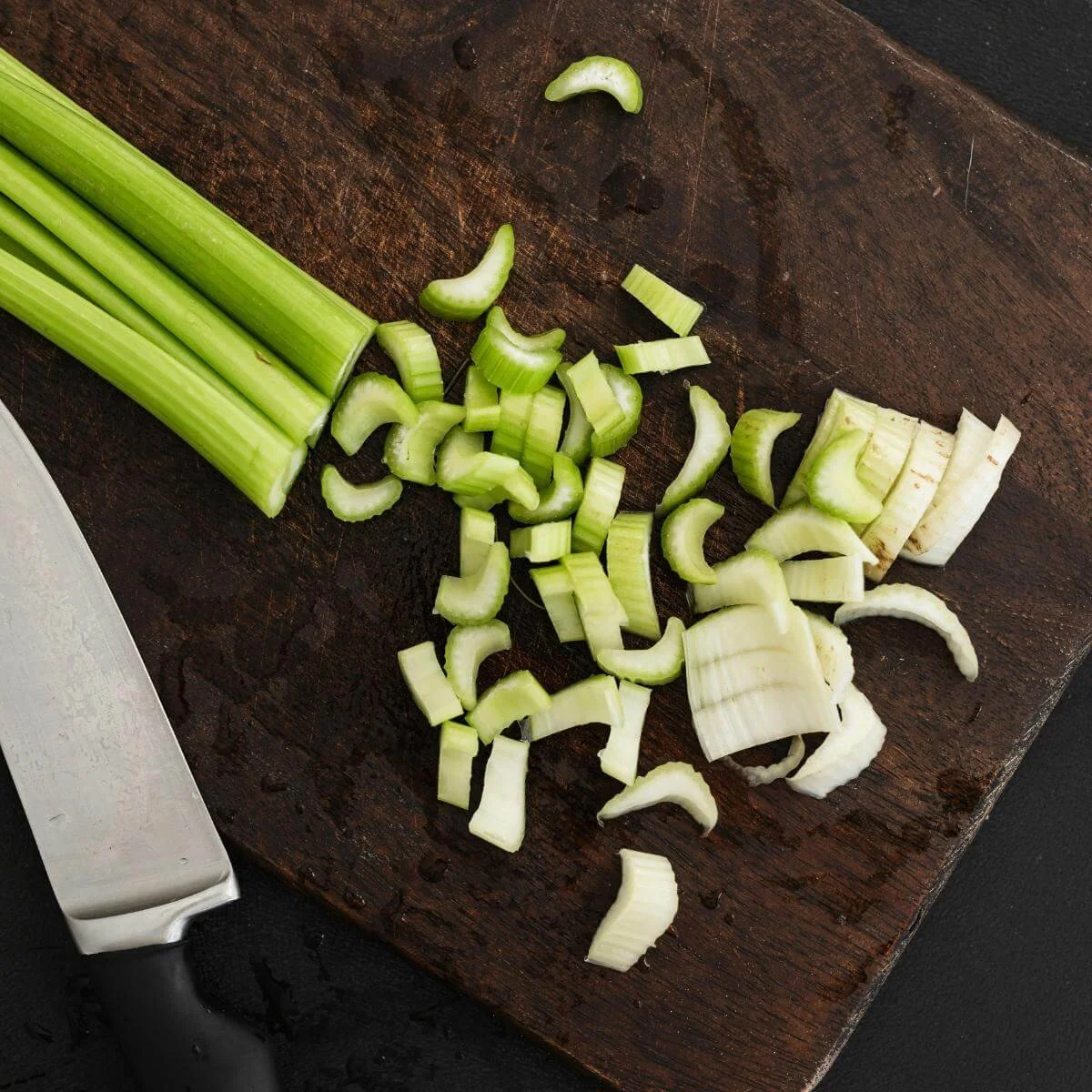
Often, I will start working on a sentence or two and then have to get up to do something — mop the floor, tend a child, chop some veggies for dinner — but the question is mulling in the back of my mind. Movement — especially vigorous movement — is great for creative fermentation. I’ve found that switching between the two, as motherhood and life demand, often refines my creativity and lends extra sparks of interest to my work.
QUESTION #3: CONFESS
Every superhero has a weakness; every human, too. We’re just good at faking it. But who are we kidding? We’re all broken and in this thing together. So what’s your kryptonite, and how do you confront its power?
My biggest weakness is wanting very, very badly to be strong.
When I was a kid, my dad taught us the shorter catechism. Whenever we reached Questions 63 and 67, he would always make me answer because they were so hard for me to say.
“Sydney, how is Christ your King?”
I would answer: “Because he rules over us and defends us.”
Then he would smile and lean a little closer, and there would be both love and challenge in his eyes. “Sydney … why do you need Christ as a King?”
And I would clench my teeth and say, “Because I am weak and helpless.”
I had such a hard time giving that answer.
I knew it was spiritually true, but I didn’t believe it applied to the rest of me. I took so much pride in my capacity, in my ability to be strong. I loved pushing myself to the edge of my strength and relished the feeling of surpassing those limitations.
Then I became disabled.
I remember lying in bed on days I couldn’t move, watching GoPro videos on my phone — climbing a mountain, surfing or running down a hill. I would watch them over and over, trying to imagine the person was me. I missed that feeling of strength so badly.
I’ve realized that my need to be strong has always been my weakness. It keeps me from receiving help. It keeps me from depending on God.
Now, I stop trying to resist my weakness. I need to lean into my weakness to experience the Lord’s strength. I have to lean into my weakness to learn the right kind of dependency. That’s really what this whole life is about — learning dependence.
I am weak now and proud of it, like Paul. I want to boast in my weakness because in my weakness, Christ is strong.
QUESTION #4: FIRE UP
Tell us about your toil. How are you investing your professional time right now? What’s your current obsession? And why should it be ours?
Right now, my work is writing a book that was born out of my suffering. And my hope.
When I first became disabled, I didn’t have a diagnosis. I lost the ability to speak, to walk, to taste. I was having seizures, hallucinations and constant pain. I went nights without sleeping.
And in those long, sleepless hours, I wrote. I wrote because it was the only way I knew how to process what was happening to me, to put language to something I had no words to describe.
Even after I received a diagnosis, on the nights that were really hard, I kept writing. I swore no one would ever see those pages. They felt too vulnerable, too broken to share with anyone. They weren’t the kinds of thoughts that I thought Christians could struggle with, much less say out loud.
But as the Lord has brought me through this season — this season of pain and motherhood and the brokenness of this life — I’ve seen some of the threads of redemption he has brought to my suffering.
That work has taken shape in a book called “Fearfully and Wonderfully Broken.” It’s written for the person who is in pain or toiling through a long period of suffering and maybe wonders, Is it just me? Am I the only Christian feeling this way? How can God bring something good from this pain that I’m in? How can I continue enduring when I don’t know how this story will end?
That is the toil of my life right now — of this moment, of this season, in this body. My work right now is to take what feels unspeakable and give it language.
QUESTION #5: BOOST
Whether we’re cashiers or CEOs, contractors or customer service reps, we all need God’s love flowing into us and back out into the world. How does the Holy Spirit invigorate your work? And how do you know it’s God when it happens?
In this season of my life — writing, interviews, motherhood, weakness — I’ve realized something surprising:
I rarely feel inspired before I obey.
I wake up in the morning feeling like I’ve been hit by a truck. My children wake up wanting and needing me. Baskets of laundry wait for me in the overcrowded laundry room, food-smeared dishes line countertops, and floors spread the span of our house as crumbly as the bottom of a toaster.
By the time I get to naptime, I check my schedule. If there’s an interview, I rarely feel like doing it. But I do it anyway.
I turn on the camera, angle it to hide whatever messes I couldn’t get to, and whisper a short prayer — sometimes the first prayer of the whole day: “Lord, please prepare my heart for this, right now. Give me the words to say. Help this conversation to glorify you and to find who it needs to.”
And then, whether I feel like it or not, I force a big smile and click “Join Meeting.”
And then, inevitably, after 30 minutes of talking about God’s goodness in a conversation I didn’t feel like doing, I am positively glowing.
Like Beethoven’s 5th symphony, the pattern repeats everywhere on different strings. Only after I get up in the morning (and drink a cup of coffee) do I feel grateful for the day. After I pause to read my toddler the same book for the hundredth time, I feel connected with my daughter. After I step outside for a few minutes of fresh air, I feel restored and invigorated.
It’s usually after we say, “Yes, Lord,” for one more act of mundane obedience we do not feel like doing that the Spirit gives us the good gift of good feelings. I’ve learned to recognize God’s blessing, not in a rush of feeling before obedience, but in the quiet, steady presence that follows it. His work is more often sustenance than spark, more plodding than pompous, more mundane than magnificent. I think, paradoxically but truthfully, there is glory in that.
QUESTION #6: inspire
Scripture and tradition beckon us into the rich and varied habits that open our hearts to the presence of God. So let us in. Which spiritual practice is working best for you in this season?
Once a month, my friend walks across our neighborhood at 6 a.m. to my house, where we sit and talk about the Lord for an hour over cups of hot coffee with heavy cream. It’s the only time of day when our children are still sleeping, and our husbands are awake but at home (usually getting ready for work). We always bring our Bibles, intending to read together. So far, we haven’t actually done that, but the conversations have been rich enough that I’ve never once felt guilty (although I try to make up for my Bible reading later in the day).
This has only just started, and in case you have the wrong idea about me, I’m not good at making friends — or getting up early in the morning. Seeing friendship as a spiritual restorative is a recent perspective that is still developing. I often find that in the busyness of life, it is hard to make time to intentionally sit and converse with a friend, to build that friendship beyond the small talk, to release the social practices and allow the moment and the space to be messy, chaotic and interrupted.
Often, even when I actually schedule a meetup, I seldom feel energized enough, social enough or interesting enough when the time comes to feel like it will be very productive. Sometimes it’s only my social anxiety that forces me to keep the dang thing instead of canceling at the last minute. Yet when we’ve actually got going, I feel the restoration seep through my body. The restoration from that early morning talk often lingers for hours, sometimes even days afterward.
I leave those mornings not just feeling socially filled but spiritually steadied.
As I said, I’ve never been good at making friends, yet I’ve realized that I was missing out on a good gift from the Lord in keeping to my own natural seclusiveness. I prayed one morning that the Lord would give me a friend I could “do life with.” A few weeks later, he answered my prayer.
I think the easiest way to insert friendship restoratives into busy schedules is to simply do what you are both already doing together. Do you both read the Bible in the morning? Do it together one day over cups of coffee. Are you both grocery shopping? Go together one morning with all the kids piled in the cart. Does your friend sweep her floors? Ask if you can come over and help with housework, and invite her over to help with yours. Do the things you are already doing together.
I remember hearing a story that when the dishwasher was first invented, one girl asked: “But when do the women talk?” We’re not busier than we used to be; we just used to find fellowship in our labor. It is truly life-changing to work at ordinary, menial, life-serving things alongside a friend. And working at a task together often deepens relationships faster than endless childless coffee dates.
QUESTION #7: FOCUS
Looking backward, considering the full sweep of your unique faith journey and all you encountered along the way, what top three resources stand out to you? What changed reality and changed your heart?
Three stand out to me as changing not just how I think about faith, but what I believe I’m allowed to feel before God. Two are fiction, and the last one is a journal that was never meant to be published. I’m glad it was.
I first read “The Brothers Karamazov” by Fyodor Dostoevsky in high school and didn’t get much out of it. The second time I read it was during college with my wonderful literature professor, Dr. Grieser, who later became my thesis adviser. His class opened the work up to me in new ways, driving this book and Dostoevsky as an author to the top of my list of favorites.
If you don’t know, the book is about three brothers who are faced with the problem of evil and try to confront it in different ways: Christianity, hedonism and naturalistic philosophy. As each grapples with the problem of evil, each story follows the same arc: the suffering itself, the breaking point and a dream that draws them into the aftermath — and consequence — of their own philosophy.
Dostoevsky, who suffered much himself in his own life, inserts biographical details into many of his characters, including things like seizures and the death of a young boy, both of which deeply resonated with me from my own life. Dostoevsky sees, perhaps rightly, the suffering and death of a child as the deepest, cruelest, most nonsensical grief in the world, so the turning point of the book centers around that. It is a beautiful work and masterfully done. I recommend the Richard Pevear and Larissa Volokhonsky translation.
The second is a journal: “A Grief Observed” by C.S. Lewis. This is the journal Lewis kept after the death of his wife, Helen. It was never intended to be published, and when he did, he did so anonymously. It was only after so many of his friends recommended to Lewis his own book that he finally admitted himself the author.
I understand why he would wish to keep it a secret — it is a profoundly vulnerable work. Lewis’ stepson described it as revealing him “naked in his own Gethsemane.” I am also deeply grateful that Lewis humbly and self-sacrifically declared himself the author because, coming from the mind of so great a reasoner and apologist of the faith, it means even more in its pain and wrestlings.
Lewis asks questions of himself and God that I didn’t know Christians were allowed to ask. It gave me the wisdom and language for deep and profound lament and honesty before the Lord, driving me to take my most raw and unruly struggles to him rather than hide them within myself as something Christians should never feel. The book is short and can be read in a few hours. I’ve read it numerous times and each time, find a new thought or feeling I didn’t have language for that Lewis put into words.
The last is “The Chronicles of Narnia” (if you’ll forgive me for counting seven books as one). This work, also by C.S. Lewis, has been a bulwark to me my whole life. In my early years, “The Lion, The Witch, and the Wardrobe” introduced me to my first clear understanding of the gospel. Throughout my teenage years, “Prince Caspian, The Voyage of the Dawn Treader” and “The Silver Chair” became living illustrations of Christian character and living well before the face of God. After my little brother, Isaiah, died, “The Last Battle” (especially the second half) became something I went to again and again. In my personal suffering of physical loss and grief, “The Magician’s Nephew” and “The Horse and His Boy” became dear favorites to me — and still are.
I am drawn to stories that refuse to lie about suffering, because they grapple with truth from the inside, as we all must do. I think fiction is one of the most powerful revealers of life because, like each good fiction book, we are all living life from inside a story.
Certain things can be godsends, helping us survive, even thrive, in our fast-paced world. Does technology ever help you this way? Has an app ever boosted your spiritual growth? If so, how?
I have two answers to this, and they seem like opposites.
The first is Instagram. When I first got sick, I didn’t know anyone who looked like me. I didn’t know any other young woman who used a mobility aid. More than anything, I wanted to see if someone my age could use an aid without having it “define them.” Could one be stylish, artistic and independent with a cane? Was I banned from using a wheelchair because I could walk at times? What did disability really look like?
So I did what any 21-year-old would do: I turned to social media. And I found a community I didn’t know existed. There were a lot of women like me, living rich, beautiful and joy-filled lives with a disability.
Over time, I began sharing my own story online, and more and more people began resonating. What started as looking for representation became becoming it. Now, I hear from women who say they pursued mobility aids, a new dream or even motherhood because they saw that it was possible from my account. I remember being in that season and how much representation meant to me. It’s a huge blessing to know I can help someone else that way, too.
Of course, being a content creator with a large online audience has its dangers. One thing I wanted to be cognizant of — especially after having children — was the amount of time I spent on my phone. It’s easy to start seeing everything as “content” or feel the need to spend hours filming, editing and replying to all the admin stuff. There’s an assumption that the more successful you are on social media, the more time you have to spend on your phone.
I decided early on that I was not going to use my phone around my children except for filming, which they get to be a part of. No editing, no research, no scrolling, no replying to comments. It keeps me present and shows them, with my daily life and actions, that they are more important to me than anything online. It helps me thrive, and I know it helps them thrive too.
That said, even with the best intentions, my phone can still be a distraction in my life. The problem with social media is that the same tools that connect us can also consume us. So my other favorite app is Opal. It is a free screen time manager, and it’s the only one I’ve found to work for me. I use it to block nearly every app on my phone overnight and through the first half of the day. I call that block “Enjoy Your Life.” It’s helped me cut my screen time dramatically and, more importantly, protect my attention for the real stuff of life, which is always going to be offscreen.
The connection and community on Instagram and the boundary on Opal have been two of the most spiritually grounding technological practices in my life.
QUESTION #8: dream
God’s continually stirring new things in each of us. So give us the scoop! What’s beginning to stir in you but not yet fully awakened? What can we expect from you in the future?
I hope this is just the beginning.
Writing is where I feel most honest before the Lord, and I sense him stirring something long-term in me — a body of work that tells the truth about suffering without losing sight of redemption. “Fearfully and Wonderfully Broken” feels like a first step, not a conclusion.
One area that keeps pressing on my heart is children’s literature.
After having kids myself, I realize how difficult it is to explain disability to a child in a way that is both truthful and dignifying. We live in a culture that struggles to hold tension — we either flatten disability into something inspirational or reduce it to something tragic. But Scripture does neither. It tells the truth: we are broken, and we are deeply valuable at the same time.
I feel that gap when I look for books for my daughters. I haven’t found many that can hold both realities well. I find myself wondering if I might one day try.
That idea both excites me and unsettles me. Writing for adults feels like speaking in my own language. Writing for children feels like learning to speak truth more clearly than I ever have before.
For now, I’m continuing to share my life and faith online (@the.annegirl), and I’m grateful for the community forming there. But more than growth or numbers, my hope is simple: to keep telling the truth about suffering and the goodness of God — and to trust him with whatever comes from that.
Quilting bees, canning food, washing and drying clothes — only decades ago, these types of communal tasks were mainstays, opportunities for people to gather and connect, sharing both the burden of work and their personal lives.
Nowadays, especially in Western cultures, we’re much more individualistic in how we approach work. We put in our earbuds and blast a podcast while washing dishes, chopping vegetables for dinner, or pulling weeds in the backyard.
Have we lost something precious in the process? Perhaps a social bond that strengthens not just society at large but our own souls?
This week, we challenge you to think of one way you can turn a burden into an opportunity to connect with someone else. Whether it’s carpooling with a co-worker to work or helping a neighbor rake her yard, there are millions of ways to share the load and our hearts.
Sydney Anne Bennett is a writer, speaker and digital creator known for her honest reflections on faith, chronic illness and motherhood. After being diagnosed with Functional Neurological Disorder, she began sharing her story online, building a community of hundreds of thousands. She is the author of Fearfully and Wonderfully Broken. Sydney lives in rural Idaho with her husband and daughters and writes about finding meaning, dignity and hope in the midst of suffering.