
Ruth Haley Barton
21 min read ⭑

“That is the organizing principle of community itself — that we are gathering together around the presence of Christ for the purpose of transformation so that we can discern and do the will of God.”
Ruth Haley Barton is a seasoned spiritual director, teacher and retreat leader. She is also the founder of the Transforming Center, a nonprofit organization focused on building up pastors and leaders so they can lead their own transforming communities well. While she’s spent decades in organizational leadership, her true love is writing, which has led to books such as “Leading a Transforming Community,” “Sacred Rhythms” and “Strengthening the Soul of Your Leadership.” Recently, Ruth sat down with Rapt and shared what’s coming next for her as she steps away from active leadership responsibilities, how she’s harvesting the fruit of the last 25 years of her life and why community is essential to spiritual transformation. Her answers were given exclusively to Rapt — you’ll only find them here.
The following is a transcript of a live interview. Responses have been edited and condensed for brevity and clarity.
QUESTION #1: ACQUAINT
Food is always about more than food; it’s also about home and people and love. So how does a go-to meal at your favorite hometown restaurant reveal the true you behind your web bio?
There’s a difference between what I do when I’m going out and when I’m eating in. When I’m eating in, I’m a very simple cook. I’m a good cook, but only with the simple, straightforward things. But I like it. I’m not somebody who tries something new every night. I like the tried and true.
Now, when we go out, that’s another story. I love to try all the new things out there. We have a couple of places around here that we go to regularly. I enjoy upscale Neapolitan Italian. If I do get pizza, it’s Neapolitan, very upscale, with really good ingredients. Italians have a great way of cooking other things, too.
I love going to these restaurants because what they cook is special. I go with my husband, and he’s my favorite date. But sometimes I’ll go with a woman friend — oftentimes after a demanding speaking engagement when I’m exhausted. We will meet at Gia Mia, tuck in there, get comfortable together and get served.
I live in Wheaton, Illinois. People think of Wheaton as being a conservative sort of Midwestern town, which it is, but we have had an explosion of new, wonderful restaurants. Wheaton was dry for many years, but it’s no longer that way. That makes it more fun. There’s a wonderful vibe in downtown Wheaton and lots of great restaurants. People are often kind of jealous that we have all the options we have within 10 minutes.
Getty Images; Unsplash+
QUESTION #2: REVEAL
What “nonspiritual” activity have you found to be quite spiritual, after all? What quirky proclivity, out-of-the-way interest or unexpected pursuit refreshes your soul?
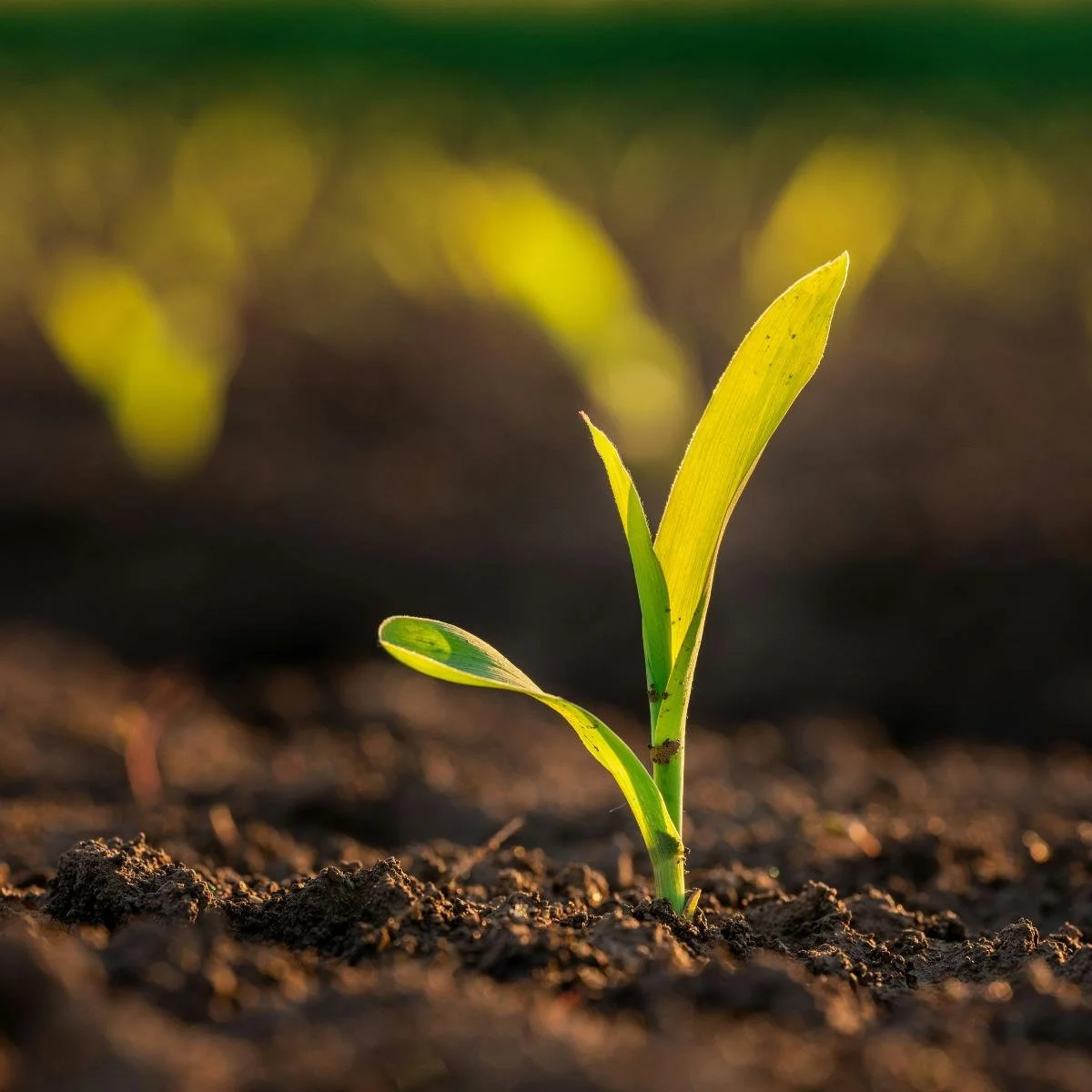
If you know me very well, you know that I don’t separate the spiritual and the secular, so I won’t be able to do that. But one of the things that has surprised me later in life is how enriching and replenishing being out in the garden can be. There’s a calmness — a settling in, a sinking in — when I’m in the garden. I learn lots of things there, too. I’m very connected with this God who grows things, as many other people are. You don’t have to have spirituality to practice gardening, but for me, it bridges the gap in my spirituality between the natural world and this God who grows me and grows things.
There, I connect with profound truths about growing, transformation, what it requires and what it takes. There are hard things about growing that are very evident in the garden that also apply to our lives, such as deadheading and pruning. Early in your Christian life, you think everything’s going to be up and to the right, and then someday, it’s not. You go out into the garden, and maybe you think, Well, maybe God is pruning something, a branch that was more dead than I knew it was. Maybe that pruning has to do with being able to even bring forth a more beautiful flower, a more beautiful fruit — if I will just let God do that work.
Right now, it’s harvest season here in the Midwest, so our plants are giving us more tomatoes, zucchinis and cucumbers than anybody knows what to do with. There’s an awareness, and this comes from David Whyte, my favorite poet. I love his teachings on the inner life and conversational leadership. He also talks about harvest. There’s a season in our lives when we harvest the fruit, and if we don’t, the fruit will rot on the vine or drop and rot in the garden. Given my age and stage right now, I relate to that. I need to harvest the fruit of my life; otherwise, it could rot on the vine. It’s changing the way I’m looking at my life now and how I’m going to shape my life in the future. I’m going to shape it for harvest. But the garden is the place where you actually see that lived out and where you realize that if you don’t get out here and pick every day, things start to rot on the vine.
What does harvest look like for you?
Well, I have a new book coming out. It’s already out, actually. It’s called “Leading a Transforming Community: Foundations, Practices, and Strategies for Opening to God Together.”
This was a very hard book to write. I contracted for it 13 years ago, so I’m a stunning 13 years late. I wrote a bunch of other books first because I just couldn’t do this one. I finally realized that in order to even move on in life, I was going to have to write this one so that I could sort of bring some closure or bookend or something to a period of time in my life when I was doing a certain thing. I realized that going ahead and pushing through and publishing this book was a harvest for me because it represents 25 years of a certain kind of ministry. If I hadn’t written it, I would have felt a sense of incompletion, like maybe everything that 25 years was about didn’t produce the best fruit that it could.
That’s a very good feeling to know that you’ve harvested a major work in your life. Then after that, whatever God does with it doesn’t matter. You’ve done the thing of harvesting it.
So the harvest is the journey, the wisdom gained along the way and giving it away?
Yes, and making sure you’ve captured it somehow. That’s what it is for me, anyway. I don’t know what harvest looks like in anybody else’s life. You change your life and priorities to do that. Finishing this book challenged other aspects of my vocational life, but I knew the whole way along that it had to be done and other things had to be sacrificed. I’ve never doubted it, and I’m more sure than ever that this book had to come out in order to be the fruitful harvest from these years in my life.
QUESTION #3: CONFESS
Every superhero has a weakness; every human, too. We’re just good at faking it. But who are we kidding? We’re all broken and in this thing together. So what’s your kryptonite, and how do you confront its power?
For me, it’s people-pleasing. I know where it comes from in my family of origin and my birth order position. I know why it’s such a vein running through my life and why it’s been so hard to — if you want to use gardening language again — deal with that taproot.
The taproot in the garden is another big lesson. You pick the little flowers that are above the surface and think you’ve dealt with the root. There’s a taproot under there, and if you don’t deal with the taproot, you haven’t dealt with the thing that’s wreaking havoc in your life. You can make some scheduling tweaks and say no to a few things, but if you haven’t dealt with the taproot of people-pleasing, you will keep making the wrong decisions and doing too much in your life. It’ll drive you to death.
My answer might surprise people who think I’m a strong person, but I am weak in that area. I am weak when it comes to people-pleasing, and I don’t like to disappoint anyone. It hurts me. I can hardly stand to disappoint anyone, which means that I keep doing more than a human should do. It’s very deadly, and it is my weakest spot. It is kryptonite — and I appreciate you calling it that — to be caught in a place where I am not willing to disappoint someone else. At this stage of my life, there are so many invitations and possibilities that come my way. All of them are good, which is another problem. There’s not one thing that comes along my path now that’s not worthy, which makes it even harder to choose what’s best.
QUESTION #4: FIRE UP
Tell us about your toil. How are you investing your professional time right now? What’s your current obsession? And why should it be ours?
I think my toil is trying to fit writing, which is my most significant sense of calling, into my other priorities. I’ve been an organizational leader for 25 years at the helm of a nonprofit organization. I know now that organizational leadership and authorship don’t fit together very well. The best toil is always the writing, but the hardest part of it is trying to fit it in with other aspects of life that tug at me.
As a result, I am letting go of some of my organizational leadership responsibilities so that I can continue to say yes to the writing, content development and thought leadership. People have surprised me by calling me a thought leader, and the publisher is positioning me that way as my new book comes out. But I realized that I can’t be a thought leader if I don’t have time to think. I haven’t had enough of that for many years now, so I’m changing some things so that the toil can be the kind that Paul talks about. With all of my being, with every bit of energy that God instills within me, I want to toil around the writing and the thinking and the reflecting and being a spiritual guide through my writing. That’s the good work. That’s the good toil. The voice in my work is really the voice of a spiritual director trying to offer up whatever guidance I can.
Tell me about the book. It was a long time coming. What’s it about? Why was it on your heart?
It’s called “Leading a Transforming Community: Foundations, Practices, and Strategies for Opening to God Together.” The last 25-plus years of my life have been spent leading, guiding and cultivating transforming communities of leaders and pastors who are seeking their own spiritual transformation in the midst of the crucible of ministry. I’ve been curating and cultivating a safe space for them to tell the truth about their own relationship with God, what’s missing, what’s deformed, what needs transforming, what is transforming, what’s happening in their churches and communities, and the real travails of pastoral ministry and Christian leadership.
Do you believe that people change incrementally over time with others in the context of spiritual practices that open us to God?
The whole purpose of the book is to help transforming communities. You can use a lot of descriptors around the word community. A few favorites would be Christian community, which I think oftentimes has a whole lot more to do with belief. This is what we believe, and specifically what we believe about Christ. This is good, and there’s nothing bad about any of it. But when you say “Christian community,” there’s going to be a good statement of faith behind that. Just go to their website, and you’ll find it.
Then there’s spiritual community — another phrase I love — which has to do with the Holy Spirit, the third person of the Trinity. Spiritual community lives responsibly with the Holy Spirit. To me, the concept of transforming community has to do with gathering around the presence of Christ for the express purpose of being transformed into Christ’s image. That is the organizing principle of community itself — that we are gathering together around the presence of Christ for the purpose of transformation so that we can discern and do the will of God. That’s been our definition across these past 25 years. This is a time in my life when I felt it was important for me to write out of those experiences and capture them right now.
I’m grateful for the delay, by the way. For me, it was excruciating to have it hanging over my head this long and to realize that I was failing to meet a deadline, which I lived with for all those years. But now all of us agree that this is a better time for the book to come out because if I had written it 13 years ago, it would have been pre-COVID. It would have been before the real reckoning around racial justice. It would have been before the political scene that’s dividing churches and Christians right now. So if I’d written it 13 years ago, it would have become irrelevant very quickly because it wouldn’t have had the context of these big things that we’re dealing with as a church now.
Who’s the target audience? Who’s the ideal reader?
Leaders, pastors, especially pastors. My publisher feels like pastors will pick this book up the most because there’s a desperate longing and an expectation of what is next for the church. It’s a mess — a big mess. What’s next? What do we do on the other side of these dynamics that I just named?
There’s something deeply unifying about talking to leaders about transformation; it transcends any kind of denominational division or even particular issues. If your focus is on asking, “Are we transforming in Christ’s presence?” a whole lot of other things really do fall away. It’s an incredibly clarifying question. What is transforming? What is deforming the life of a community? Can we look at it all through that lens?
So this book is definitely for pastors, but it’s also for leaders of Christian ministries, whether for-profit or nonprofit. The Transforming Center is a nonprofit organization, and yet we define ourselves as a community of men and women gathered around the presence of Christ for the purpose of transformation so that we can discern and do the will of God. International Justice Mission (IJM) is another organization that I’m very close to, and they are committed to justice in terms of their mission. But in terms of their identity, they are a community of Christian formation. What I see in my own life and in IJM CEO and founder Gary Haugen’s life is that it’s essential for the senior leader to be the one who champions others. It is so demanding to lead a transforming community and to keep people focused on their true identity that, if a senior leader doesn’t do it, it’s not going to happen. It’s not going to go anywhere. It’s not going to be sustained over the long haul. I am looking at senior leaders who have the courage to embrace this as a vision and pay the price of either establishing communities around that value or reorienting the ship toward that goal of becoming a community gathered around the presence of Christ for the purpose of transformation so that they can discern and do the will of God. The apostle Paul says our transformation is prerequisite to being able to discern and do the will of God.
QUESTION #5: BOOST
Whether we’re cashiers or CEOs, contractors or customer service reps, we all need God’s love flowing into us and back out into the world. How does the Holy Spirit invigorate your work? And how do you know it’s God when it happens?
I love this question so much because I think the work of spiritual transformation — or in evangelical Protestant circles, we might call it sanctification — is the will of God. The Holy Spirit is especially active in the transformation process. It’s the work of the Spirit deep within.
To me, transformation is very Trinitarian. Jesus, the Son, asked the Father to send the Holy Spirit. The Holy Spirit is the one who is present with us in the context of our everyday lives, who is translating Jesus’ teachings to us. He unveils what the call to love means in my life, here and now, with the people that I live with, rub shoulders with and work with. The Holy Spirit is here within me now to help me understand what the demands of love are in my situation.
When you’re looking for wisdom, the question is, “What does love call me to?” The Holy Spirit is my counselor and my confidant to help me answer that question day in and day out. Figuring out what love calls me to requires opening myself to the Spirit’s guidance. It’s a very immediate sort of thing. It’s a daily, minute-by-minute process of orienting myself to the presence of the Holy Spirit deep within, saying, “What is love calling me to now and now and now?” If that’s what I’ve done today, I’m good. I simply want to pay attention and respond to the Holy Spirit, who tells what it means to love right here, right now.
QUESTION #6: inspire
Scripture and tradition beckon us into the rich and varied habits that open our hearts to the presence of God. So let us in. Which spiritual practice is working best for you in this season?
I’m going to share two that are deeply related. This will not surprise you if you’ve interacted with my work. Solitude and silence. Silence in particular. Sitting openly and receptively in the presence of God and allowing that inner chaos to settle. Trusting God to bring what I need versus me grabbing for what I need and telling God what I think I need. Sitting in that open and receptive posture is my most important daily practice.
That expands into my understanding of the Sabbath. Solitude is a shorter, daily time when we can practice silence, deep rest in God, deep listening and receptivity. But if you were to ask me what’s saving my life these days, I would say Sabbath saves my life week in and week out. I am religious — if you pardon the pun — about Sabbath. The reason is that I’m so in touch with my human limitations. Without Sabbath, I’m too limited. I can’t do what this life is requiring of me if I don’t step back and rest on the seventh day. That means that the whole week is oriented toward what needs to be done and what will enable me to practice Sabbath. It literally saves my life week in and week out. It’s salvation because we’re only human, profoundly human. On the Sabbath, I acknowledge that, and I let God refill me or replenish me or just minister to me. Sometimes I need to be ministered to. I minister to others so much, and on the Sabbath, I can be open to God for however he wants to minister to me as a human.
What does silence look like for you practically, and what does Sabbath look like?
Silence is literally sitting and breathing, typically in a position that is good for the body, whether that’s with feet flat on the floor, back straight or curled up under a blanket, but something that feels good in the body and that can be sustained — a position of openness. I know people who practice solitude flat out on the floor on their backs, saying, “God, I’m open to whatever you want to bring to me.” It begins with the body and paying attention to what the body needs so I can be open, available, receptive and comfortable but not fall asleep.
Then I get in touch with breathing because it’s a beautiful sacramental reminder of the Holy Spirit, who is closer to us than our breath. I can connect my breathing with my awareness of the presence of the Holy Spirit, inhaling the presence of God and exhaling and letting go of whatever is keeping me from being fully present. Sometimes I time it, but most times, I don’t.
When I sit, I love the prayer posture of open hands because open hands say so much to God in and through my body. First of all, it says I’m letting go of what I usually cling to — my identity, my desire to fix things and make things happen, my cares and concerns. I’m opening, and I’m receptive to what God wants to bring. I now open my hands reflexively for prayer, even under the table when sitting in meetings. If the meeting is getting a little tense, I’ll open my hands, trying to let go of my own anxiety and receive the presence of the Spirit. I started with 10 minutes a day, which I now know was remedial. Nowadays, if I can get 20 minutes to a half-hour a day, I find it spiritually helpful.
Retreat time is an expansion of that. I believe in retreats. Those times are set apart for extended silence and solitude with God. I start my quieter moments with God with real receptive silence. Then out of that, I might do spiritual reading or read Scripture, or I might do some journaling about what I’ve heard God say to me. But that silence prepares me for whatever I’m reading. It means that I’ve let the chaos settle so that whatever God says to me through spiritual reading or Scripture has more of an impact because I’m quieter.
If I’m in a more formal, centering prayer situation, there’s a bell at 20 minutes to signal that the time is over. But when I’m alone, I can go as long as I want. Then I use a prayer, oftentimes the Lord’s Prayer, as a way of coming back into the realm of words.
QUESTION #7: FOCUS
Looking backward, considering the full sweep of your unique faith journey and all you encountered along the way, what top three resources stand out to you? What changed reality and changed your heart?
The first resource I have to mention is spiritual direction. I discovered it when I was in my own place of deconstruction in my early 30s, even though nobody was calling it deconstruction then. I was on staff at a church I loved and came to the end of my ability to really experience God in the midst of that. I was becoming aware of areas where I was stuck and needed transformation, but I didn’t know how to access it. I couldn’t find my way through the inner chaos, longings and desires. That was while I was up front teaching in a ministry environment. A lot of pastors and leaders are in that place where they’re maintaining a brave face, but they’re suffering inside. I was in a profoundly evangelical setting where, at the time, spiritual direction was not well known. Now, 30 years later, it is better known.
A friend who saw what I was going through realized I might need spiritual direction even though I didn’t know what it was. So she recommended it, along with a person who could help. I trusted her. I would not be where I am today if it wasn’t for spiritual direction. I’ve continued to have a spiritual director all of my ministry life right up until this moment. I don’t know how leaders are supposed to make it through all of their own stuff while ministering in front of other people without someone who’s attending to their own soul and allowing them to be who they really are. So top of my list would be spiritual direction. We have a listing of spiritual directors on our website because we think it’s such an important part of strengthening the souls of leaders. We believe in providing at least some options for spiritual directors who have been through our content and have been trained through a reputable spiritual direction training program.
My second resource would be poetry. Poetry is what gets me into deeper spiritual places, where intellectual prose or didactic teachings can’t reach. I think God uses poetry to circumvent some of my defenses and get to the heart of what’s going on inside. I’ll give you one example: the poem “The Journey” by Mary Oliver, which many of your listeners and readers are probably familiar with, starts by saying, “One day you finally knew what you had to do, and began.” It was the beginning of letting go and leaving a place that wasn’t good for her anymore. She talks about people clinging to her legs and saying, “Mend my life!” Then she says that you start to hear a voice that is your own, see the stars, make your way and leave those voices behind because you’re committed to saving the only life you can. Lord, have mercy. That poem helped me leave a job that was killing me. Many people around would say, “You can’t possibly go. You’ve got all this good here. You can’t leave us.” The end of the poem says, “You moved away, hearing the voice that was your own voice, seeing the stars, being led to save the only life you could save.” I cannot tell you how many times a poem has met me in a way in which God has been able to use it in my life. I believe God has spoken to me many times through a poet who’s really in touch with the soul. David Whyte is another one whose poems have met me at times when I’ve needed to make a decision.
Lastly, I’m a writer, so journaling and writing also save my life day in and day out. Writing is not a biblical command. It’s not a spiritual practice we see in Scripture, but I think journaling helps me say things I need to say to God. Ted Loder is a poet pastor from the United Methodist tradition who says, “There’s something I wanted to tell you, but there have been errands to run, bills to pay, arrangements to make, and I forgot what I wanted to tell you. I forgot what I’m about or why. Oh God, don’t forget me, please, for the sake of Jesus Christ.” That prayer ushers you into a dynamic of saying something true to God. What does your soul need to say to God? Someone has said that you’d be surprised what your soul would like to say to God. I would add to that, “You’d be surprised what God wants to say to your soul.” So journaling as a practice helps me to say the true thing to God that I need to say. Because it’s a physical activity, and your hand is moving, God may say stuff back to you through your body, through the temple of the Holy Spirit. All of a sudden, you’re in this communion, this dialogue, and you look back and say, “Did I write that?” The truth is no, the Holy Spirit probably wrote it through your hand, and now you have it.
Those would be the three things that mean a great deal to me in my own spiritual life that are all accessible to other people.
Certain things can be godsends, helping us survive, even thrive, in our fast-paced world. Does technology ever help you this way? Has an app ever boosted your spiritual growth? If so, how?
One of the apps I find really helpful is the Centering Prayer app because it ushers you into centering prayer through a writing by Thomas Keating, some Scripture reading or the church mothers or fathers. It times it for you so you can be present with God for 20 minutes, and then the gong goes off. That’s a way I can use my phone profitably for solitude.
My other answer may sound crazy because it’s not necessarily spiritual, but I consider it to be spiritual. One of the sweetest aspects of my life right now is the fact that I have a 12-year-old — almost 13-year-old — granddaughter who really wants to stay connected. But we don’t live in the same town, so we talk every week for about an hour on the phone. That’s really important to her, and it’s important to me. It was really hard when my daughter, her husband and that particular set of grandchildren moved because I was used to being close to them. They had been close here, and it was a grief and a loss that I had to find my way through. But there have been glimmers of gifts on the other side, and our phone calls are one of them. If they still lived in town, that granddaughter and I probably would not prioritize talking for an hour. But the phone makes it possible.
So how can I completely set aside something that’s given me such a great gift? There’s a lot of care that needs to be given, of course. Even as I spoke about Sabbath, solitude and retreat, I think we need to think about where our technology will be during those times. My suggestion would be to put the phone outside the room or disconnect it when you go on a retreat. Our job is to make it work for us versus letting it do things to us that we hadn’t even known were going to happen. That’s our job. Part of our spiritual responsibility is to steward it, use it in good ways and not let it use us.
QUESTION #8: dream
God’s continually stirring new things in each of us. So give us the scoop! What’s beginning to stir in you but not yet fully awakened? What can we expect from you in the future?
At the Transforming Center, we’re in the midst of communicating a change in my status, which is that I’m stepping away from organizational leadership to step into writing more, developing content and working with leaders and leadership groups, especially around this new book, “Leading a Transforming Community.” I want to be more available for having spiritual relationships with pastors and leaders as well as their congregations and communities. I couldn’t do that very much over the last 25 years. And I was always leaving the people here who needed me. Now, I’ve already said yes to some things in the coming year that will enable me to connect more closely with some leaders and their groups.
I am a writer first and foremost, so the idea of waking up every day and knowing it’ll be a writing day is the life that I’ve been dreaming of for a long time — and I’m finally on the cusp of it. That’s very exciting. I might even do some further education. I love studying, exploring and learning, but I’ve had to set that aside in the past, too. I might take courses and go after another degree, but I know I’m going to get a chance to learn.
Finally, I want to be a certain quality of presence for my family at this stage. I’m very excited about having more of my best energies to give within this little intimate space called family. My family has been very long-suffering in standing with and supporting me in all the outer things that I’ve done. What’s drawing me is to be more with them in an intimate way. So all of those things are ahead.
As believers, one of the greatest privileges and responsibilities we have is being transformed into the image of Christ. Romans 12:2 tells us to “not be conformed to this world, but be transformed by the renewal of your mind, that by testing you may discern what is the will of God, what is good and acceptable and perfect” (ESV). Second Corinthians 3:18 adds that “we all, with unveiled face, beholding the glory of the Lord, are being transformed into the same image from one degree of glory to another. For this comes from the Lord who is the Spirit.”
We don’t experience this transformation alone. We find it only with the Holy Spirit, who dwells within us, and in relationship with other believers. As we open up, support others and allow ourselves to be supported, exhort others and allow others to speak into our lives, we find true change.
Ruth Haley Barton (Doctor of Divinity, Northern Baptist Theological Seminary) is the founder of the Transforming Center, a ministry dedicated to strengthening the souls of pastors, Christian leaders and the congregations and organizations they serve. A sought-after teacher, retreat leader and trained spiritual director, Ruth is the author of numerous books and articles on the spiritual life. Educated at Northern Seminary, the Shalem Institute for Spiritual Formation and Loyola University Chicago Institute for Pastoral Studies, she has served on the pastoral staff of several churches, including Willow Creek Community Church, and is professor of spiritual transformation at Northern Seminary.