
13 min read ⭑

“My husband often says no one should have to die to experience the kingdom of God. I want to spend my life figuring out how to help make God’s kingdom real — right here and now, for everyone.”
Much of Shannan Martin’s life revolves around food and writing. Each week, she serves as lead cook at the local community kitchen in Goshen, Indiana, where she and her team make meals for their hungry neighbors. The remainder of the week, she’s busy writing. She’s the bestselling author of books like Start With Hello and The Ministry of Ordinary Places, as well as the writer behind the popular Substack The Soup.
Read on to discover Shannan’s positive spin on “food noise,” her delight in thrift shopping and the books and people who have radically altered the course of her life.
QUESTION #1: ACQUAINT
Food is always about more than food; it’s also about home and people and love. So how does a go-to meal at your favorite hometown restaurant reveal the true you behind your web bio?
I’ve been hearing a lot about “food noise” lately. It’s a new term for me, and one that gives language to the phenomenon of devoting a great deal of mental energy to what I’m planning, cooking or eating next. I really do fall asleep most nights thinking about breakfast. Most people seem to think of food noise negatively, but I find it to be a reliable companion. Through the ups and downs of life, my next meal is something I can count on and even anticipate. It’s something I don’t want to take for granted. I’m on staff as a cook at our community kitchen, which puts me in close proximity to neighbors experiencing food insecurity. I want to work toward a world where everyone looks forward to dinnertime.
My family is blissfully cursed to live just one (walkable) mile from downtown Goshen, where top-tier food constantly tempts us. I’m proud of this city’s commitment to high-quality yet accessible food. Most recently, a local brewery added a Thai beef salad to its menu. It felt like being punched in the taste buds, which means I can’t stop thinking about it. It’s funky, crunchy, unexpected and plate-lickingly weird.
I grew up as a Midwestern country girl, so I still have a soft spot for basic budget carbs. I’ll ride for Taco Bell forever. As time passes, I’m most at home in the layered chaos of city and neighborhood life. My personality can be basic one day (potatoes!) and a bit much the next (Thai beef salad!). Like my personality, my palate covers a lot of ground. But at my core, I’m an intense, occasionally spicy person who gravitates toward intense, spicy food.
Lennart K; Unsplash
QUESTION #2: REVEAL
What “nonspiritual” activity have you found to be quite spiritual, after all? What quirky proclivity, out-of-the-way interest or unexpected pursuit refreshes your soul?
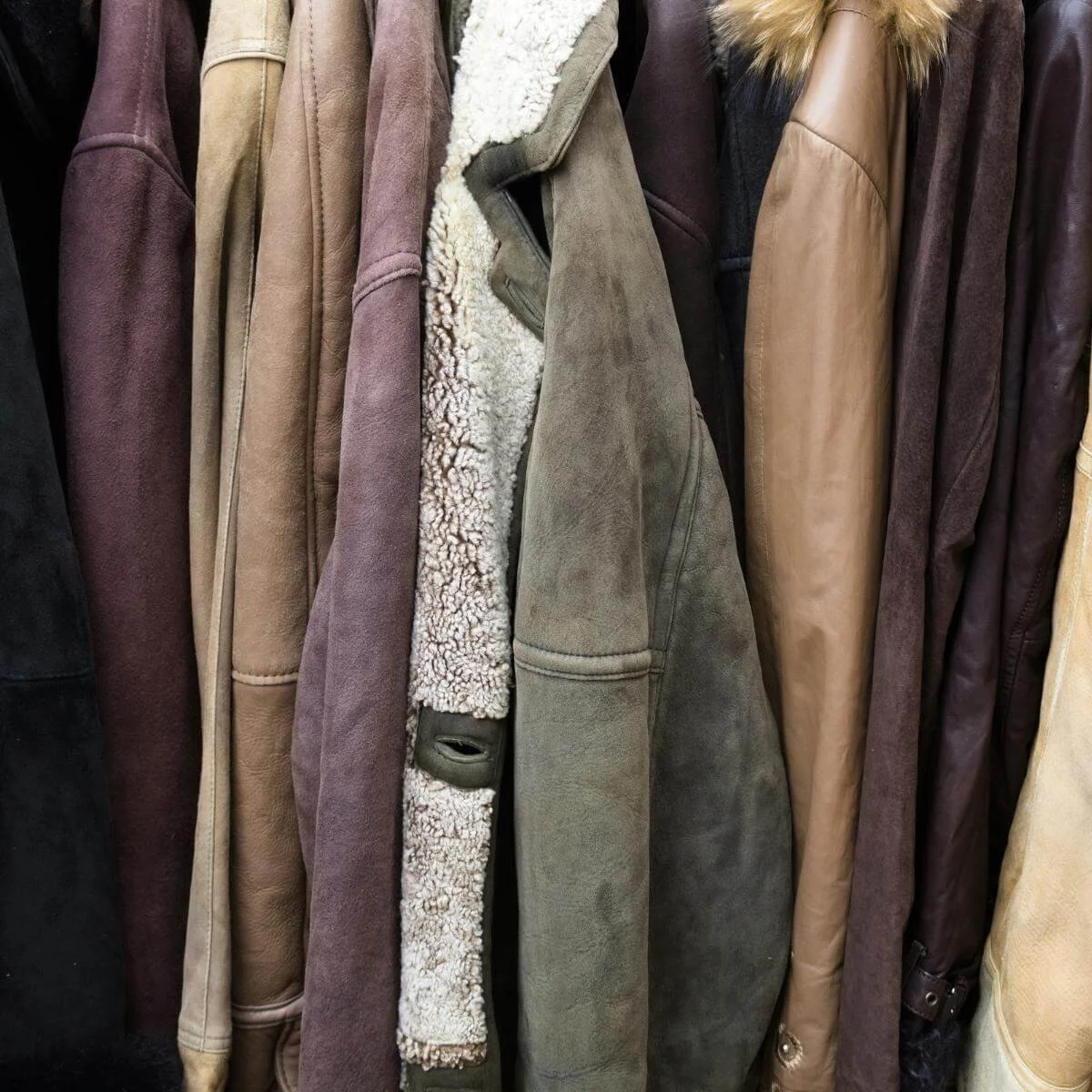
I was a hand-me-down kid. My family lived out in the boonies, away from shopping malls, with a squeaky-tight budget. Aside from the occasional trip to Kmart or JCPenney’s, we got by on intermittent trash bags of pass-downs from older cousins and wealthier friends. There were few things better than pulling treasures from the bag, one by one. Somehow, it never made me feel less-than. It always made me feel lucky.
As an adult, around the time our three youngest kids were locked into eras of rapid growth and mayhem, constantly wearing holes through the knees of their pants, my husband and I experienced dramatic career shifts, which resulted in our income being cut by 70%. I ran to the nearest Goodwill, and over time, wore down a path between our home and its doors. This was a decision born of necessity, but it didn’t take long for me to discover its many additional perks. It felt like the treasure bags of my youth on a larger scale. I never knew what I would find, but I almost always found something.
These days, we can afford to shop retail but rarely do. I found my groove at thrift stores, where unlimited options await at a fraction of the price. Secondhand shopping is a gentle, thoughtful way to move through the world. It’s a creative experience that has helped me know myself better, connected me to my community and made a tremendous impact on my family’s budget, allowing us to divert our dollars to more meaningful endeavors.
QUESTION #3: CONFESS
Every superhero has a weakness; every human, too. We’re just good at faking it. But who are we kidding? We’re all broken and in this thing together. So what’s your kryptonite, and how do you confront its power?
My kryptonite is that I enjoy drama and, at times, seek conflict. It brings me no joy to admit this. In this political moment, where drama rules not just the day, but the hour, my impulse to dig deeper into the headlines is even harder to rein in. I enjoy the sense of control I experience when I’m keeping up on the news. Because I am frustrated by those who intentionally choose to turn away from “being political,” I often lean into sharing political news and my personal political views. But even I know outrage can only be sustained for so long. I’m working on building rhythms of keeping an eye on the danger while also retreating, even in small ways, in order to remember all there still is to love about life.
Someone once described my personality type (Enneagram 8) as one that “builds connection through conflict.” It’s a strange thing to admit, and it sounds terrible, but I honestly felt seen. When someone is willing to meet me in the tension, I am more likely to trust them. Unfortunately for me, most people don’t enjoy conflict, including my husband. The struggle is real! Being able to talk about the ways we’re fundamentally wired differently without assigning moral value to one way versus another has been helpful for us. Conflict is a natural part of most relationships. It doesn’t have to signal an alarm. After decades of feeling that my role in conflict is to “calm down,” my husband now understands the importance, at times, of rising up to the challenge of a necessary conflict. Similarly, I have learned the value of not picking fights just because I’m good at it or because it scratches an itch.
No one has ever accused me of effectively “hiding” this part of myself. I see it as one of my superpowers. It gives me a directness that can help move things forward when they’re stuck, and it fuels my work for justice. If used recklessly, my comfort with conflict can cause real harm. But as I mellow over time, I’m more skilled at using it as a tool, rather than deploying it as a weapon.
QUESTION #4: FIRE UP
Tell us about your toil. How are you investing your professional time right now? What’s your current obsession? And why should it be ours?
Today, as a lead cook at The Window, Goshen’s community kitchen, I spent five hours making lasagna and working alongside my co-workers to serve it to 150 of our neighbors. It’s physical, fast-paced work — on our feet for hours in a blazing-hot kitchen. Each day is focused on what is needed — actual daily (day-old) bread. We sort through cases of salad greens. We chop onions by the gallon. We generally only work one to two days in advance, aware that a donation might “disrupt” our loosely planned menu at any time, in the best possible way. This work is immediate and embodied, but what I love most is that it provides opportunities for real connection.
For the remaining three days of my week, I’m currently focused on launching my fourth book, “Counterweights,” into the world. For me, this work cycles through three distinct seasons: 1) Writing the book. 2) Promoting and launching the book. 3) Refilling the creative well and supporting existing work until the next project takes root. Right now, I’m in phase 2, which means I’m talking about the book I spent the previous year writing and editing. This is more outward-facing work, which means I’m generally a bit more presentable and less “hibernating gremlin.”
When I took on a part-time job outside of authoring, I worried that it wouldn’t leave me with enough time and attention for writing. What I’ve found, instead, is that these two wildly different types of work feed each other. It’s a relief to give my brain a break and let my body physically carry some of the load. Conversely, since I write from a street-level, lived-experience perspective, my friends from the kitchen have a way of weaving into my writing. In so many ways, they have pastored and educated me in faith and life.
My current and evergreen obsession is thinking about how we can carry on together. How do we endure when everything feels too much? How can we be more honest about the complex abundance of our lives and this shared world? My husband often says no one should have to die to experience the kingdom of God. I want to spend my life figuring out how to help make God’s kingdom real — right here and now, for everyone.
QUESTION #5: BOOST
Whether we’re cashiers or CEOs, contractors or customer service reps, we all need God’s love flowing into us and back out into the world. How does the Holy Spirit invigorate your work? And how do you know it’s God when it happens?
The whimsy and wisdom of God created me to be a gut-led person. Over the past decade, my journey with God has primarily been a lesson in paying attention. French philosopher and activist Simone Weil said, “Attention, taken to its highest degree, is the same thing as prayer.” My slow journey to prioritize attention has proved her words true. Over time, I have shifted away from traditional forms of prayer that often felt stale and hazy to a more embodied form of communion with God in which the Holy Spirit is evident in every area of my life and my job is simply to take notice.
One of my favorite Bible verses is, “For I am sure I will see the Lord’s goodness while I am here in the land of the living” (Ps. 27:13). I came upon this verse later in life. It speaks to the heart of what I see as my job within this one imperfect, beloved life I’ve been given – to live expectantly, to see everything as vital and alive, to be sure of little beyond God’s goodness and to be captivated by its mystery.
My best writing often requires a good amount of stewing. It can feel like avoidance, or even (on my least gracious days) laziness. I’m learning to accept it and even welcome it as I would a friend. All of it counts. As I do the work of examining the connections between things and identifying the metaphors that emerge, this spiritual “knowing” often shows up as a bodily sensation — heat and urgency, physical and distinct. I don’t always feel it, but when I do, I know I need to find a quiet moment and start taking notes.
For me, the Holy Spirit shows up in quiet attentiveness, in prolonged moments that look like dawdling and in the exhilarating sensation of bumblebees trapped in my veins. When an idea that began as something like a gnat darting across my vision takes shape into something connected and visceral, it’s one of the most satisfying feelings. Though my writing work is solitary, I’m always aware that there are forces beyond me at work. A good writing day means getting out of the way and surrendering.
QUESTION #6: inspire
Scripture and tradition beckon us into the rich and varied habits that open our hearts to the presence of God. So let us in. Which spiritual practice is working best for you in this season?
Fifteen years ago, when our family relocated from an idyllic farm in an affluent, homogenous community to our humble city home, the contrast between the two was total. Everything about our new community was unfamiliar. I didn’t know a soul, and most of the people in our lives questioned our decision. I was raising three kids under the age of 8, excited for this new chapter, but also feeling lonely. I began to grapple with the fact that perhaps there was not some big “thing” I was supposed to do in this new community. Perhaps this place did not “need” me at all. I started to cozy up to the idea that I was simply, miraculously, being given the opportunity to experience God in a new place and in new ways.
In a place that most people would consider to be on “the wrong side of the tracks,” I discovered an enduring, all-seasons portal for beauty stretched overhead. I got serious about noticing the sky. It was something I had taken for granted up to that point. Noticing the sky taught me to bear witness to my reality and the realities of those around me. The more intently I watched it, the more I understood this complicated world to be woven together by our differences and threaded with inescapable beauty.
I took it further, extending the metaphor for all it was worth. The sky belongs to everyone — the longest-living art installation, waiting to wow us. Looking at the sky became a vital part of my rhythm for life. Years later, it remains one of my most meaningful practices. Looking up provides a moment to pause and take a breath, to feel my smallness in a wide, weird world. It reminds me that some things change, and some things stay comfortably predictable.
The late Eugene Peterson said, “All theology is rooted in geography.” My theology was formed by this nondescript block and the people who call it home. I learn from the walnut trees, the crumbling sidewalks, the gardens of my immigrant neighbors. I know God does not live up among the clouds. But watching a summer day sizzle into a fruit-bowl night sky, God’s goodness is made manifest.
QUESTION #7: FOCUS
Looking backward, considering the full sweep of your unique faith journey and all you encountered along the way, what top three resources stand out to you? What changed reality and changed your heart?
In the earliest days of our paradigm shift, before selling our farm and just as we were beginning to grapple with the fact that we were focused primarily on living the American dream (with a side of Jesus), the book “Tattoos on the Heart” by Gregory Boyle fell into my hands. Its impact on my life cannot be measured. His words gave me a new lens for seeing and relating to God. “How much greater is the God we have than the one we think we have?” This line alone opened me up to curiosity and a prophetic imagination for what’s possible in God’s kingdom. Boyle’s work with Los Angeles gang members began to dissolve my simplistic ideas about “good” and “bad” people. And to top it off, his writing was astonishingly beautiful.
Not long after settling into our new neighborhood, my husband, Cory, became the full-time chaplain of the second-largest county jail in Indiana. Our hearts and minds were changing rapidly as our lives intertwined with the lives of incarcerated and formerly incarcerated people. We invited them into our home, shared meals, spent holidays together and worshipped together. They pastored us as we collectively became seminarians of these particular streets. Many people would consider this community “under-resourced.” That couldn’t be further from the truth. Although this community has been kept from being financially prosperous, it is abundantly resourced — in creativity, empathy, resilience, kindness and faith.
So much of our change in direction can be traced back to “Tattoos on the Heart” (and Boyle’s subsequent books). I can even see the way his writing has influenced mine, especially as it pertains to writing with sensitivity and care about the intersecting stories of me and my neighbors.
If “Tattoos” and my neighbors are the two resources that most radically transformed my life, the third would be the book “The New Jim Crow” by Michelle Alexander. It helped me understand how flimsy and incomplete my education was around slavery, institutional racism and mass incarceration. I realized it was up to me to commit to my personal reeducation. Learning about the ways white supremacy has warped our nation from its foundations and has even left its mark on me was a sobering, necessary call-to-action. The ongoing work of learning from Black, brown and Indigenous people continues to change me and the ways I see the world.
QUESTION #8: dream
God’s continually stirring new things in each of us. So give us the scoop! What’s beginning to stir in you but not yet fully awakened? What can we expect from you in the future?
At our most recent Sunday morning Holy Alliance gathering with 100 incarcerated neighbors, our 19-year-old daughter, Ruby, went forward, along with two other attendees who are “moving on” to a new phase of life. Typically, those who come forward for this weekly call are nearing their release date at the work release center and facing the relief and anxiety of a fresh start. My daughter, who has not been incarcerated, will soon be moving 600 miles away to pursue her own new beginning. The group collectively blessed them with an ancient prayer: “The Lord bless you and keep you; the Lord make his face shine on you and be gracious to you; the Lord turn his face toward you and give you peace” (Num. 6:24-26).
Most of our three youngest kids’ consciousness was shaped in this community, where they were immersed in the lives of people who struggle in ways we haven’t. Now, Cory and I sit at a strange intersection, approaching an empty nest. Our young adult children are finding their way in different cities, even as the jail ministry continues to expand and grow right here in the neighborhood. In the coming months, a long-held dream for a Holy Alliance community center will become a reality, concentrating resources and creating belonging for a group of beloved people who are often overlooked and marginalized. In addition to housing existing services and opportunities, such as the Sunday gathering, art classes, tattoo removal and therapy, I’m excited to see how the center will continue to muddy up the placid waters of my privileged life in meaningful ways.
Additionally, my newest book, “Counterweights,” which highlights the Holy Alliance community and our neighborhood roots, was recently released. I’m looking forward to my first official book tour. It will be a thrill to meet readers face-to-face as we take up the counterweights practice, moving forward together in honest hope. After the hustle of a book launch, I’m looking forward to sitting still for a while and paying attention to what germinates in that pause. I’ll continue to write about the human collision of madness and miracle on my weekly Substack, in addition to shaking my fist at the gorgeous sky, watching my garden bloom and doing my best to stay upright and centered so I can keep doing my part to build a better world, where there’s enough belonging for everyone.
Jesus didn’t hide who he was from people. And he never hid what he came to do. While most of Israel waited for a mighty king to come and topple the Roman government, Jesus said, “The kingdom of God is in the midst of you” (Luke 17:21, ESV).
Other translations say, “The kingdom of God is within you.” The meaning is the same — God reigns in every heart that is truly surrendered to him. In every heart that picks up its cross and follows after Jesus. Every heart that believes him and believes in him.
May that be you and me. Because this is how God heals our broken world.
Shannan Martin is the bestselling author of several books, including Start with Hello and The Ministry of Ordinary Places, as well as the writer of her popular Substack, The Soup. Shannan is a wannabe gardener, a news geek, a fighter for justice and a thrift store stalker. She and her family live as grateful neighbors in Goshen, Indiana, where Shannan is on staff at the local community kitchen. Find her on Instagram @shannanwrites.