
Aaron Graham
9 min read ⭑

“I realized something unsettling. The culture was discipling our people more effectively than we were. That realization became a conviction I couldn’t ignore.”
Aaron Graham is the founder and lead pastor of The District Church, a thriving multicultural congregation in Washington, DC, whose aim is to build a Christ-centered, culture-defining church for both transplants and natives. Aaron earned a master's degree in public policy from the Harvard Kennedy School and a doctorate in missiology from Fuller Seminary. He has pastored in the heart of the nation's capital for over 15 years and has been featured by ABC World News, TIME, and The Washington Post for his insights on reaching millennials in our increasingly secular age. In addition, he and his wife, Amy, founded an organization called DC127, which brings churches together to help with the growing need for foster care. His book Unshakable Faith: How to Stand Firm in a Culture of Lies will be available in May of 2026.
In this interview, Aaron shares his passion for helping foster community environments where faith grows over time without diminishing. He lets us in on the rhythm of Monday date nights with his wife around a farm-to-table feast, shares how sports have a way of pulling him into the present, and reveals how the kryptonite of overwork can easily be disguised as faithfulness.
QUESTION #1: ACQUAINT
Food is always about more than food; it's also about home and people and love. So, how does a go-to meal at your favorite hometown restaurant reveal the true you behind your web bio?
Washington, DC, has been home for almost two decades now, but my favorite meal isn’t at some fancy restaurant. It’s my weekly date night with Amy. We have a spot we try to make it to most Mondays. Farm-to-table, simple and fresh. Affordable enough that we can keep coming back. We never need a reservation or have to wait — because it’s Monday. Gluten-free options for her. Solid meat options for me. We usually start with fresh chips and guacamole, and I secretly hope they add a side of pimento cheese. Then I order the honey-pot fried chicken with grits. It reminds me of Virginia, where I grew up.
The meal has become a rhythm for us. We decompress. We talk about how the kids are really doing, not just the schedule for the upcoming week. We process how things are going in the church we pastor — the wins, the tensions, the burdens. We remind each other, especially on our Monday Sabbath, how remarkable it is to live in the nation’s capital and shepherd people who care deeply about integrating their faith with their vocational lives. That weekly rhythm helps me detach my identity from what I do. That table slows me down and keeps me grounded in a city that runs on urgency. It reminds me of what actually matters.
Logan WEAVER; Unsplash
QUESTION #2: REVEAL
What “nonspiritual” activity have you found to be quite spiritual, after all? What quirky proclivity, out-of-the-way interest, or unexpected pursuit refreshes your soul?
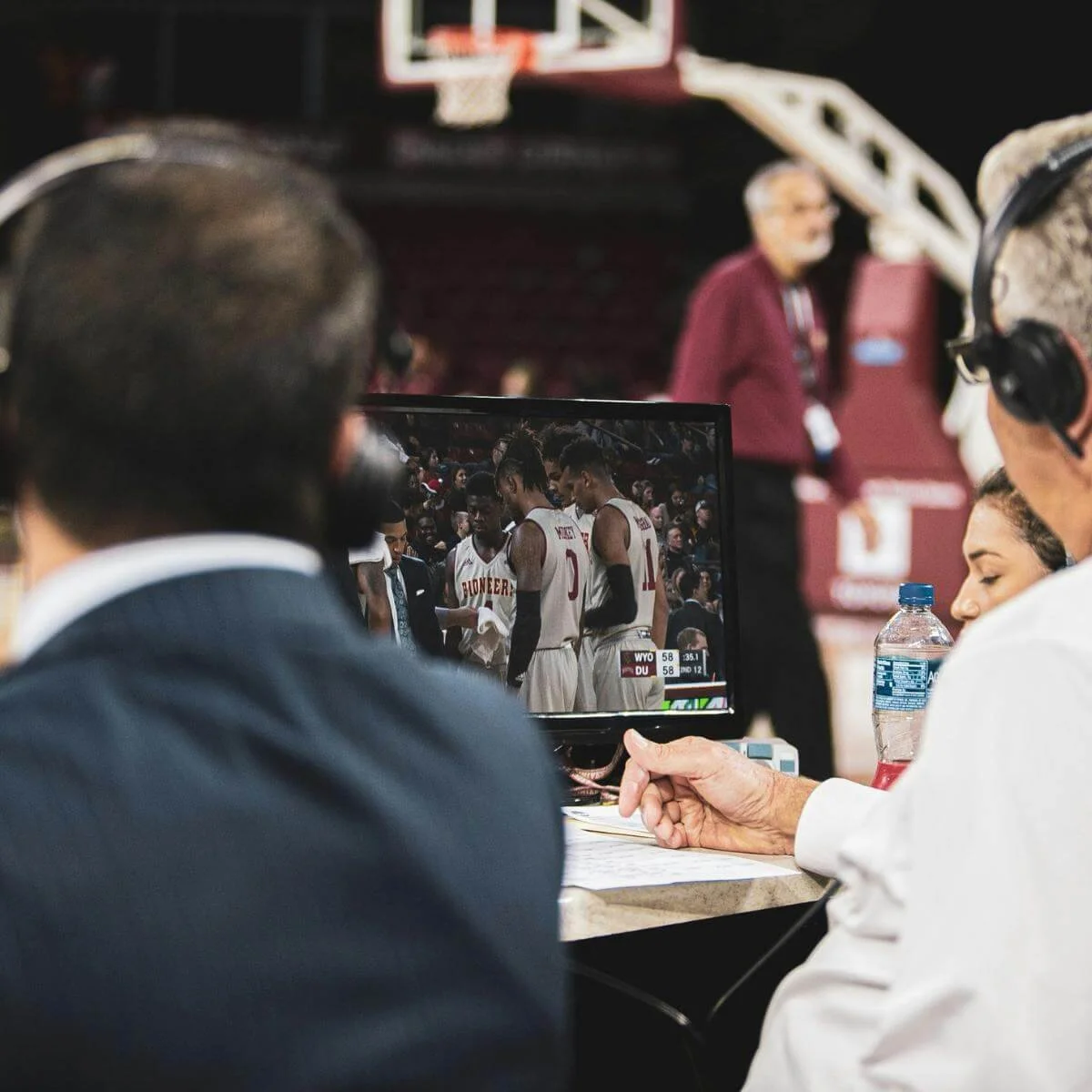
Sports have always been a great reset for me. If I’m not playing something or working out, I love watching a good game. Almost any competition will do. College basketball in March. A random playoff game I didn’t plan to watch. A Commanders run when they unexpectedly make the playoffs. Tar Heels basketball beating Duke. Watching my alma mater, Richmond, make the NCAA tournament. It doesn’t even have to be my team. I just love the drama of competition.
There’s something spiritual about the way a great game pulls me completely into the present. For a couple of hours, I’m not carrying the weight of pastoring in Washington, DC. I’m not thinking about budgets, sermons, or the heavy cultural conversations that swirl around this city. I’m just watching a well-run offense, a last-second shot, a comeback no one expected. It reminds me that joy isn’t a distraction from serious work; it helps fuel it. In a good competition, you see resilience, teamwork, failure, and redemption play out in real time. For me, it becomes a kind of mental Sabbath.
Most of the time, I’m folding laundry while watching, replaying a big moment for Elijah or Natalie, or texting friends who are just as invested. And the best nights are catching a game live with friends or hosting people for the Super Bowl. I love the mix of community and good competition. I used to feel guilty for loving sports. Now I see it as one of the ways God renews me. It steadies my mind, lifts my spirit, and reminds me that joy is part of a faithful life, too.
QUESTION #3: CONFESS
Every superhero has a weakness; every human, too. We're just good at faking it. But who are we kidding? We’re all broken and in this thing together. So, what’s your kryptonite and how do you confront its power?
My kryptonite is overwork disguised as faithfulness. When I was ten, I went through a traumatic season being held hostage in Kuwait, where my parents were serving as missionaries. During one of the most intense moments, I made a promise to God: If you get me out of this, I will serve you the rest of my life. He did. And I have. But if I’m honest, that vow quietly turned into pressure over time.
Somewhere along the way, devotion drifted into drivenness. Gratitude slowly morphed into a sense that I always needed to be producing, building, moving, leading. Rest began to feel like slacking. Margin felt irresponsible. I never said that out loud, but internally I carried the belief that faithfulness meant never letting up.
From the outside, overwork can look like commitment, excellence or responsibility. But underneath, is a quiet fear that I will waste what God has entrusted to me or disappoint the people counting on me. God has been gently confronting that in me. He didn’t rescue me so I could become a slave to work. It is by grace that I’ve been saved, and it’s that same grace I’m called to live from and share with others.
Sabbath has become less of a suggestion and more of a lifeline. I still feel the pull, especially in a city of high achievers. But I’m learning that the work of God begins with trust, not output.
QUESTION #4: FIRE UP
Tell us about your toil. How are you investing your professional time right now? What’s your current obsession? And why should it be ours?
For the last few years, one question has quietly followed me everywhere I go: Why do some people grow deeper in their faith over time while others slowly drift? After more than twenty years of pastoring in Boston and DC, I began noticing a pattern. Thoughtful, sincere people move to our city eager to grow spiritually and make a difference. They join community, serve others, and engage deeply at first. Yet over time, the pressure of suffering, ambition, and cultural confusion begins reshaping their worldview. Slowly, almost imperceptibly, their connection to Jesus and the local church weakens.
I realized something unsettling. The culture was discipling our people more effectively than we were. That realization became a conviction I couldn’t ignore. It led me to write “Unshakable Faith: How to Stand Firm in a Culture of Lies.” In it, I name the subtle lies shaping this generation and recover the historic practices that have anchored Christians for centuries. This has really become a pastoral burden for me, not just some writing project. I want to help people build a resilient faith that can withstand doubt, pressure and confusion.
My message is simple: You don’t have to drift. With intentional formation and honest community, it’s possible to build a faith that grows stronger over time, even in a secular age.
QUESTION #5: BOOST
Whether we’re Cashiers or CEOs, contractors or customer service reps, we all need God's love flowing into us and back out into the world. How does the Holy Spirit invigorate your work? And how do you know it's God when it happens?
As a pastor, Sunday is always coming. You finish one sermon, and the next is only a few days away. Preparing to preach can feel like writing a term paper every week, and preaching is only part of it. Pastors are leading staff, meeting with members, planning strategically, raising funds, renovating buildings, and navigating the administrative needs of a church. The list never really shrinks. That is why I often return to Acts 6, where the apostles refused to neglect the ministry of the Word in the midst of mounting responsibilities.
I am most alive when I am studying Scripture. It grounds me in something deeper than the headlines or emotions of the day. I often find myself personally challenged, sometimes even in tears, before I ever preach to anyone else. The Word ministers to me before it ever ministers through me. On Sundays, the moment I feel most energized is during pre-service prayer, walking through the sanctuary and praying over each seat. I pray that every person who walks in will encounter the Holy Spirit and receive what is needed that day. Salvation. Healing. Breakthrough. Peace. Even when a very average sermon is preached, as long as the Word of God goes forward, lives are impacted. God’s Word does not return void. There is always a sense of anticipation before the crowd gathers, and by the end of the service, I am always reminded again that the Word of God still carries power.
QUESTION #6: inspire
Scripture and tradition beckon us into the rich and varied habits that open our hearts to the presence of God. So, let us in. Which spiritual practice is working best for you in this season?
Fasting has become one of the most important practices in my life right now, which is ironic because I did not grow up learning to fast. If I’m honest, I used to hate this discipline. For most of my life, I preferred practices that felt productive or energizing. Fasting tends to make me irritable and impatient. It exposes how much I rely on comfort and routine. But over time, I’ve come to see it differently. When I fast, even for a day, I’m reminded how quickly I try to meet my own needs and stay in control. The physical hunger becomes a prompt to pray and to release whatever I’m gripping too tightly.
In this season, I’ve been fasting and praying through areas where I feel the greatest responsibility, especially as a parent, as a pastor leading a major renovation project, and while releasing my first book. Each time I fast, I find myself entrusting those things back to God. Fasting gives me clarity. It reminds me that I am not in control and that intimacy with God deepens when I loosen my grip and learn to trust him more fully.
QUESTION #7: FOCUS
Looking backward, considering the full sweep of your unique faith journey and all you encountered along the way, what top three resources stand out to you? What changed reality and changed your heart?
Three resources stand out in shaping my faith and leadership. First, Dietrich Bonhoeffer’s “The Cost of Discipleship.” I read it as a young believer growing up in the comfort of American Christianity, and it challenged me deeply. Bonhoeffer’s vision of costly grace reshaped how I understood what it really means to follow Jesus.
Second, Delirious?'s “Cutting Edge” album. That record became the soundtrack to my calling into ministry. I can still remember driving on the backroads of NC in my Saturn SL2 listening and sensing God stirring something deeper in me. It awakened a hunger for worship and a life fully surrendered.
Third, John Kotter’s “Leading Change.” It gave me a practical framework for leading people through seasons of uncertainty and transformation. Ministry often requires both spiritual conviction and wise change leadership, and this book helped me hold those together. Each of these stretched me and helped form a more resilient, grounded faith.
Certain things can be godsends, helping us survive, even thrive, in our fast-paced world. Does technology ever help you this way? Has an app ever boosted your spiritual growth? If so, how?
The YouVersion Bible App has been a simple but powerful tool for me for years. I read Scripture daily, but what has made it especially meaningful is reading alongside others in our church through a shared plan. We follow the same reading plan, which means that on any given day, about a hundred of us are sitting with the same passages and reflecting together. I love the way it turns a typically private discipline into a shared one. People comment on a verse, share an insight, or simply highlight what stood out to them. It creates a real sense of community around God’s Word. Even on busy days filled with meetings and decisions, opening the app grounds me and brings me back to what is most true.
Technology can easily distract us, but in this case it helps anchor me. It keeps Scripture at the beginning of my day and reminds me that I am not following Jesus alone.
QUESTION #8: dream
God's continually stirring new things in each of us. So, give us the scoop! What’s beginning to stir in you but not yet fully awakened? What can we expect from you in the future?
What’s stirring in me right now is a growing sense that God is preparing a fresh move of revival among the next generation. For years we’ve heard the narrative that Gen Z is drifting from faith. And in some ways that’s true. But beneath the surface, I’m seeing a different hunger emerging. Young people who are weary of shallow answers and digital noise are searching for something real. They’re open to prayer. Open to Scripture. Open to encounter. When they experience the presence of God in a genuine way, their response is often wholehearted.
That growing burden is one of the reasons I wrote “Unshakable Faith.” I wanted to help this generation discern the lies shaping their worldview and recover the historic practices that keep faith rooted and resilient. In the final chapter, I reflect on the kind of spiritual renewal I believe God wants to bring in our time and the kind of people he wants to form in the process. That gives me tremendous hope.
In this next season, I feel called to invest more deeply in helping cultivate environments where that kind of awakening can take root. Through preaching, writing, and gathering leaders, I want to encourage a generation that doesn’t just inherit faith but experiences renewal firsthand. My prayer is that we would see a revival marked not by hype, but by repentance, humility, and a renewed love for Jesus and his church.
Aaron believes that our culture’s way of discipling is often more effective than the church’s. Think for a minute about influences that shape you and your family’s mindset and lifestyle. Are they rooted in the example of the life of Jesus, or are they the product of the culture in which we live? It’s easy to slowly and unknowingly adapt to the ways of the world and live our lives on auto-pilot, heading in a direction that might not lead where we intended. Romans 12:2 says, “Stop imitating the ideals and opinions of the culture around you, but be inwardly transformed by the Holy Spirit through a total reformation of how you think. This will empower you to discern God’s will as you live a beautiful life, satisfying and perfect in his eyes.” Spend some time in prayer asking God to reveal the influences that are “discipling” you the most, and ask Him for the help of the Holy Spirit to live in the transforming power of Jesus as his disciple.
Aaron Graham is the founder and lead pastor of The District Church, a thriving multicultural congregation in Washington, DC, representing more than 80 nations. For over fifteen years, he has pastored in the heart of the nation's capital, discipling a generation to follow Jesus with courage and conviction. Aaron earned a master's degree in public policy from the Harvard Kennedy School and has been featured by ABC World News, TIME, and the Washington Post for his insights on reaching millennials in our increasingly secular age. He and his wife and two children live in Washington, DC.